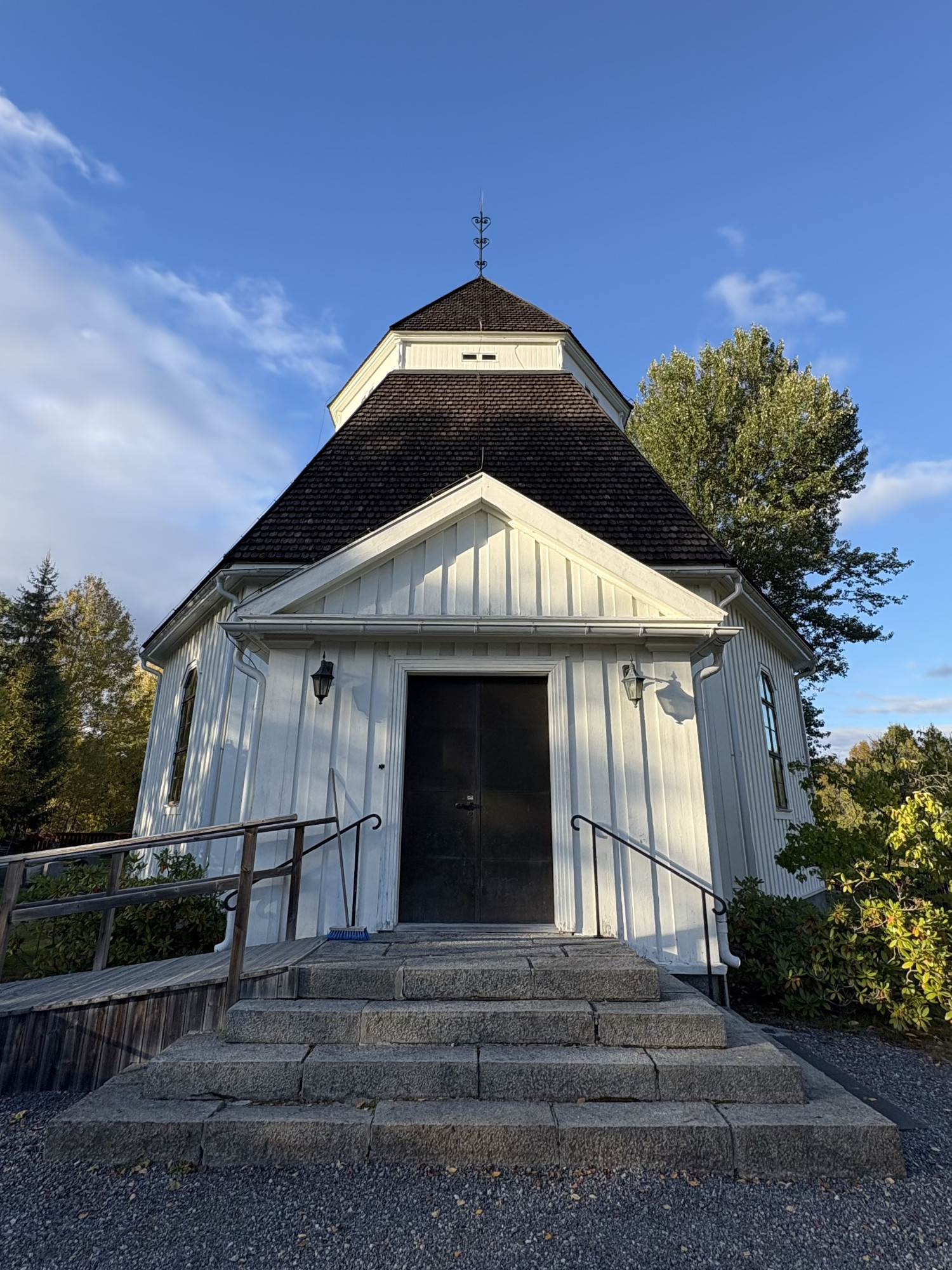
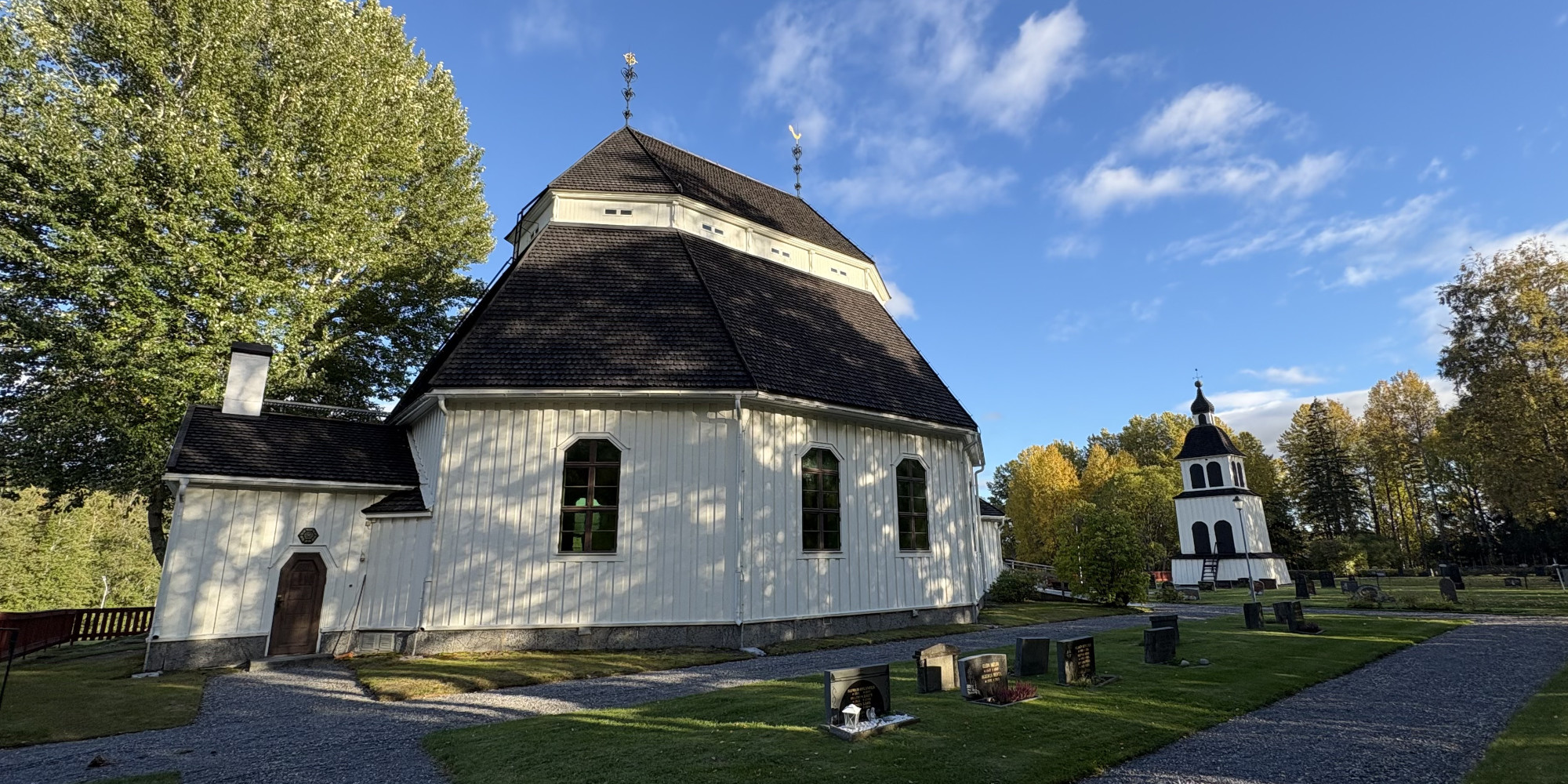
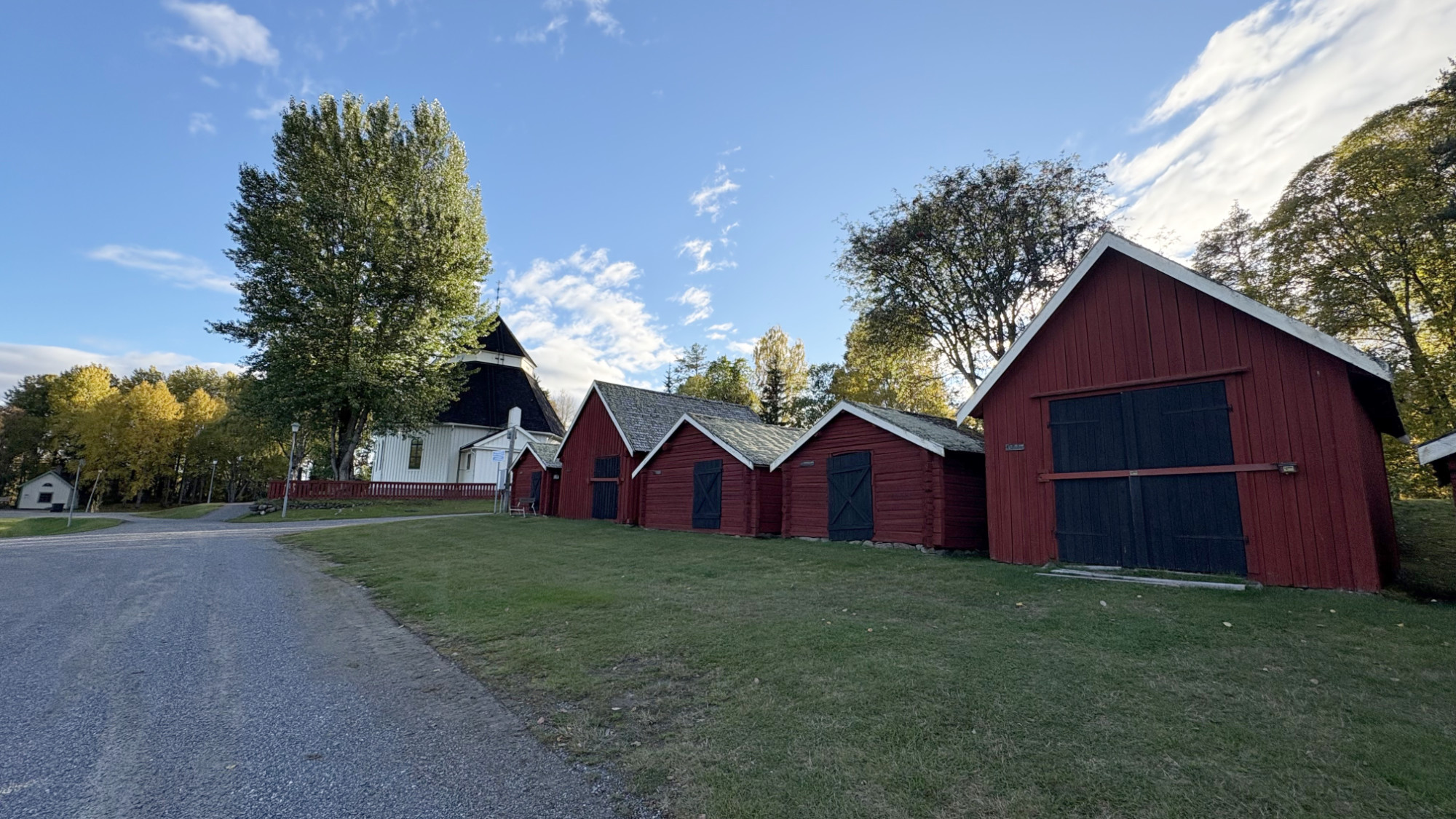
The present building was designed by architect David Frykholm after fire destroyed its predecessor, a relocated ironworks chapel originally built in 1771, which burned to the ground in February 1926 when sawdust in the ceiling was ignited by a stove flue. The church has an octagonal plan built of horizontal timber, with a porch to the south and a small sacristy to the north. Its white-painted panelled exterior is topped by a hipped roof covered with wooden shingles and two small ridge turrets, one bearing a cockerel, the other a cross within a circle.
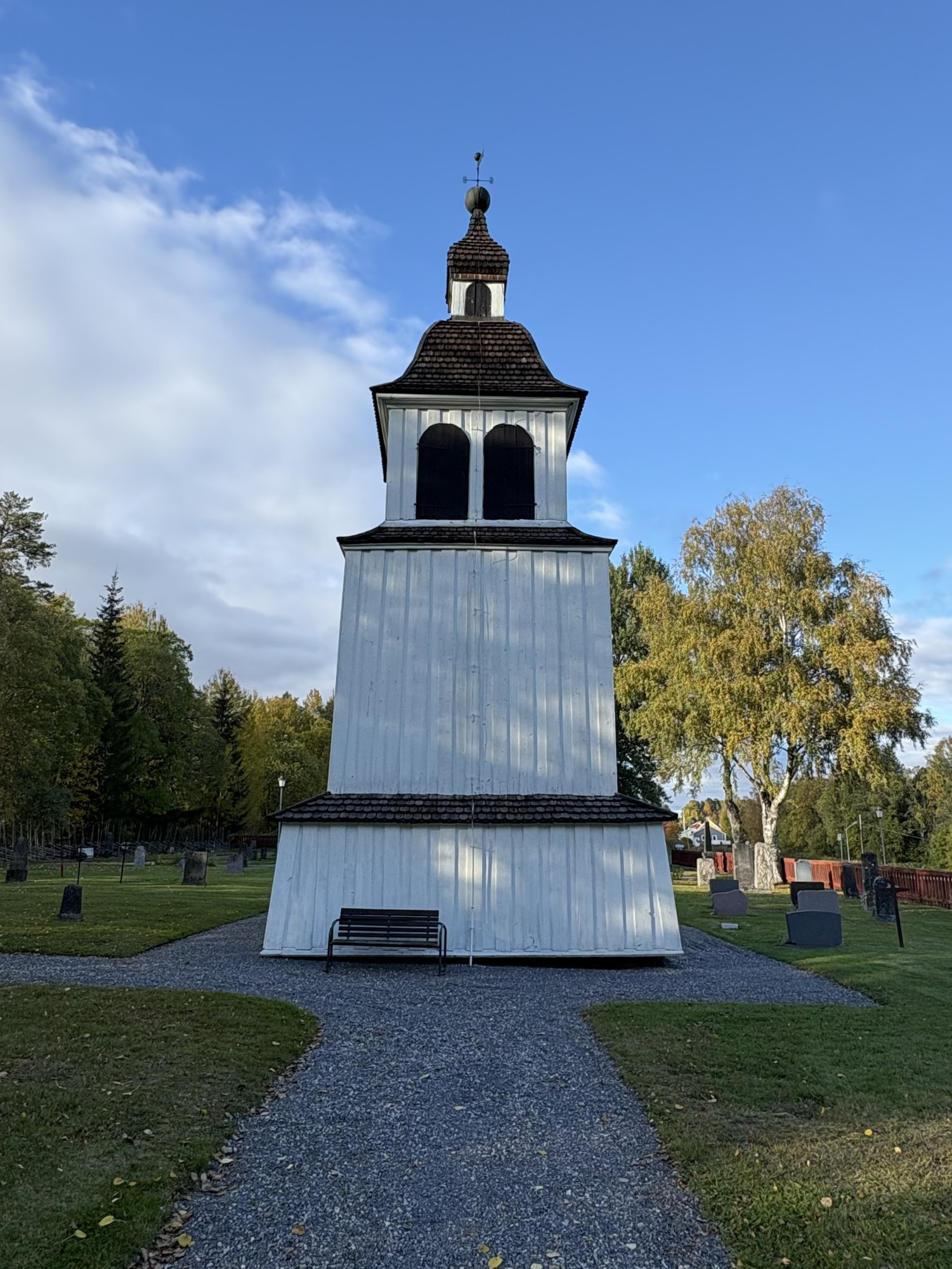
Standing to the south of the church is a separate bell tower of Bothnian type, with a square base and onion-shaped dome. It was originally built in 1724 for Högsjö gamla kyrka, but was bought at auction in 1789 and re-erected beside Viksjö church, probably in 1792 according to local tradition. Nearby, seven church stables survive from the late eighteenth century, a reminder of the days when parishioners travelled to church by horse.
The altarpiece, painted by Stig Bergh, depicts a detail from Titian's Last Supper, held in the Louvre. The pulpit, in an eighteenth-century style, was made by master craftsman Erik Johan Näslund, with a five-sided body and an eight-sided sounding board, and the church also has a wooden, hourglass-shaped font. The gallery balustrade carries thirteen paintings by Arne Bohman.
Several objects rescued from the fire of 1926 connect the present church to its predecessors: a black chasuble, pewter candlesticks from the eighteenth century, and a Bible associated with Karl XII. An iron chest made at Västanå ironworks in 1878 is also preserved, along with a chasuble dated 1829.