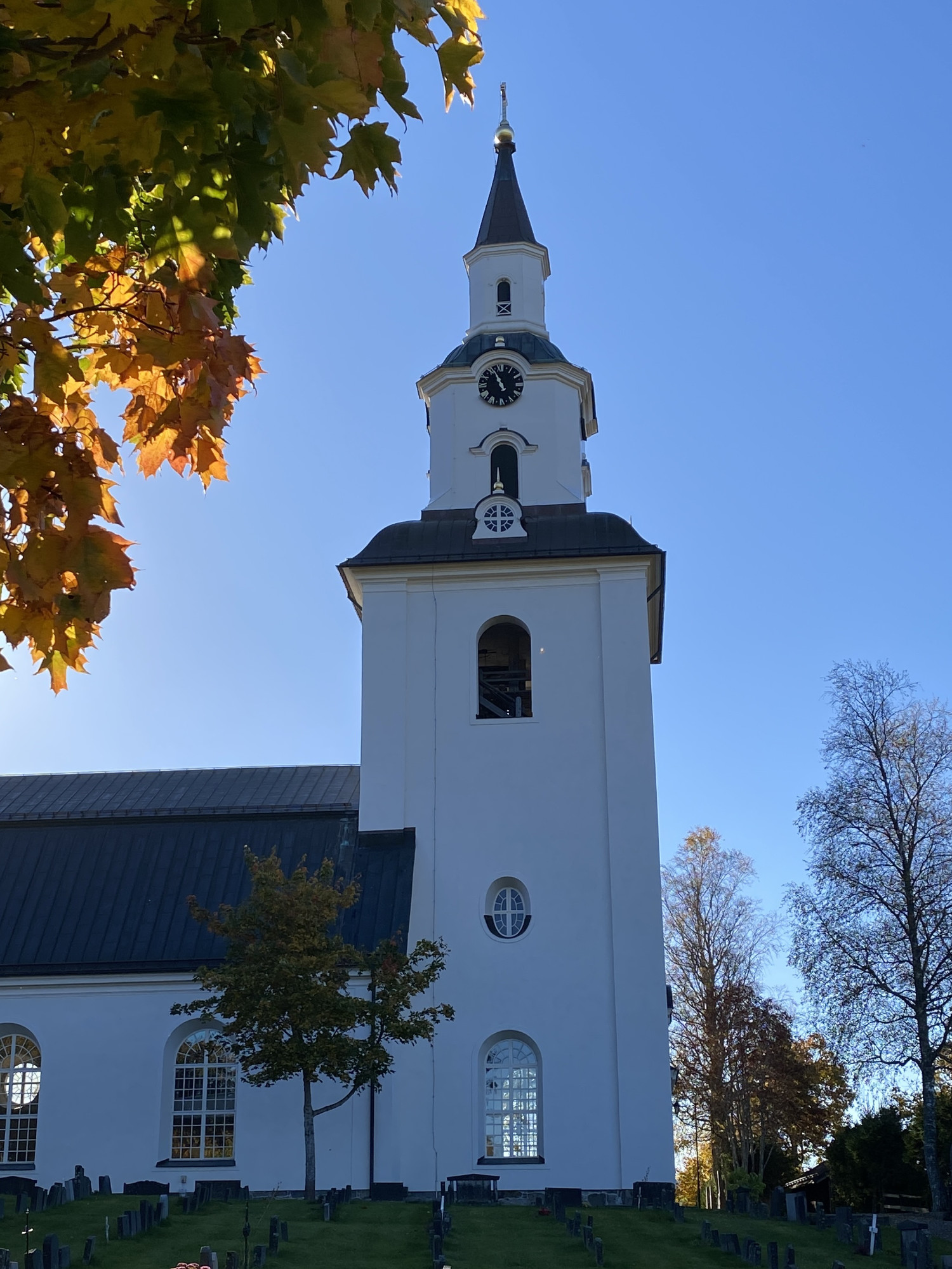
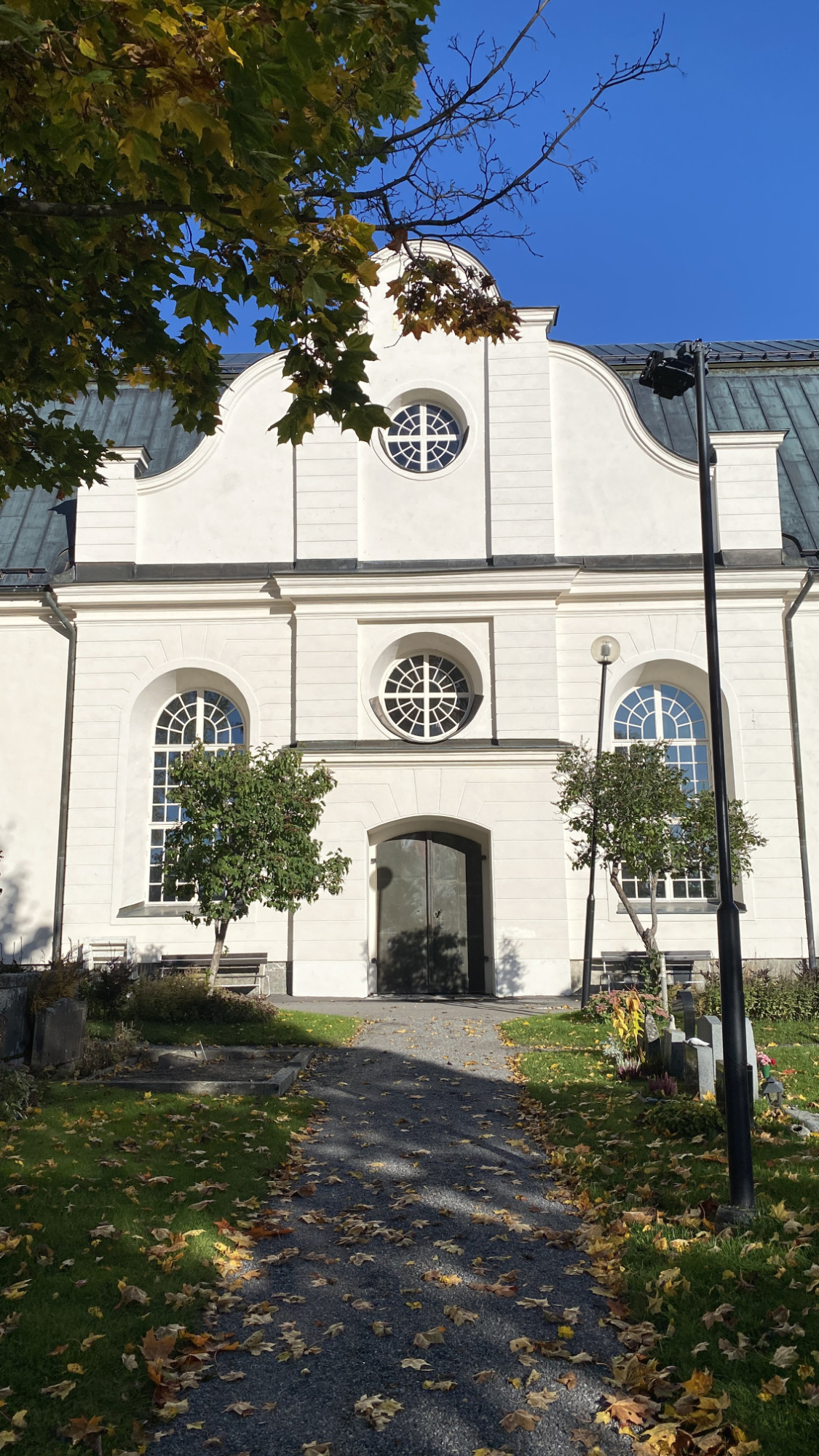
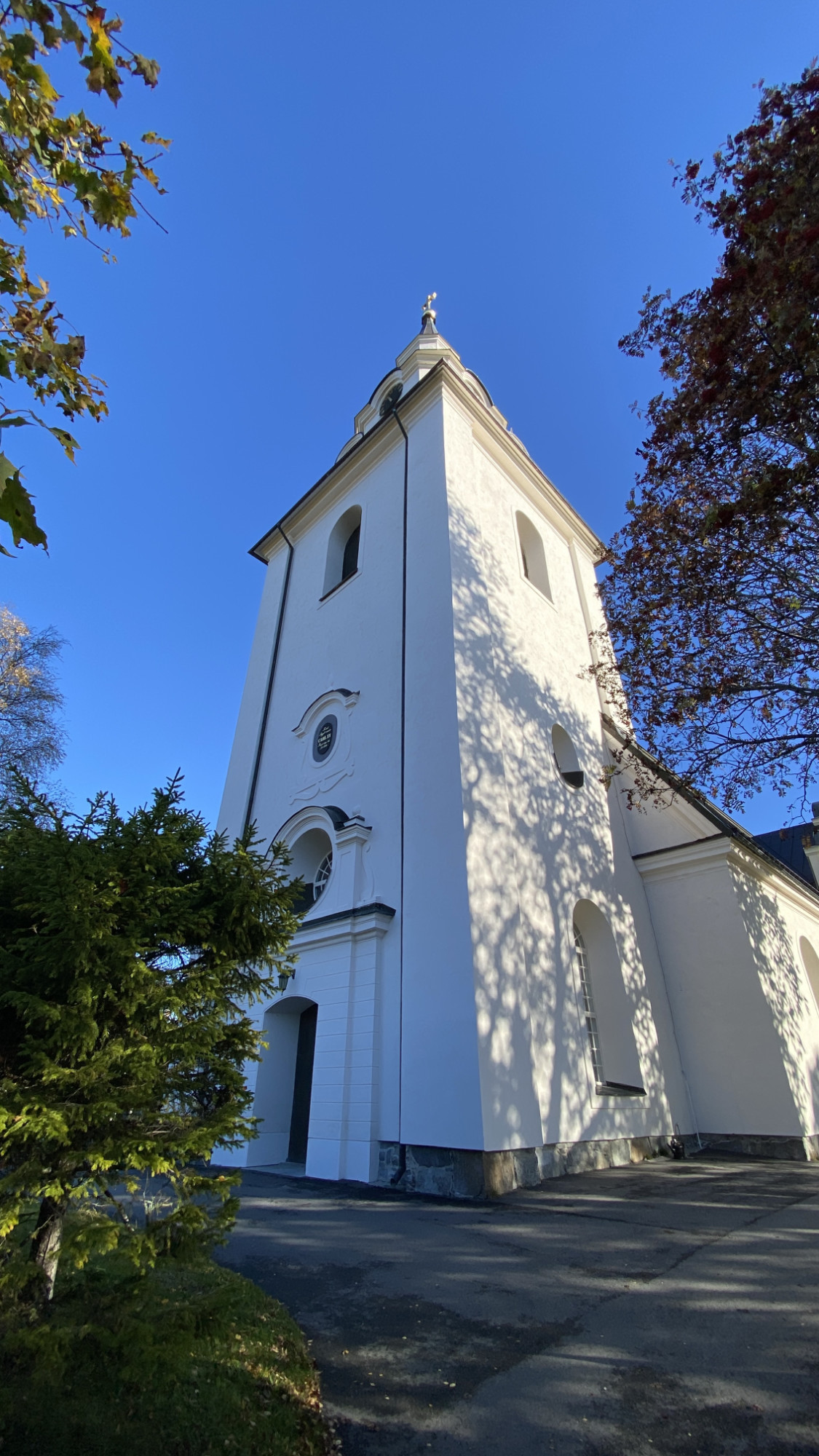
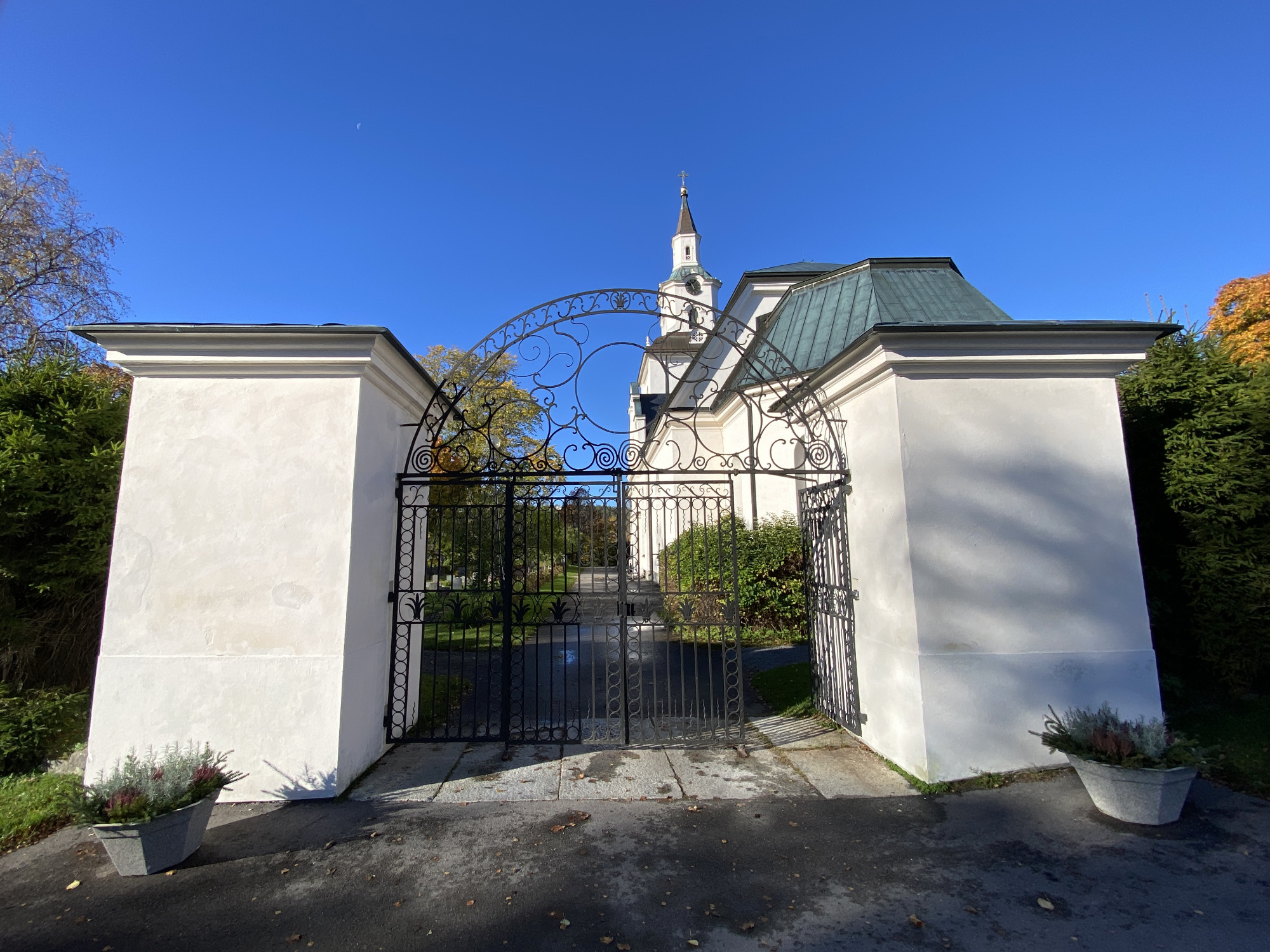
Little is known of the original medieval stone church that once stood here. It was burned during the Russian raids of May 1721, along with all its furnishings, and only provisionally rebuilt in the years that followed. The church seen today largely dates from 1858–1859, when much of the old church's walls were taken down and a larger building erected under the direction of Dan Hagman. A tower was added in 1860, replacing an earlier freestanding bell tower.
A further restoration in 1898 added a five-sided chancel with new stained-glass windows, and much of the interior fittings were replaced at that time. Interestingly, a good deal of the older furnishings were reinstated during the 1950s, giving the church a layered history of alteration and partial return to earlier appearances.
Among the notable fittings is a gilded wooden pulpit made in 1785 by Johan Edler the Elder, and a porphyry font dating from 1899. The church's oldest chasubles survive from the eighteenth century.
The church has a long connection to the bishops of Härnösand, who served as the parish's incumbents for some 241 years and lived at a nearby bishop's residence built in 1814. Five bishops are buried in the church or churchyard, and the writer Alfhild Agrell, born in Härnösand, is also buried in the churchyard. The church has had a series of organs since 1845; the current main organ dates from 1990, retaining the façade of its 1845 predecessor, and a smaller choir organ was built in 1988.
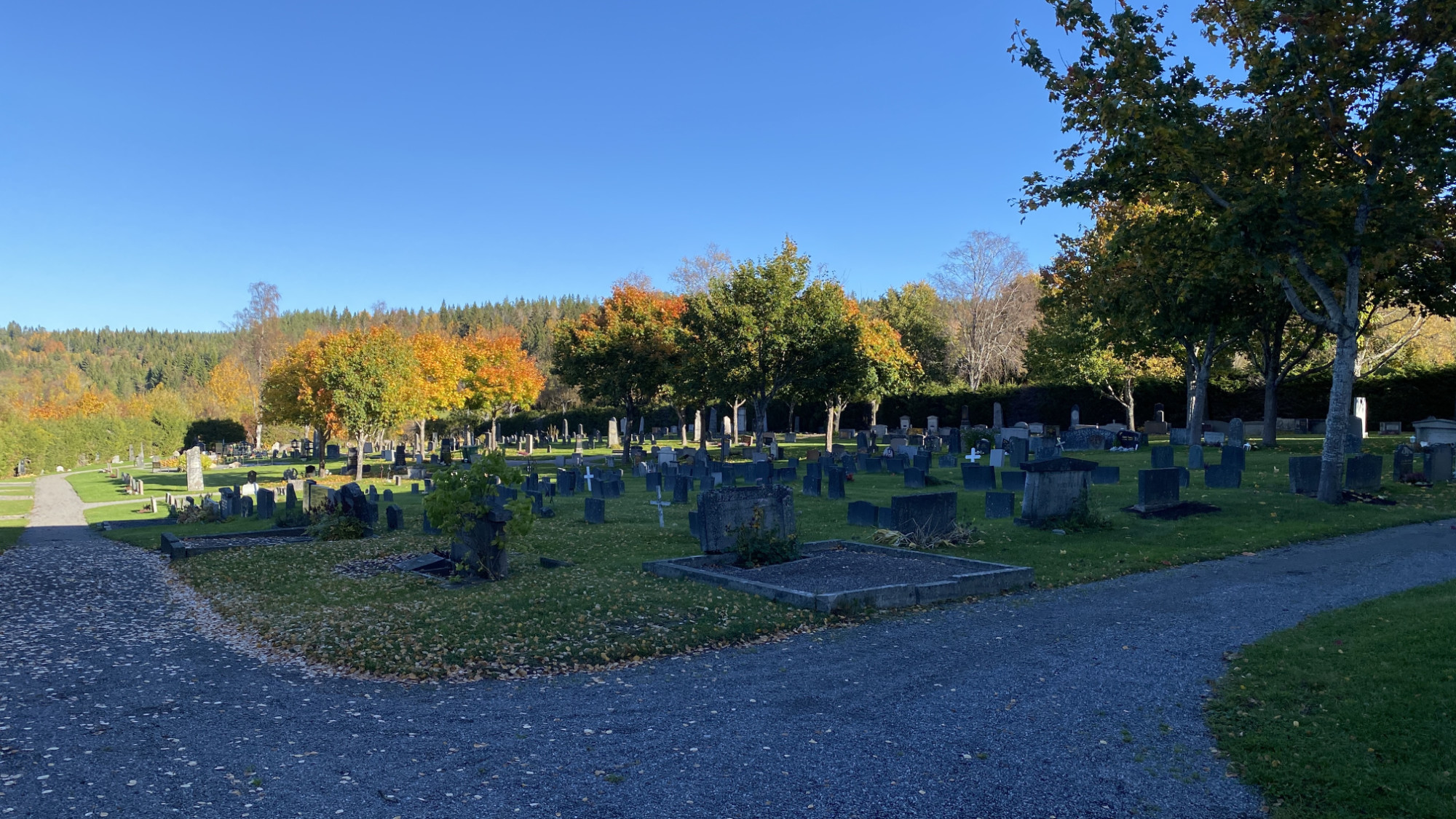
We visited this church on a beautiful autumn day. We are able to take some nice shots. The church is a bit on a hill and has a very beautiful surrounding. We checked the events calendar, and there is quite some activity in the parish hall and regular masses.