The earliest church on this site is thought to have been a wooden building erected in the 1200s. It was replaced by the first known stone church around 1480, said to have been built by the monk Pater Josefus, then parish priest in Indal. That building was modest in size, roughly 17 by 10 ells.
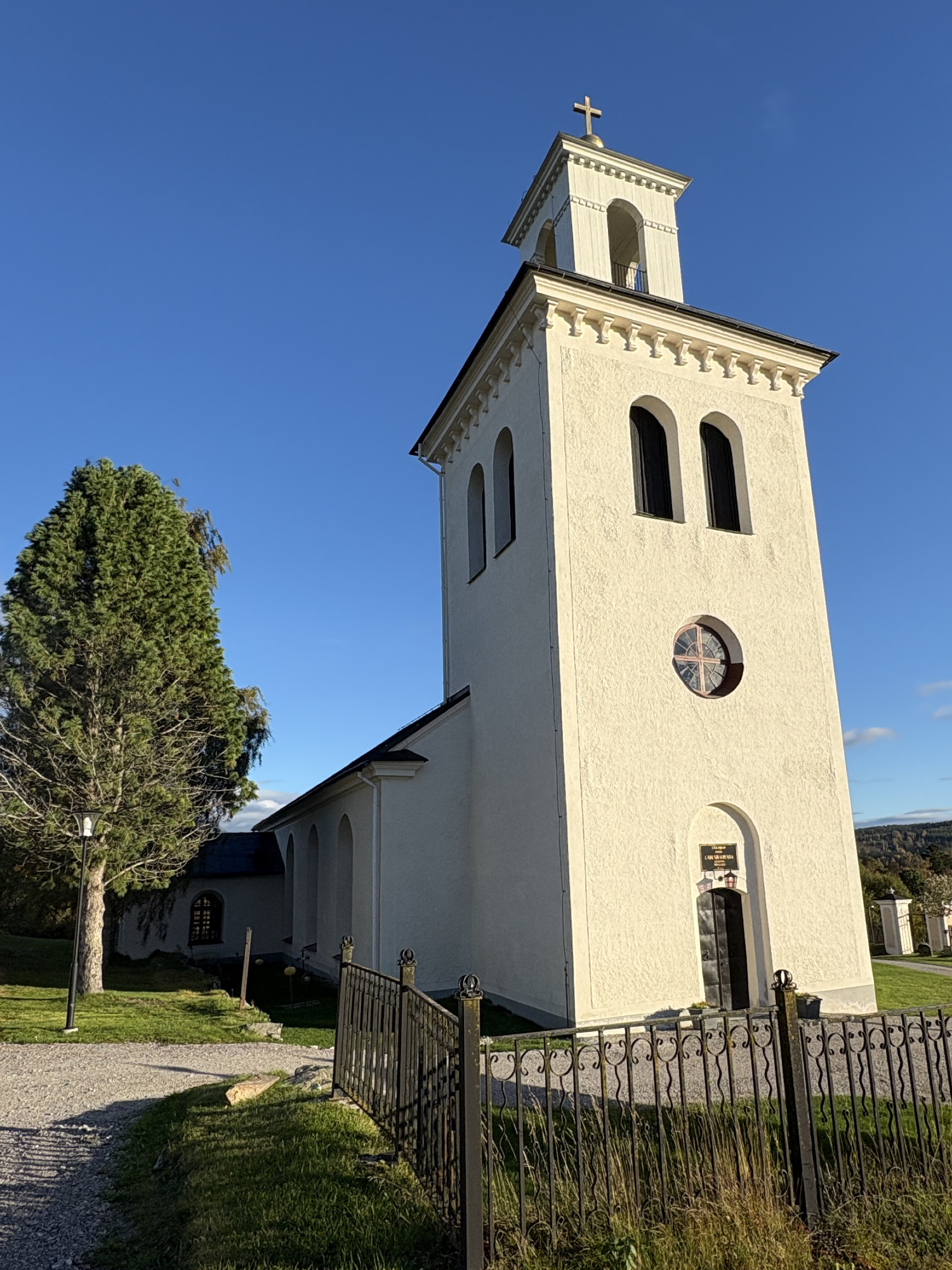
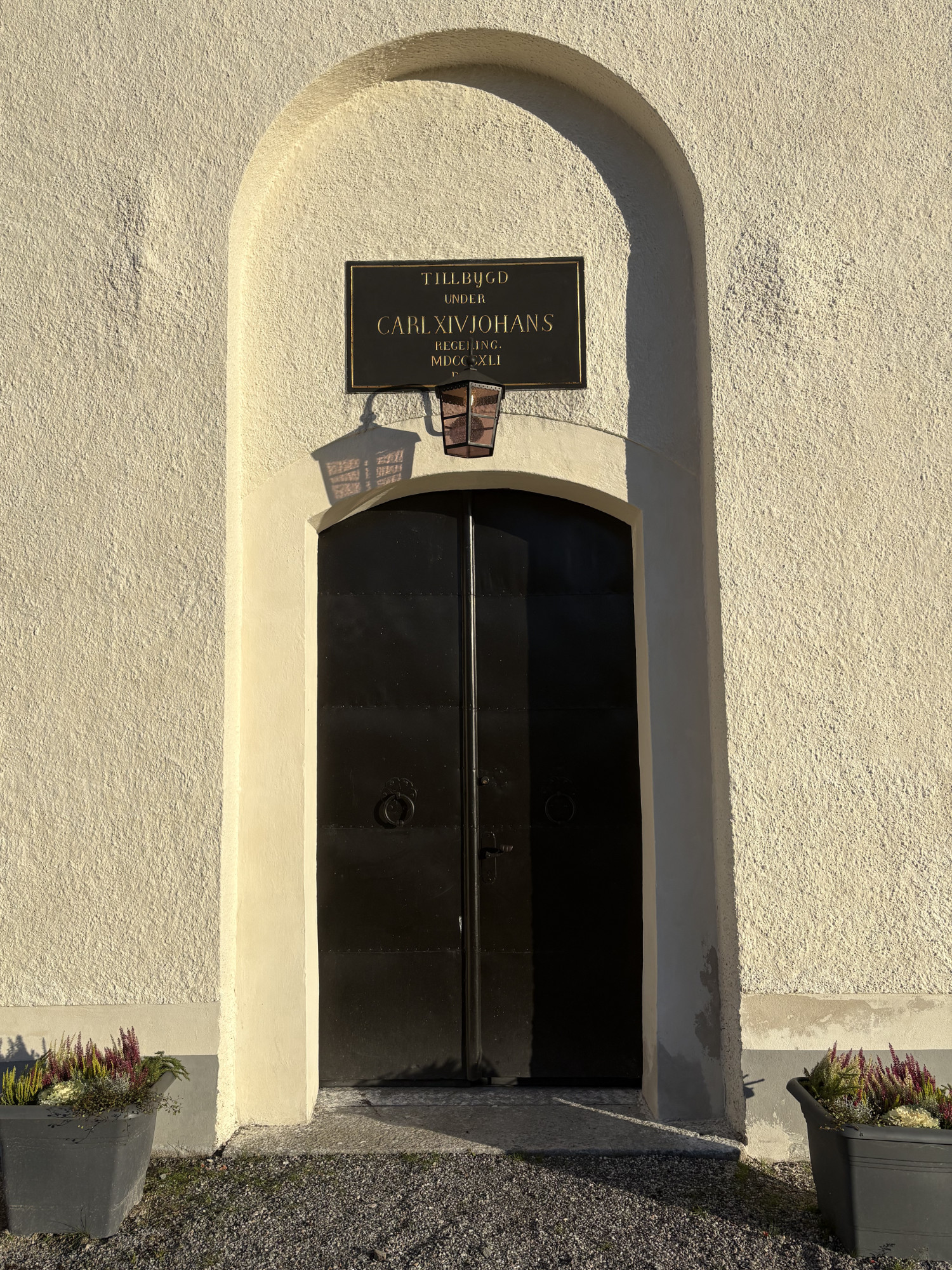
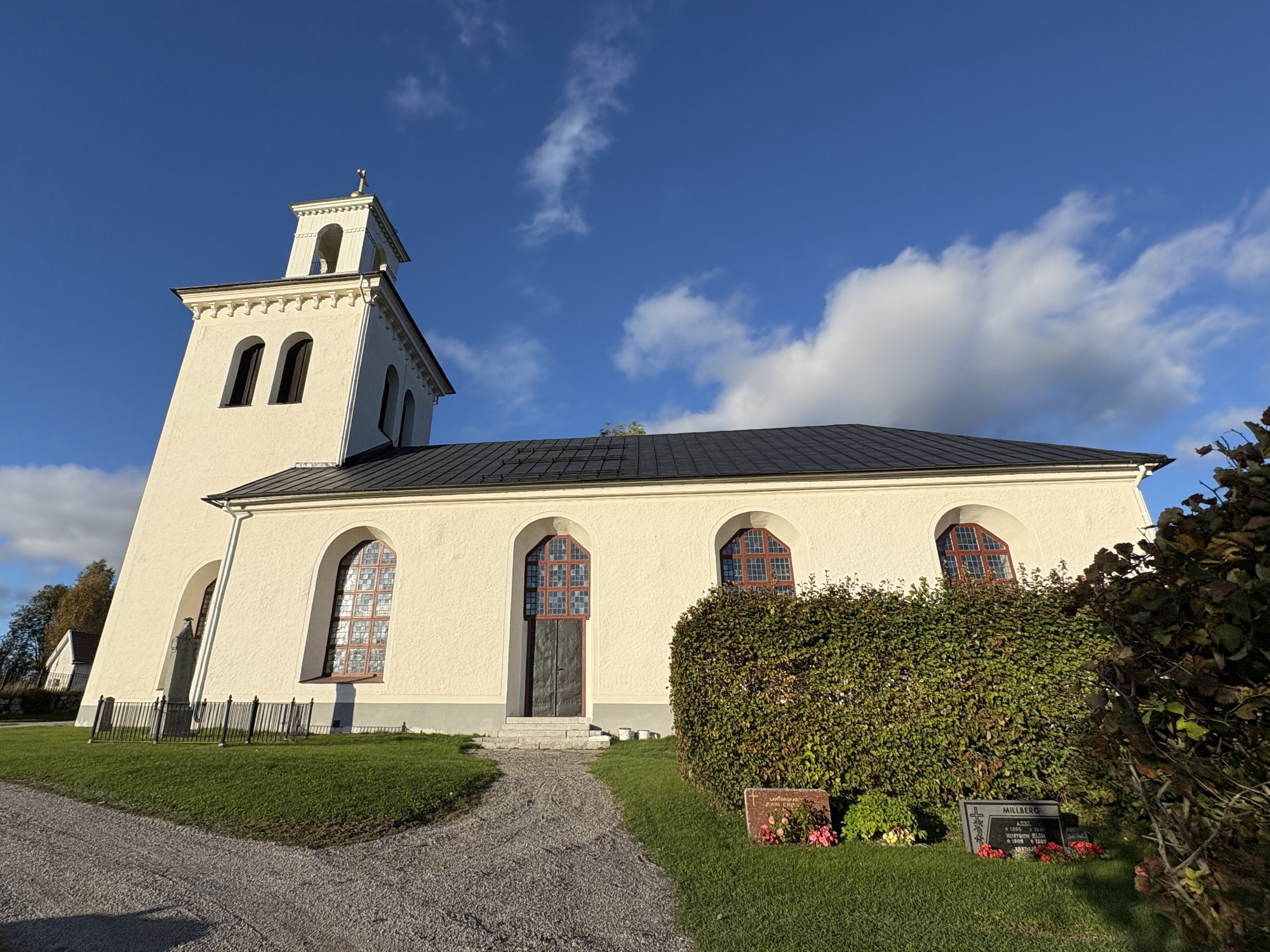
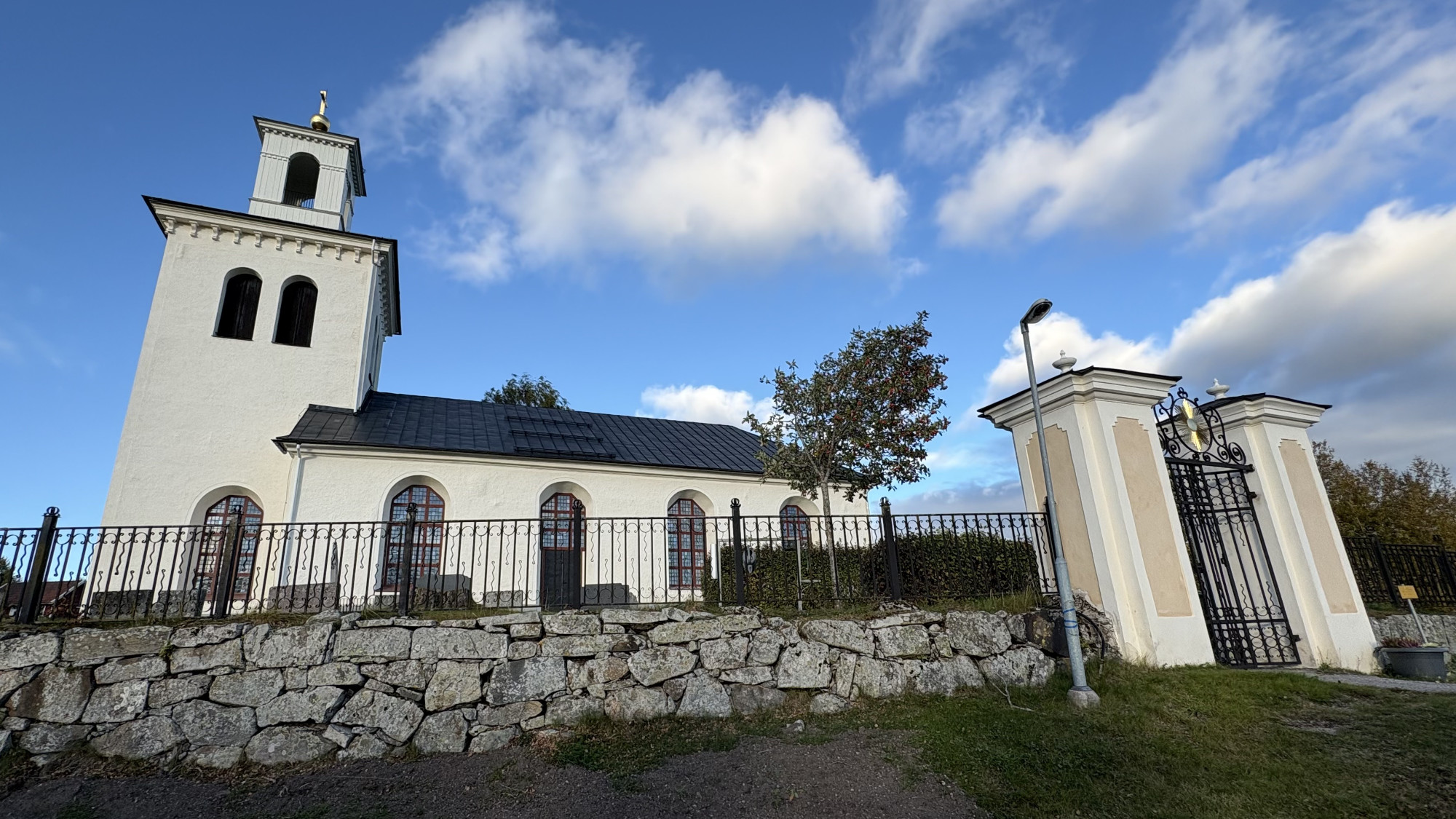
A major rebuilding took place between 1752 and 1757, when the church was lengthened and widened considerably. Further changes followed in 1836–1840: the old, decaying wooden bell tower on the rocky ground west of the church was demolished and replaced by the tower attached to the church that gives it its present appearance, a wooden sacristy was replaced with one of stone, and a new entrance was added on the south side. A bell tower with three bells is recorded on the site as early as the 1600s, and by the 1700s it had fallen into such disrepair that a new tower closer to the church was long planned before finally being built from 1835.
Jonas Bredberg, a priest from Njurunda, oversaw the parish during the eighteenth-century rebuilding and died in 1774; he was buried within the church, though his remains were later moved out in the late 1800s and the exact location of his original grave is no longer known.
Among the church's furnishings are a sculpture of St Olof dating from the 1200s, an altar cabinet from the 1400s, and figures of a bishop and a madonna from the 1500s. The altarpiece, depicting the Last Supper and the Crucifixion, and the gallery front, showing a series of biblical figures, were both painted by Anders Eklund.
In more recent times, geothermal heating has been installed to help reduce running costs.