Högsjö gamla kyrka
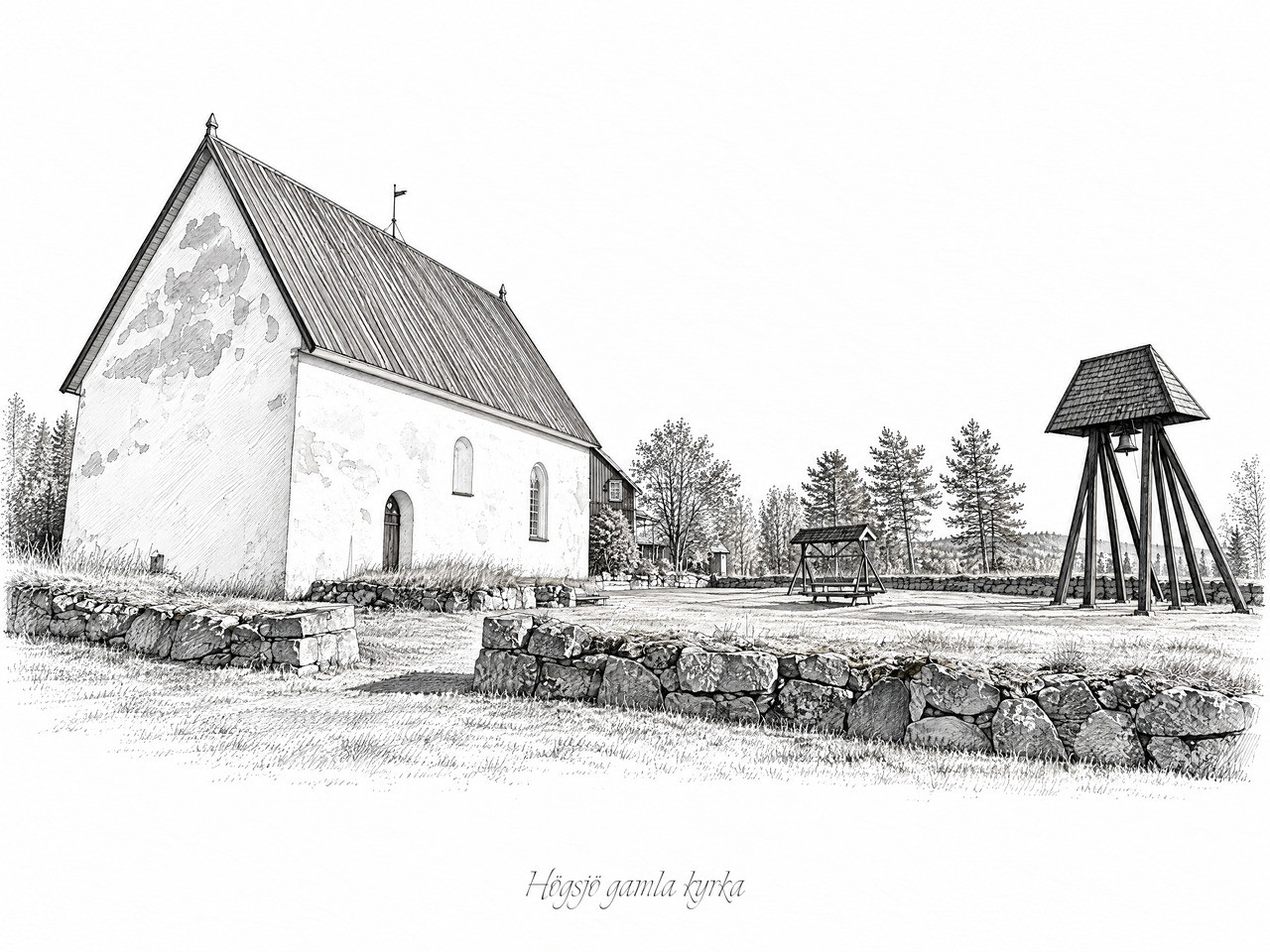
Högsjö gamla kyrka stands on a small hill northwest of Mörtsjön, beside the local heritage centre. Beneath its steep roof, weathered white walls hold a medieval story of fire, rebuilding, abandonment and care.
Our visit
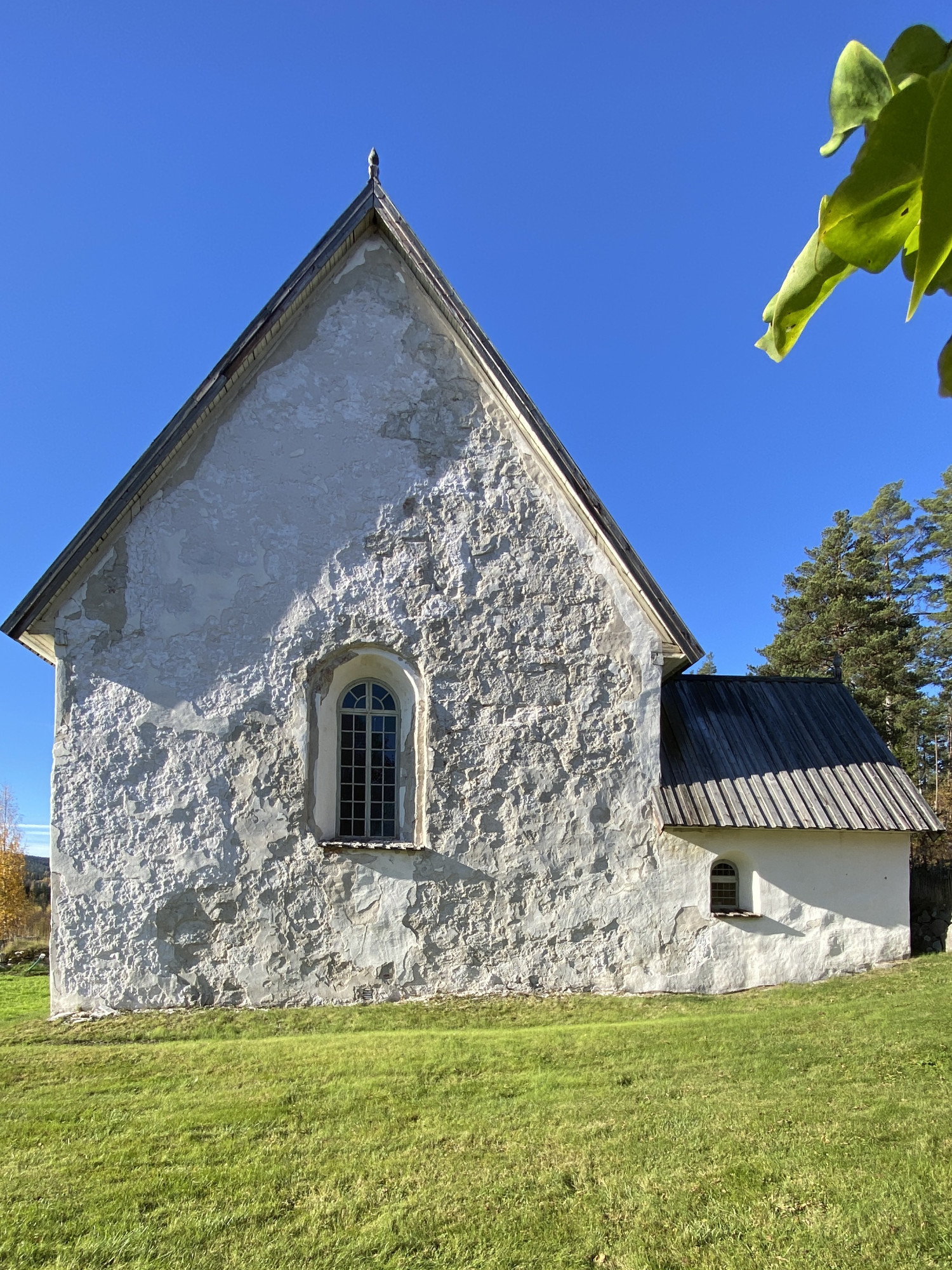
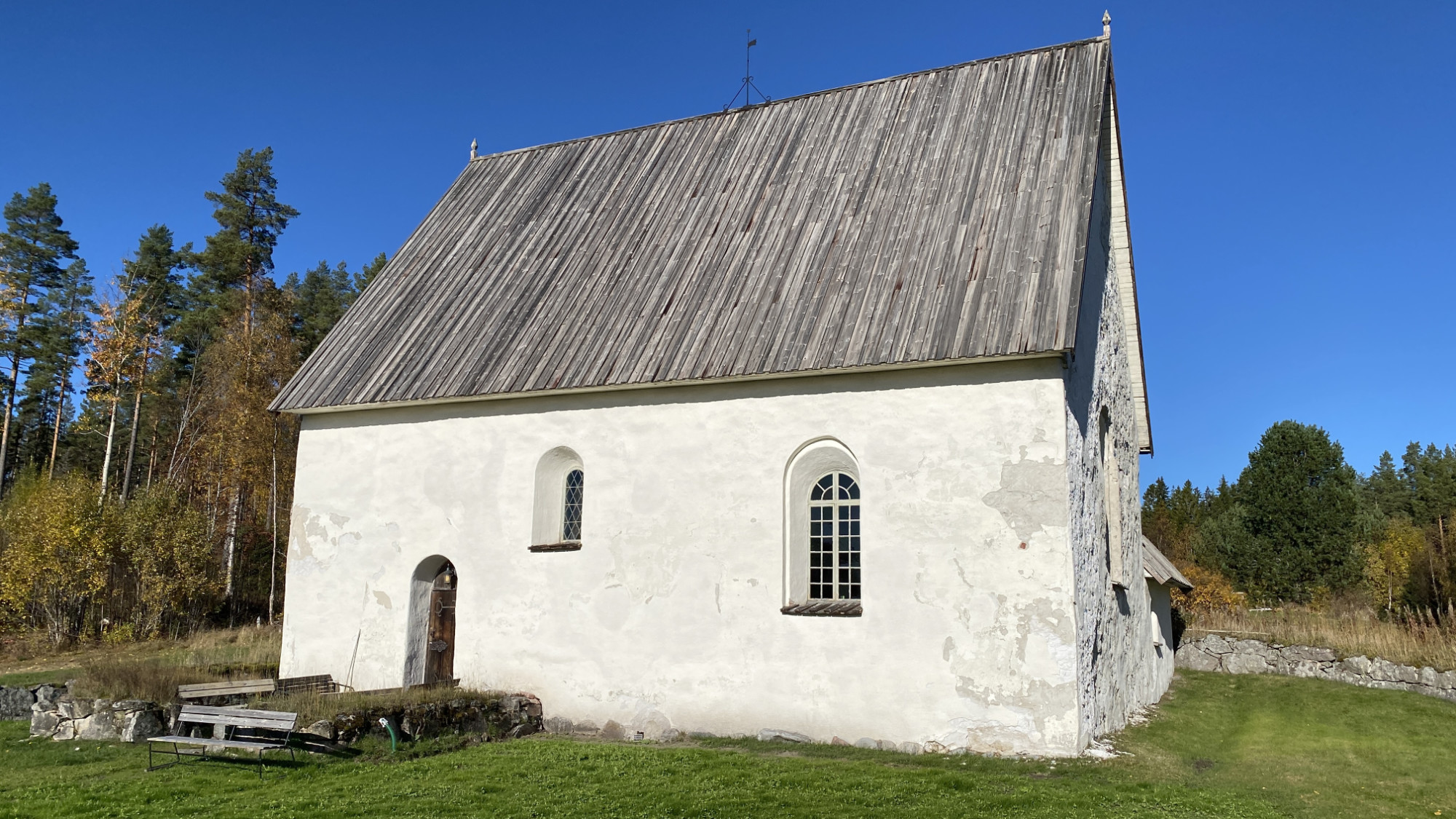
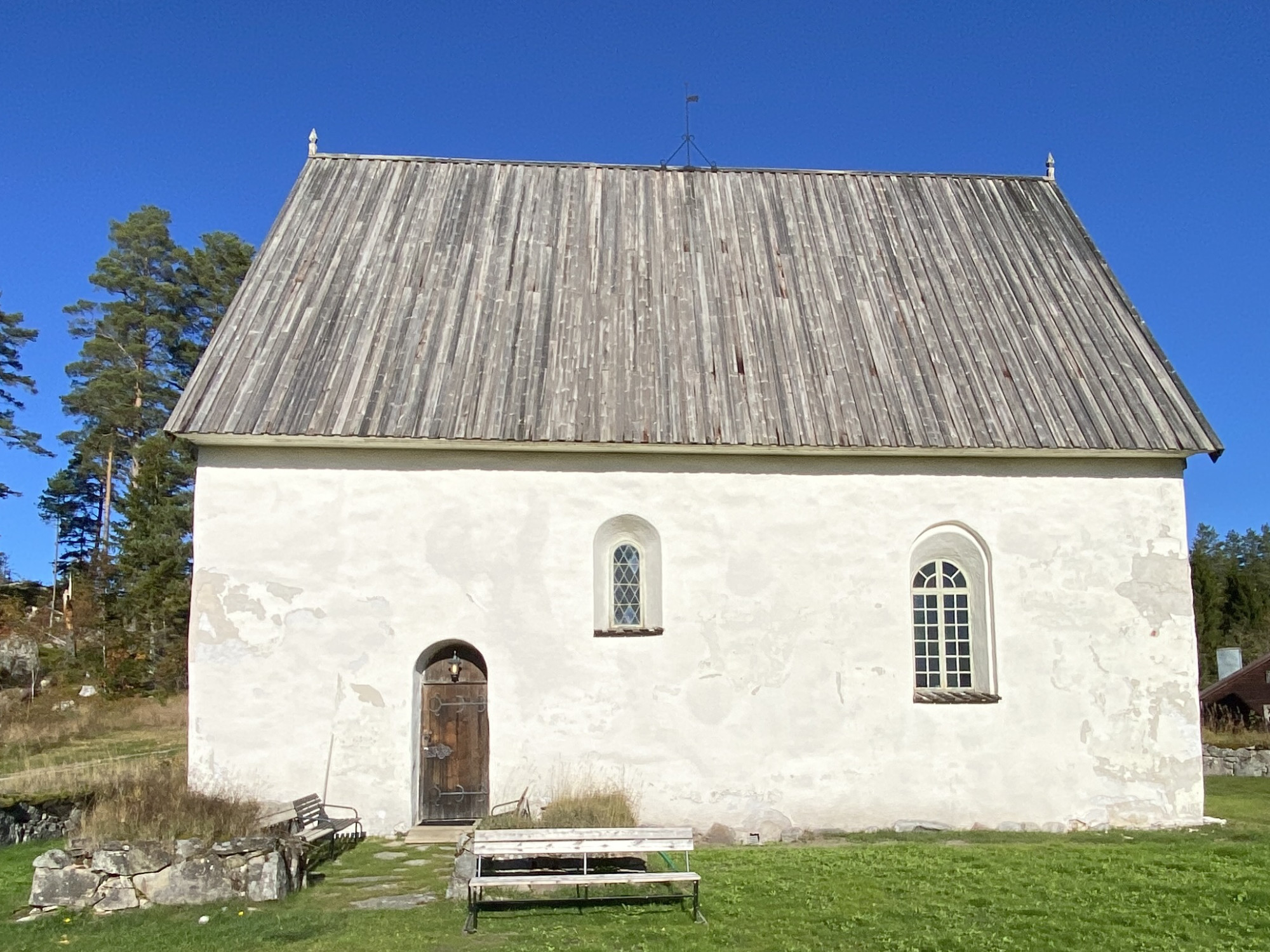
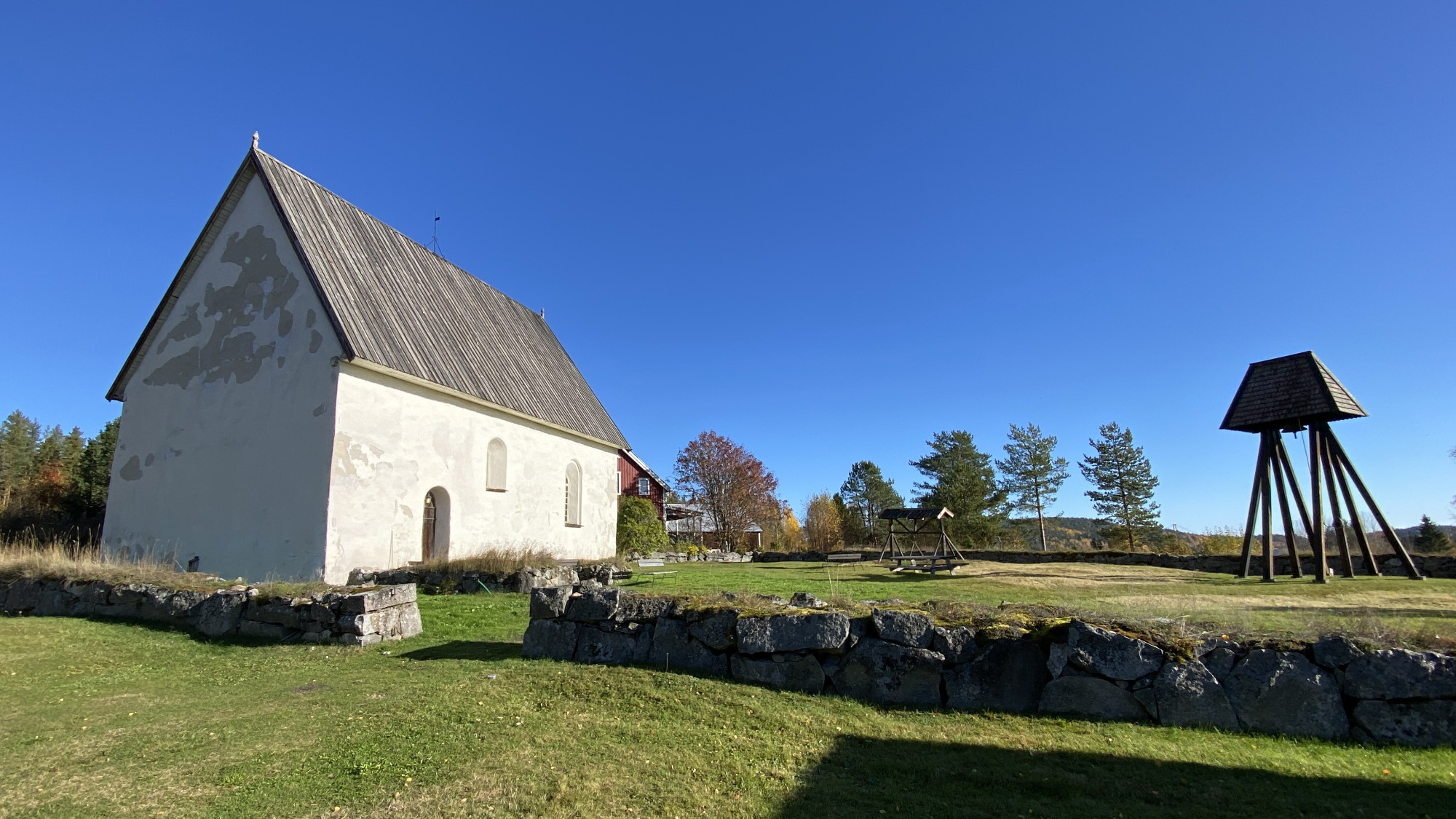
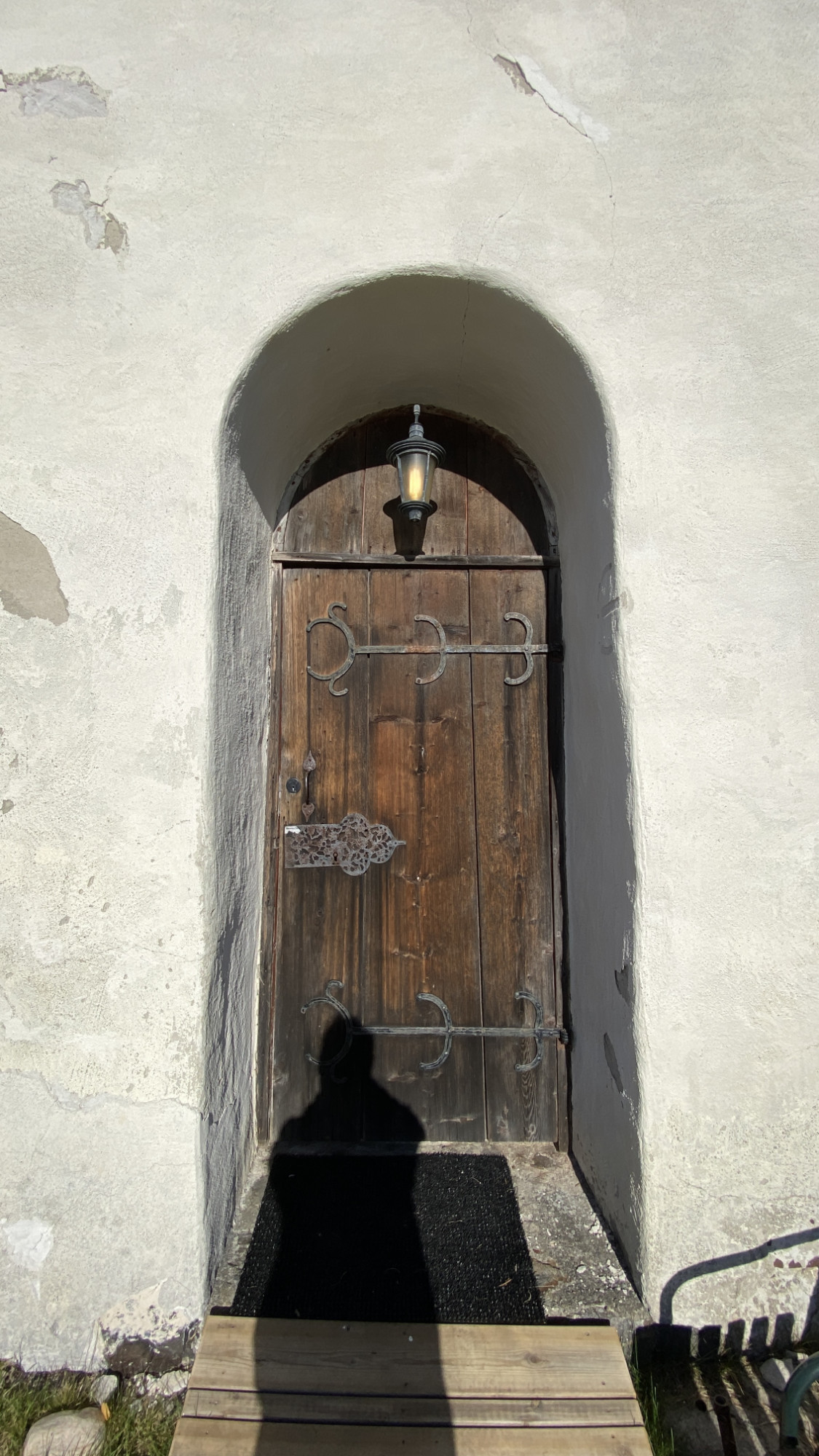
We visited this church on a beautiful day. What an amazing find. Thinking of all the stories that took place here! Our visit on 4 October 2026 is recorded in the five exterior photographs below.
A small church, a long memory
Seven moments in the history of Högsjö’s medieval church.
A church in local stone
The small gneiss church is built. Its precise construction year remains unknown.
A visit enters the record
Archbishop Jakob Ulfsson visits: the earliest written mention identified by the diocese.
Fire reaches Högsjö
On 30 May, the church and bell tower burn during the Russian coastal raids.
The doors reopen
After reconstruction led by Hans Biskop, the church returns to use.
The parish moves on
The larger Högsjö kyrka replaces the old church. Fittings are moved or sold.
Care returns
Restoration begins to recover the neglected medieval building.
Preserving the old church
Architect David Frykholm directs a further restoration.
Three things to notice
Small details visible in our photographs from the churchyard.
The steep grey roof
The tall, weathered roof dominates the low walls. Small finials and a slender weather vane finish its ridge.
Windows of different sizes
Two unequal arched windows and a low wooden door break the long south wall. Patches of older plaster give the white surface its texture.
A bell frame of its own
The bell hangs in a separate timber frame, sheltered by a shingled canopy. Its open supports contrast with the solid church walls and rough stone boundary.
The full church story
The exact age of Högsjö gamla kyrka is unknown. The parish suggests a fourteenth-century origin, while the national building register gives a broader medieval date. Built from local gneiss, it has a rectangular nave and a straight-ended chancel. A porch and sacristy once extended the small building.
The diocese identifies a visit by Archbishop Jakob Ulfsson in 1507 as the earliest written record of the church. Its medieval life is harder to reconstruct from surviving documents than from the building itself.
On 30 May 1721, Russian coastal raiders burned the church and bell tower. The fire also destroyed the parish archives and fittings. Rebuilding was led by Hans Biskop from Österbotten; after fifteen years of work, the church returned to use in 1736.
In 1789, the parish moved to the larger Högsjö kyrka on the other side of Mörtsjön. According to the building register, the pulpit and bell went to the new church, while the altarpiece was sold to Viksjö. The old building was left behind.
Restoration began in the early twentieth century. Further work in 1934–1936, directed by Härnösand architect David Frykholm, helped preserve the church we see today. Low masonry marks the former porch. Our autumn photographs record the worn plaster, steep roof and separate timber bell frame: a small building with a long and interrupted life.
Plan a visit
Vallen 160, 87016, Ramvik
Opening hours
Opening hours have not been confirmed for the current date. This does not mean the church is closed.
Check access with the parish before travelling. Services and seasonal changes can affect visits.
What’s on at Högsjö gamla kyrka
Loading calendar… Events will appear here automatically when the first background fetch finishes.
Contact & official information
Högsjö församling
- Telephone +46 611 28800
- Email harnosand.pastorat@svenskakyrkan.se
Check the official pages below for opening hours and visiting information. We may not have the latest details, and access can change for holidays, services or private ceremonies. If the information is unclear, contact the parish before travelling.
Find your way
Use the interactive map to explore the church and the surrounding landscape.
The interactive map could not load. Use the location link below.