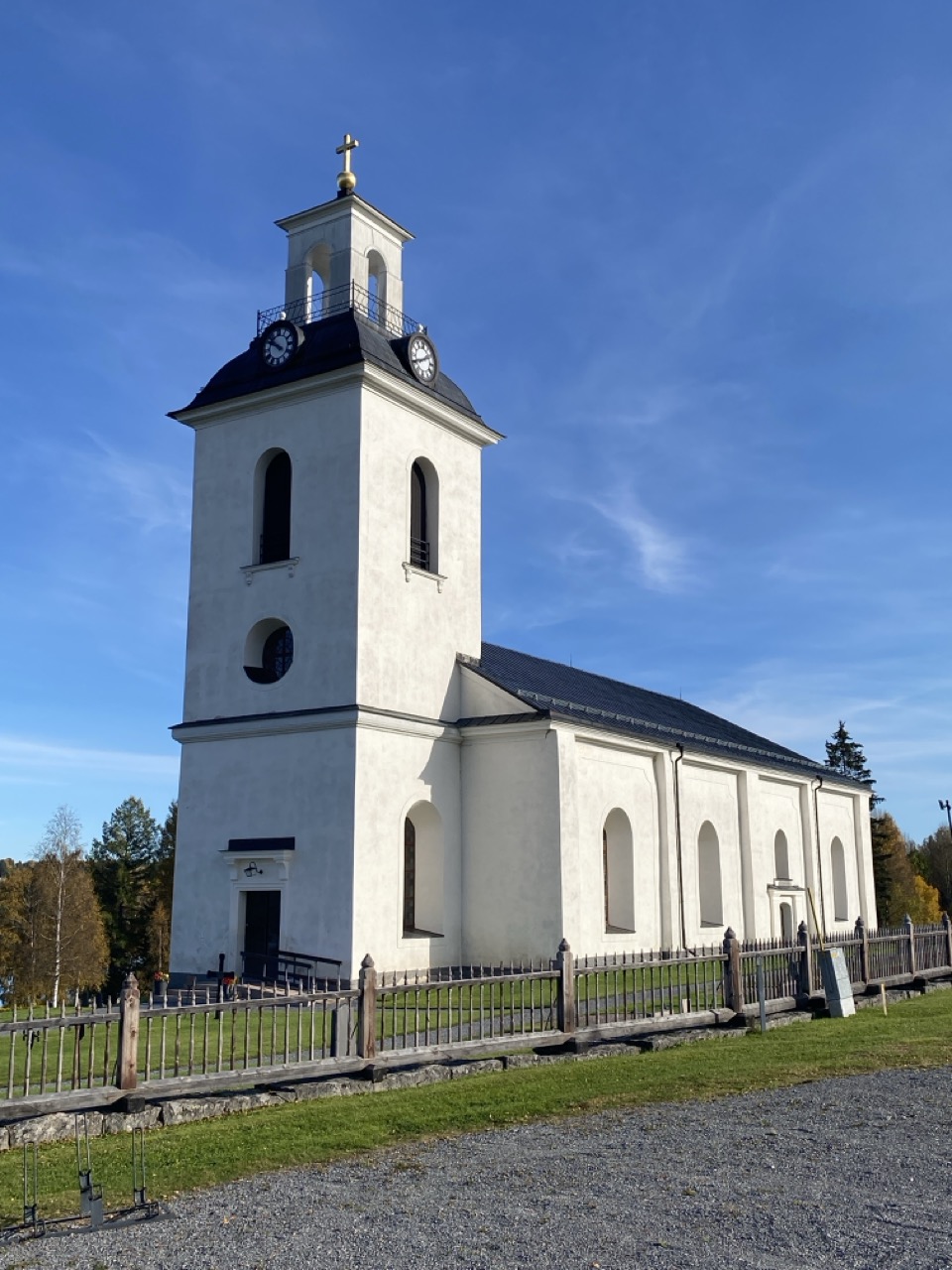
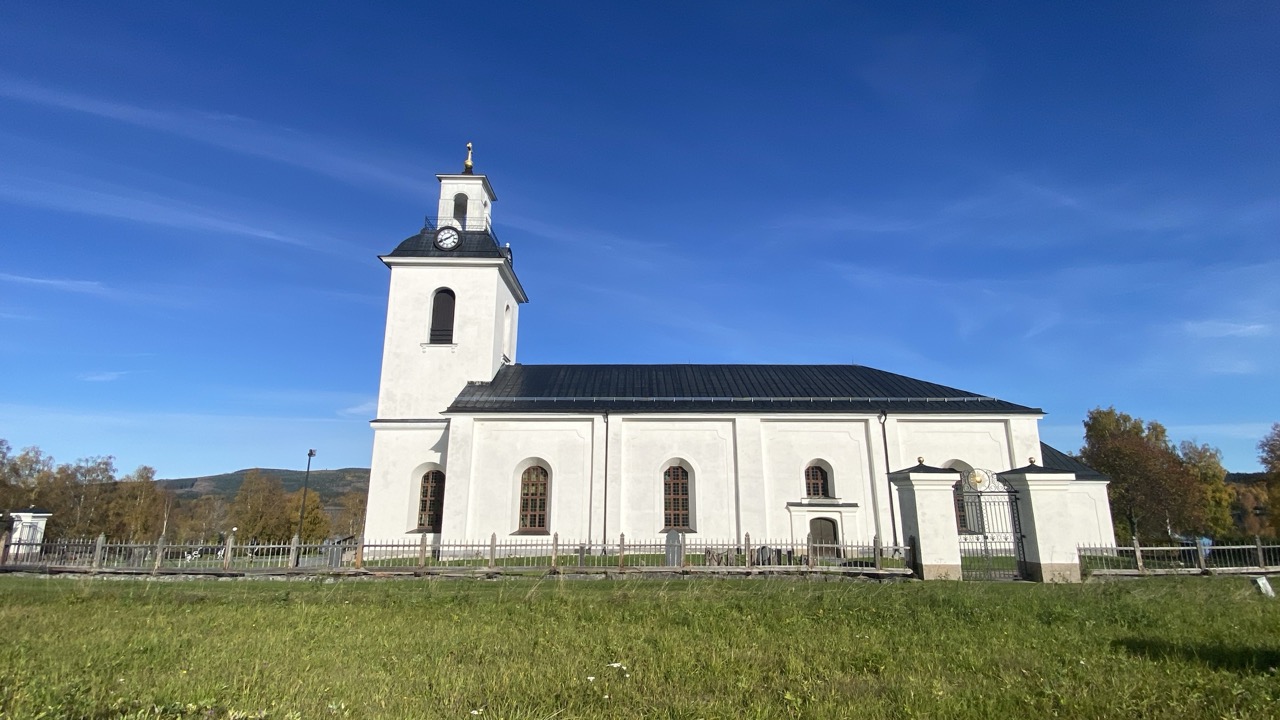
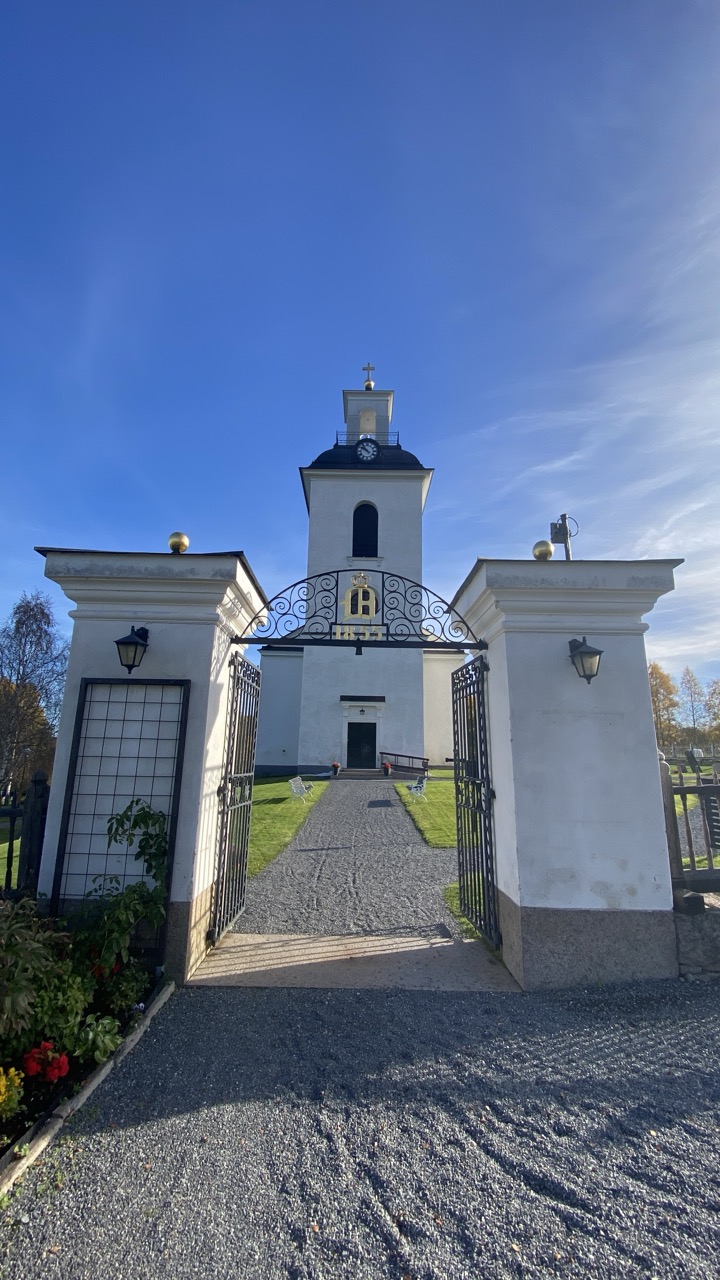
The present church was built between 1786 and 1790, replacing an earlier structure on the site thought to date from the late Middle Ages. It was constructed by the master builder Pål Persson of Stugun in Jämtland, and consists of a nave with a chancel and sacristy to the east and a tower to the west, following a plan typical of rural Swedish churches of the period.
Among the church's furnishings is a pulpit carved in 1806 by Nils Dahlqvist of Nora. Interestingly, for the first decades of the nineteenth century it stood above the altar rather than in its more conventional position, a reminder of how church interiors were sometimes rearranged over time.
The altarpiece, painted in 1815 by Gustav Erik Hasselgren, has its own history of movement: it was bought from Sankt Jacobs kyrka in Stockholm in 1840–1841 and set within an altar surround made in 1843. The font, carved from pale sandstone, is a later addition, designed by Erik Fant and dated 1940.
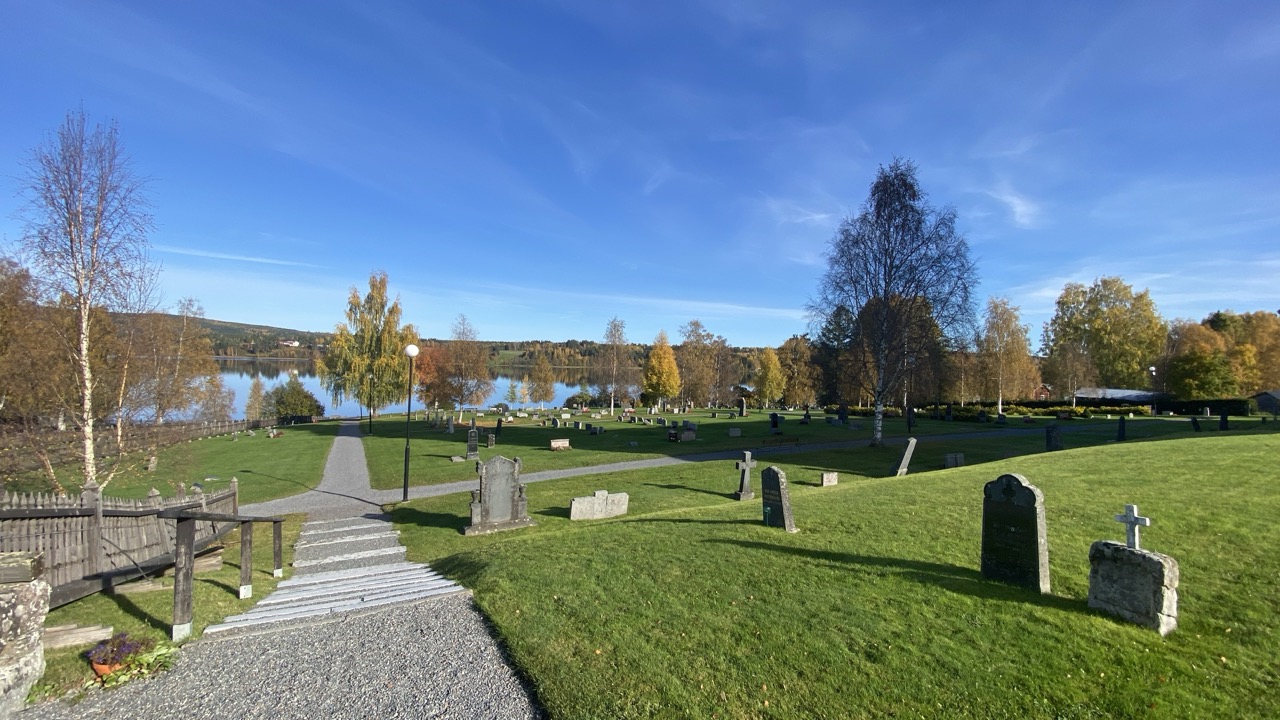
In the churchyard lies the grave of Gunnar Hedlund of Rådom, a government minister and leader of the Bondeförbundet (the Farmers' League/Agrarian Party), giving the site a connection to twentieth-century Swedish political history.