Uppsala domkyrka
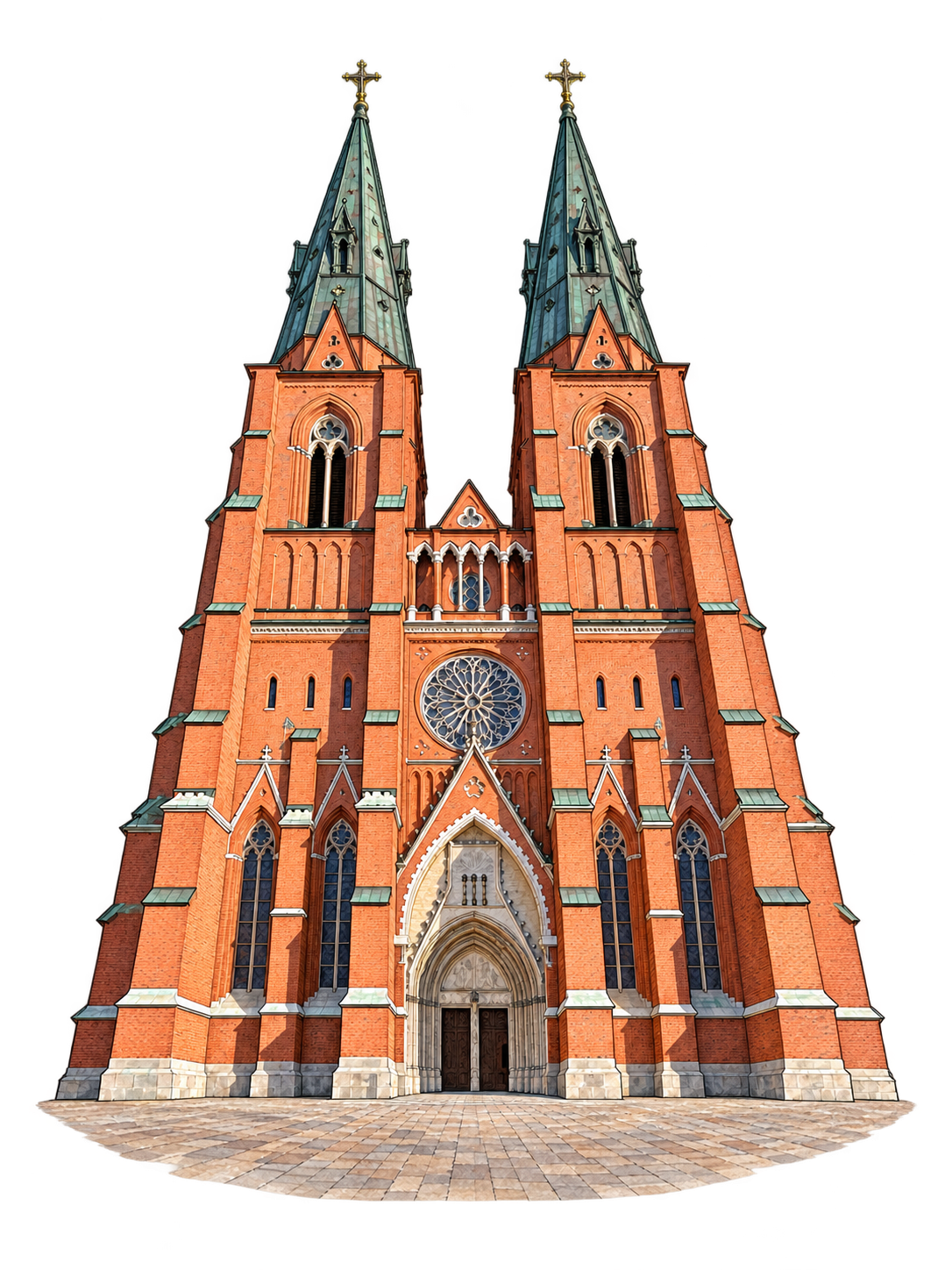
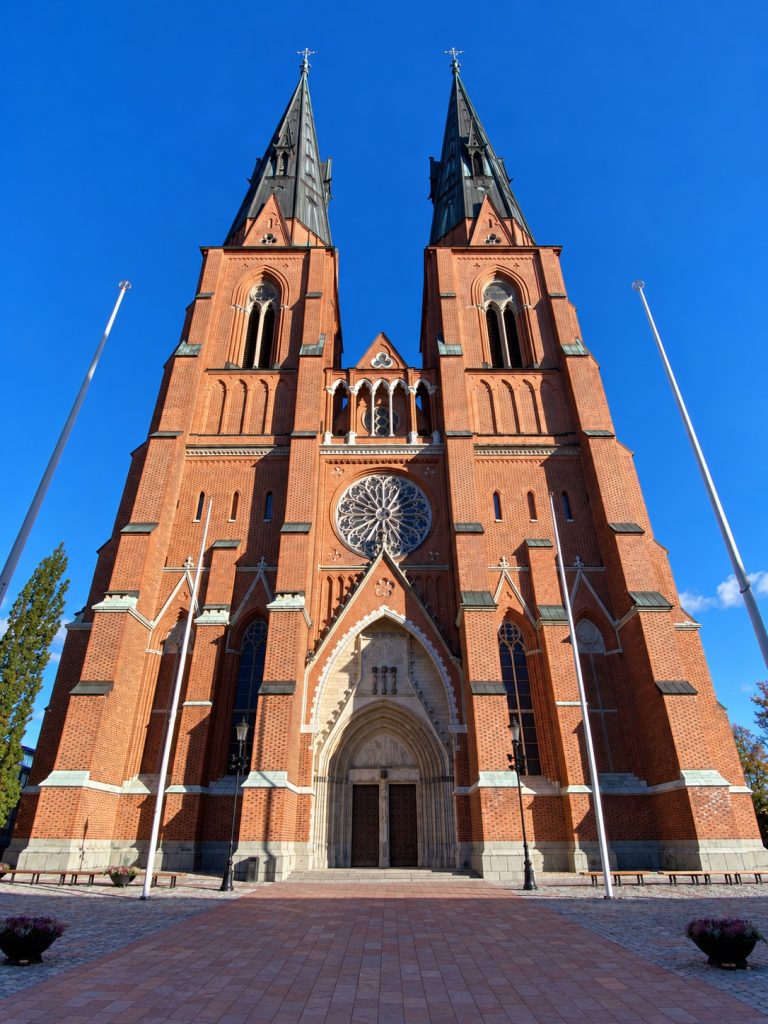
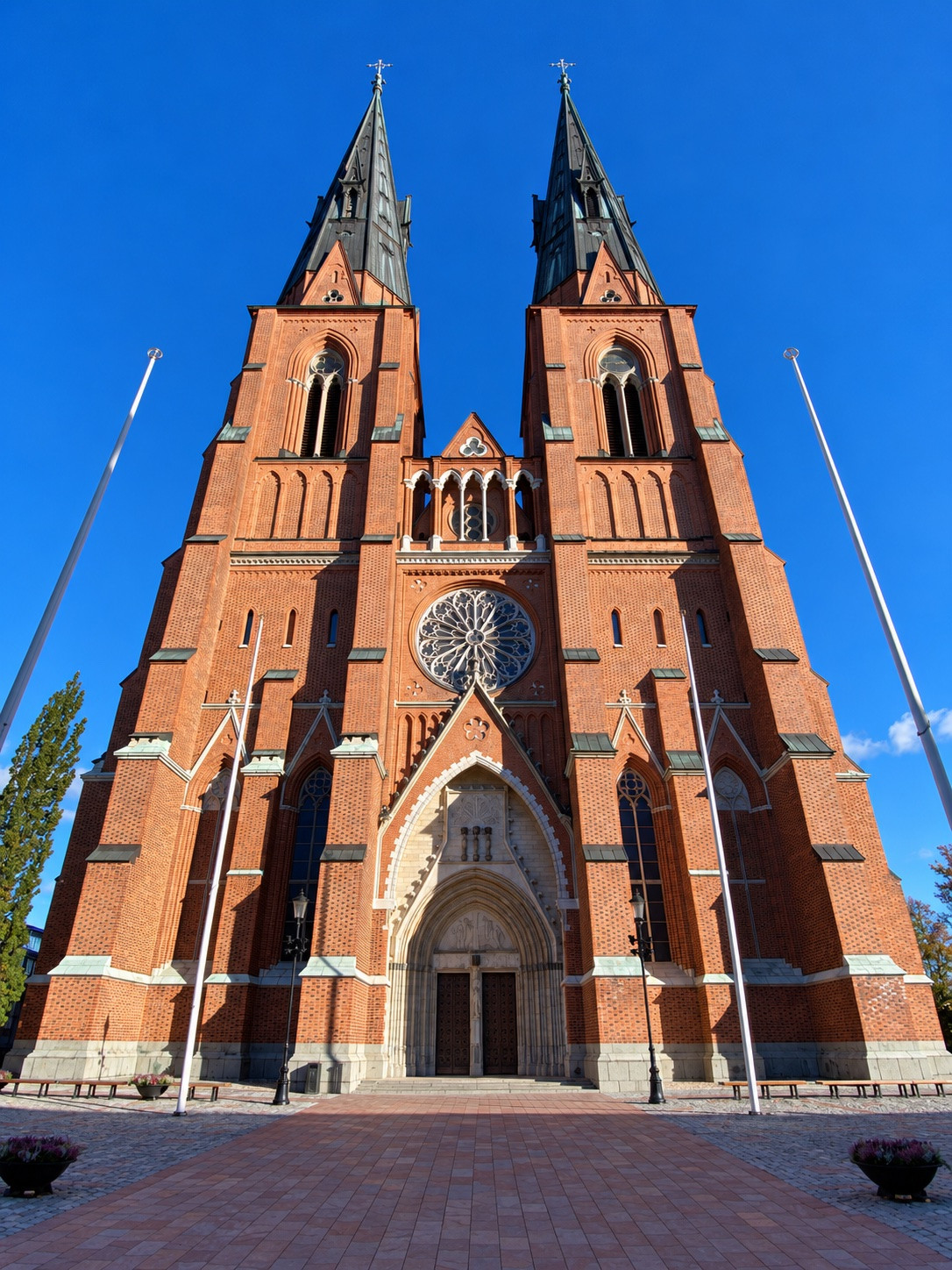
Uppsala domkyrka rises above the city in red brick and copper-green spires. Beyond its monumental west front, clustered columns, painted vaults and long lines of chandeliers lead through a cathedral shaped by medieval ambition, fire and later restoration.
Our visit
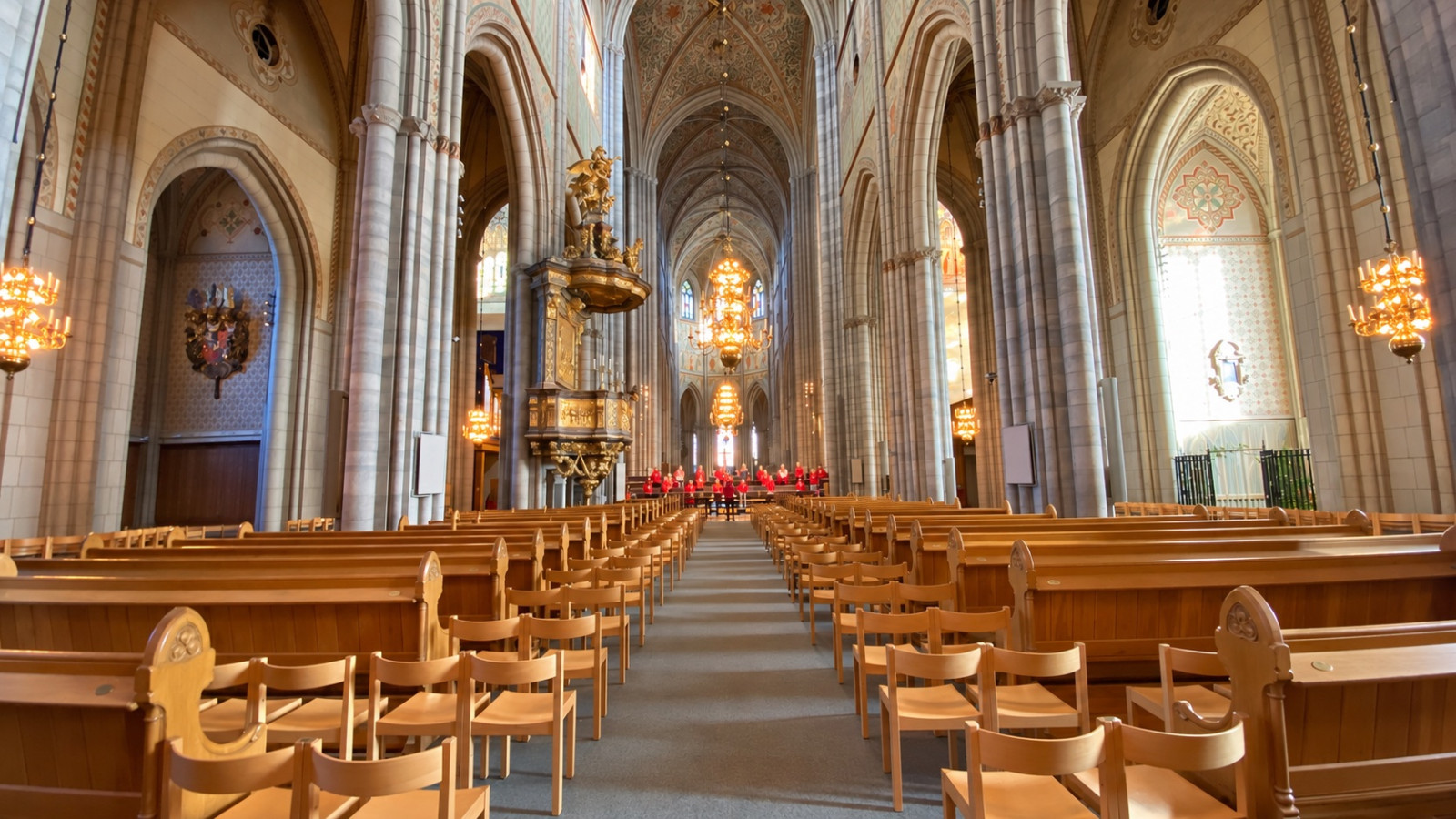
Our photographs from 17 October 2026 move from the twin-spired exterior into the aisles and nave, with closer views of the painted vaults, memorial sculpture and western organ. A distant choir adds a glimpse of the cathedral in use.
 Uppsala Domkyrka
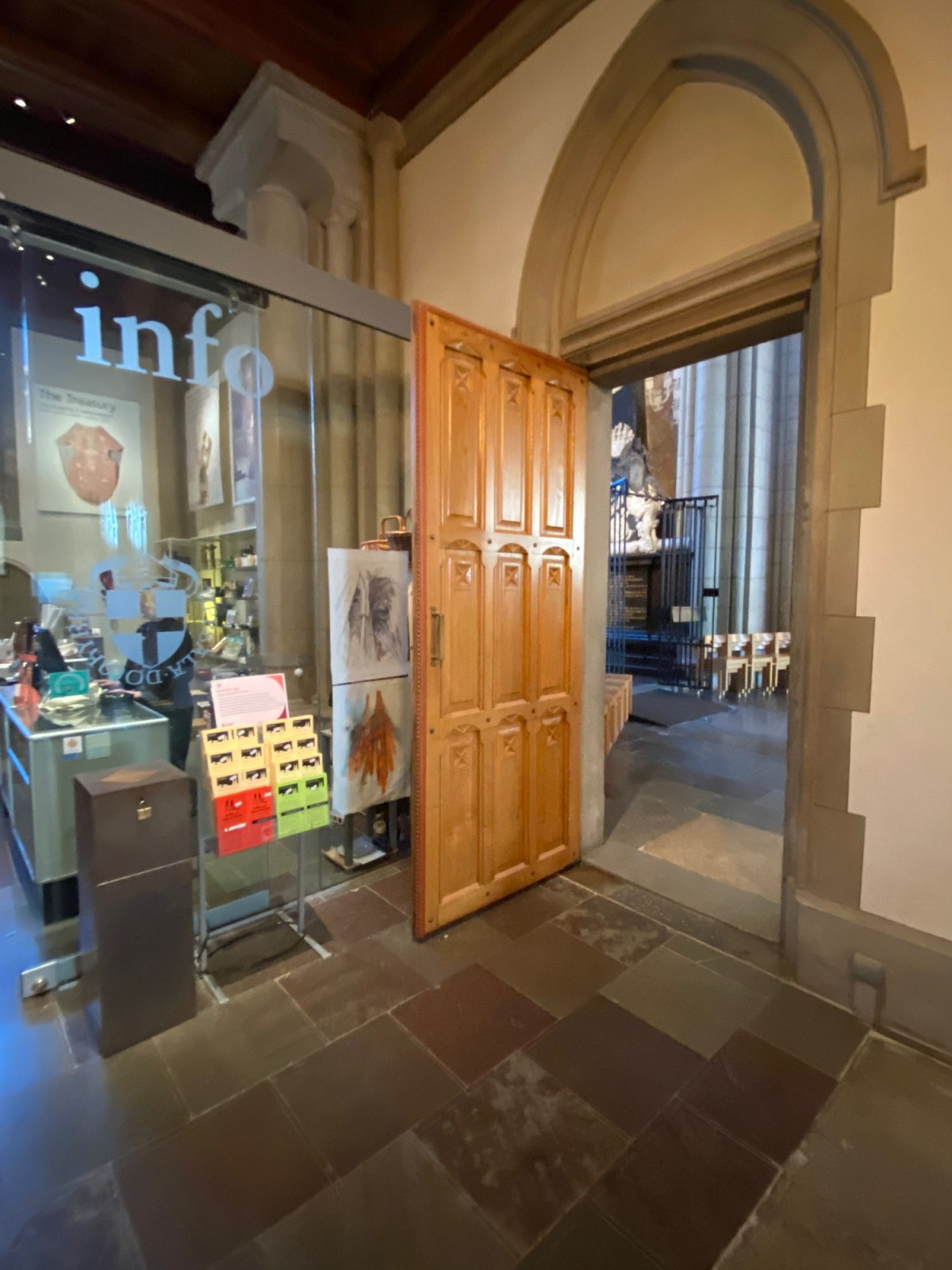
® Churches in Sweden 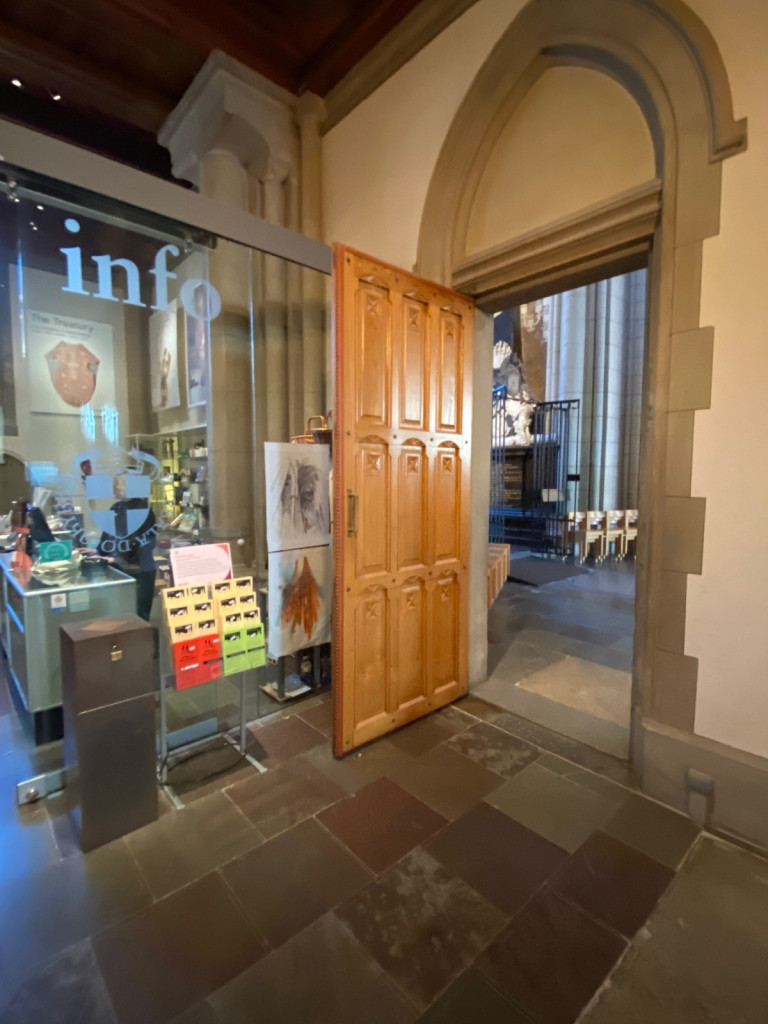 Uppsala Domkyrka interior shop
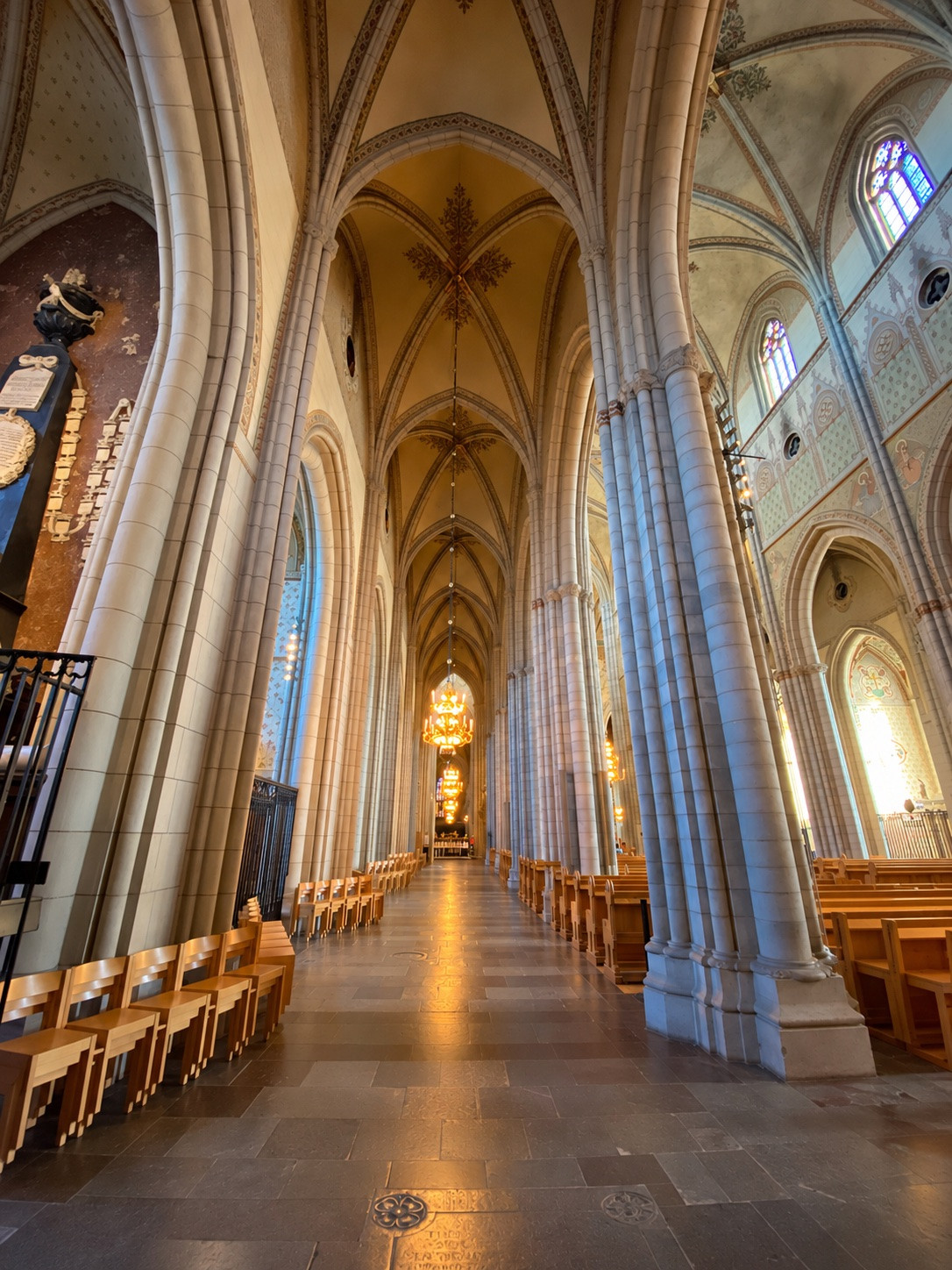
® Churches in Sweden 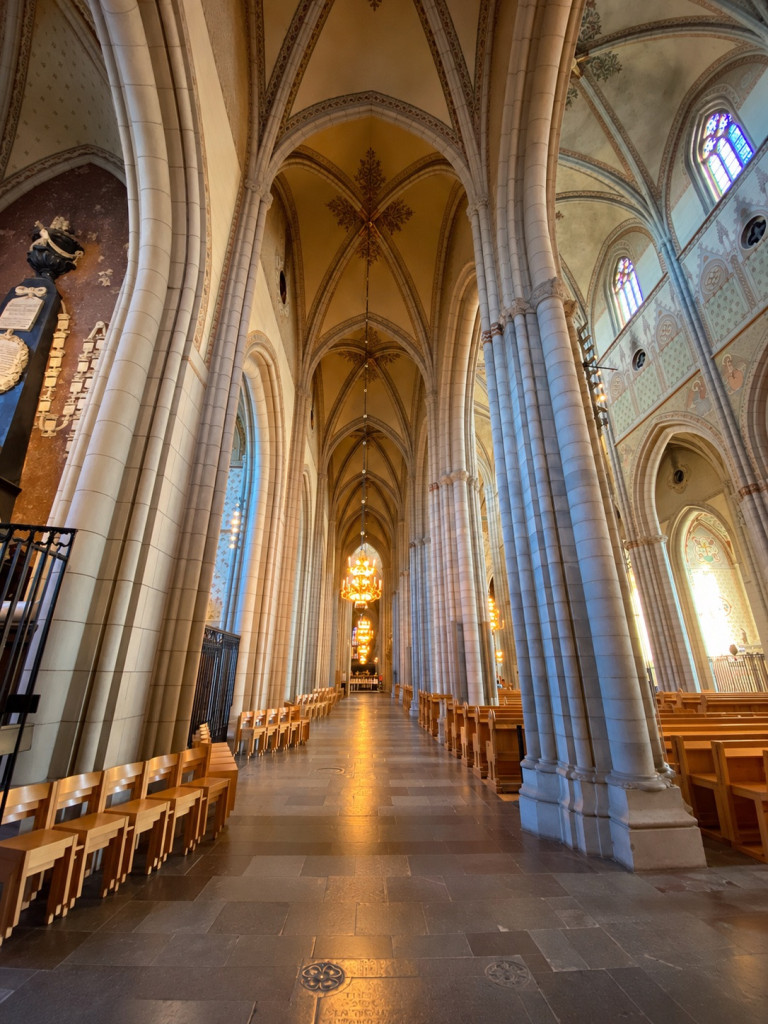 Uppsala Domkyrka side isle
® Churches in Sweden 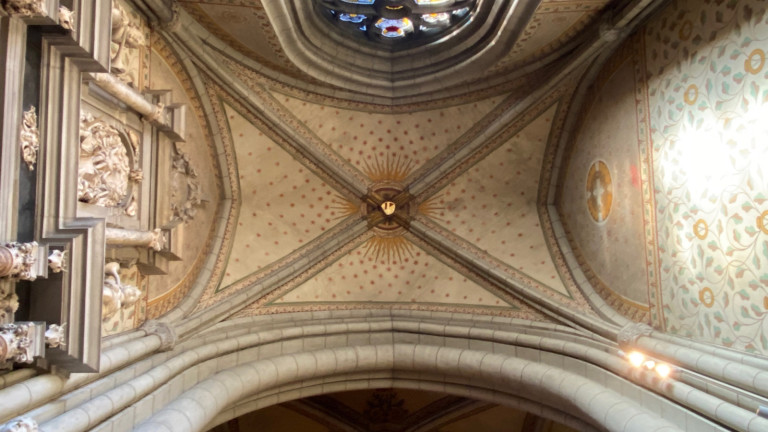 Uppsala Domkyrka
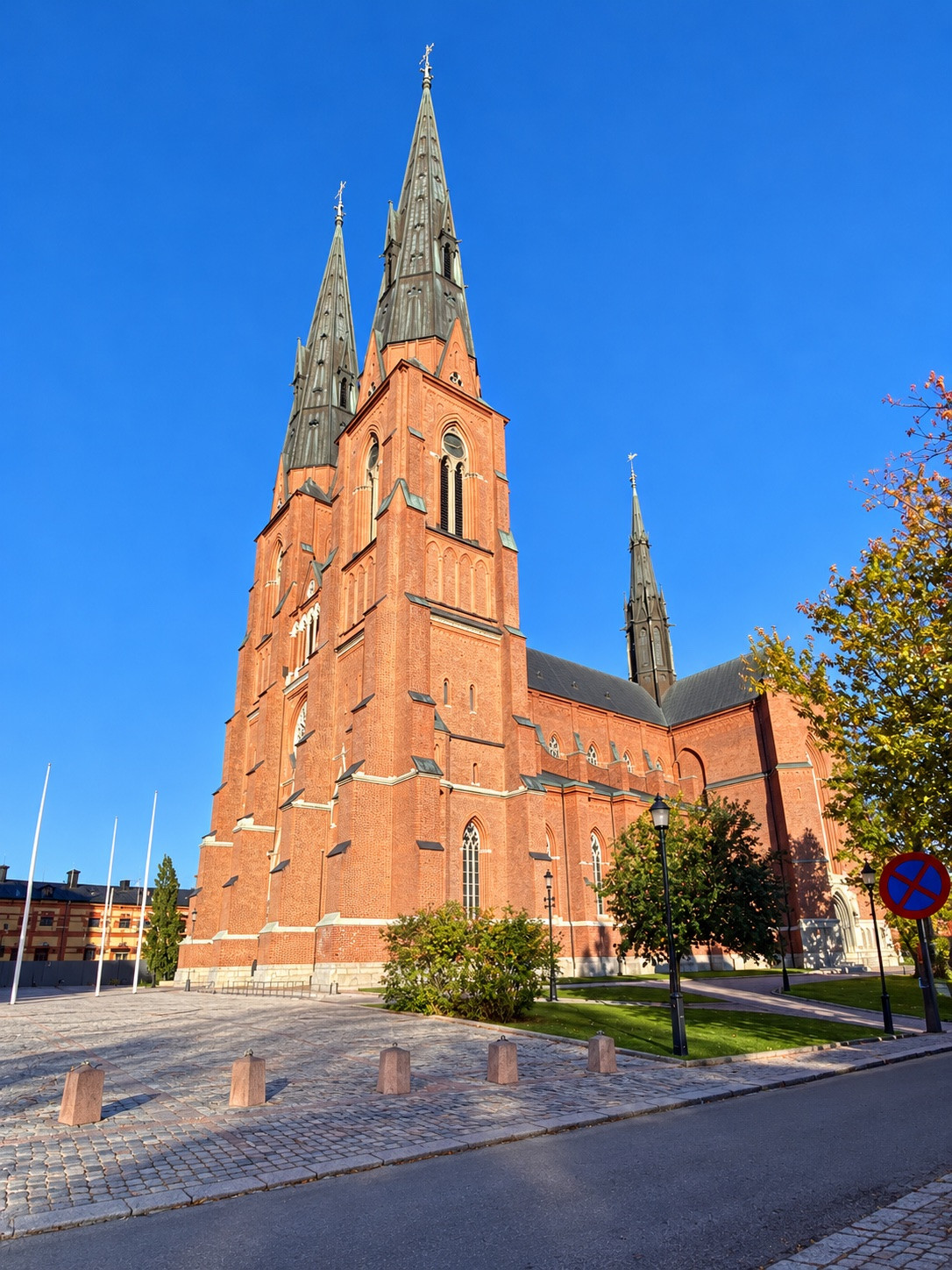
® Churches in Sweden 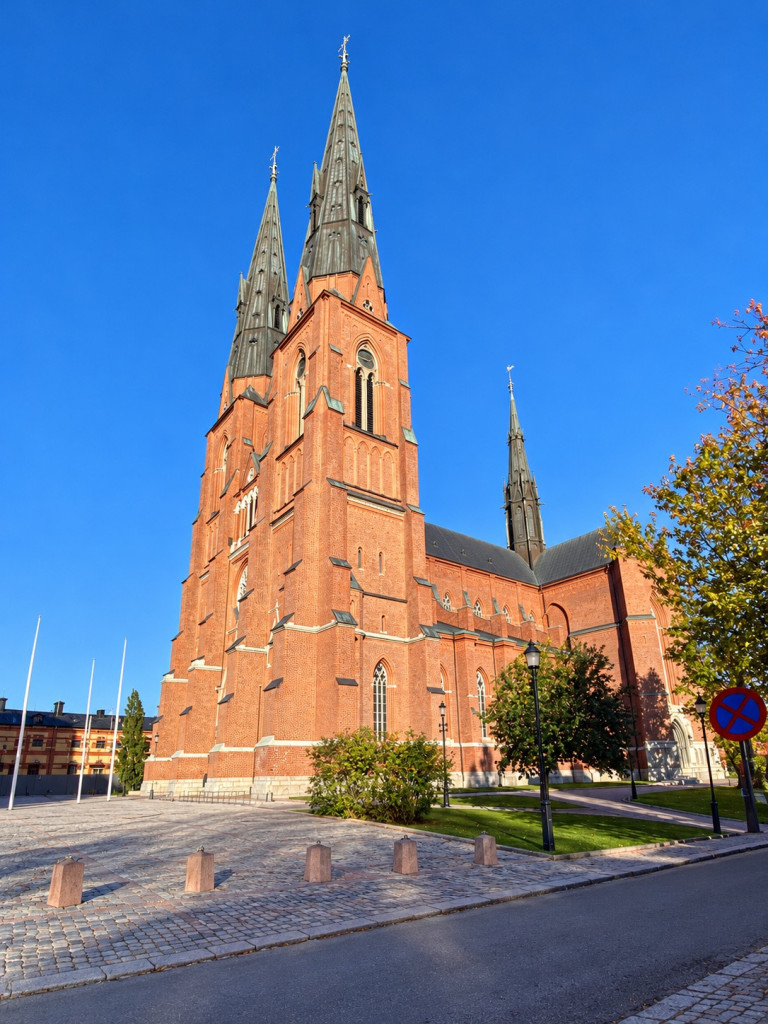 Uppsala Domkyrka south-west view
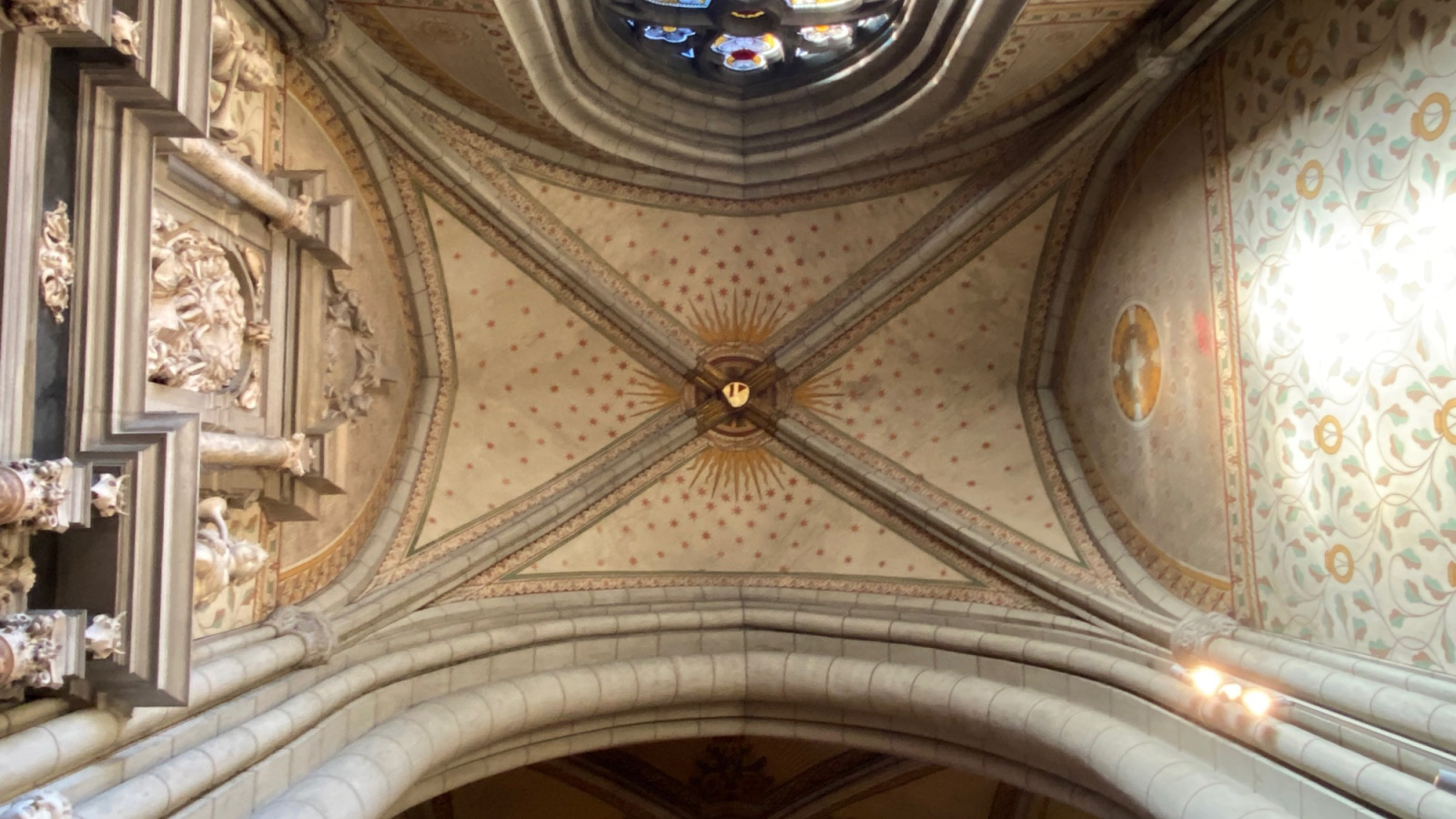
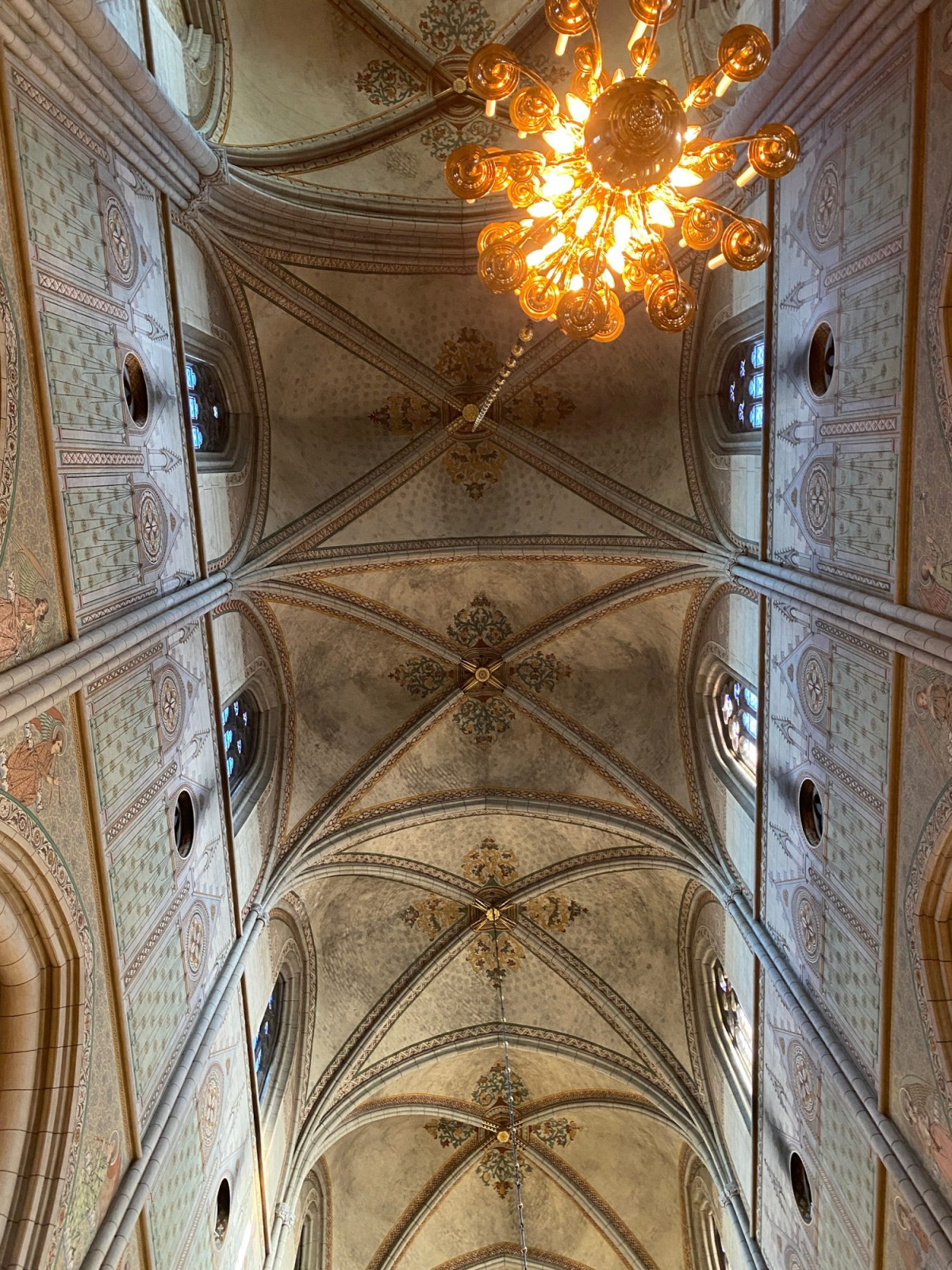
® Churches in Sweden 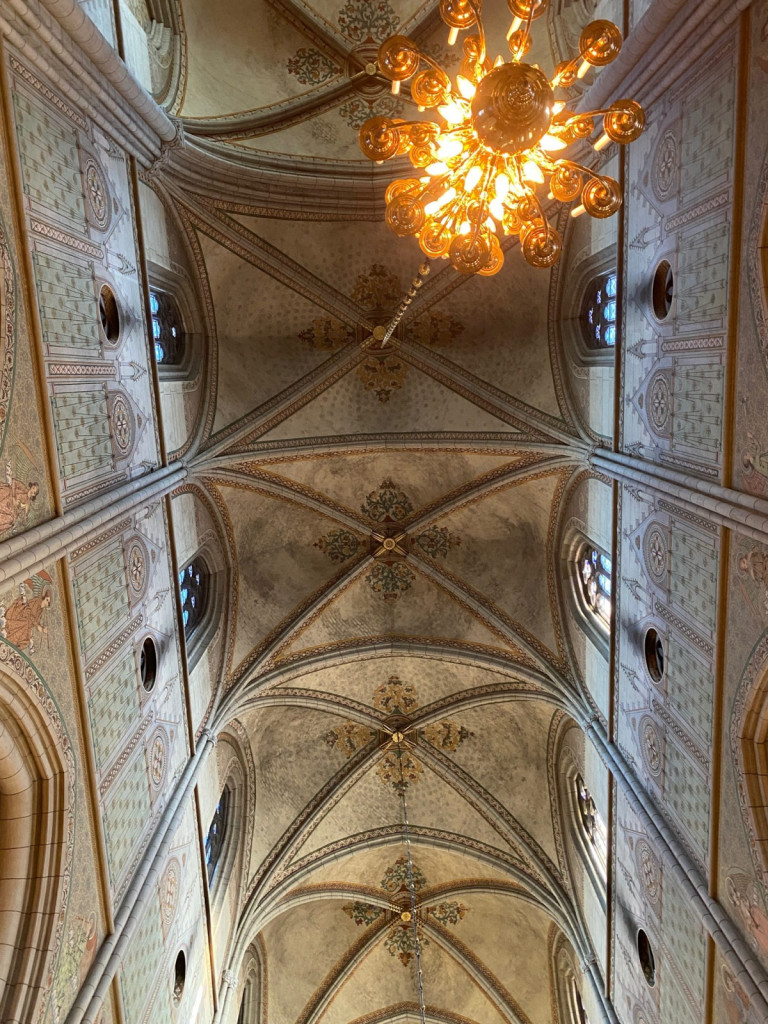 Uppsala Domkyrka ceiling
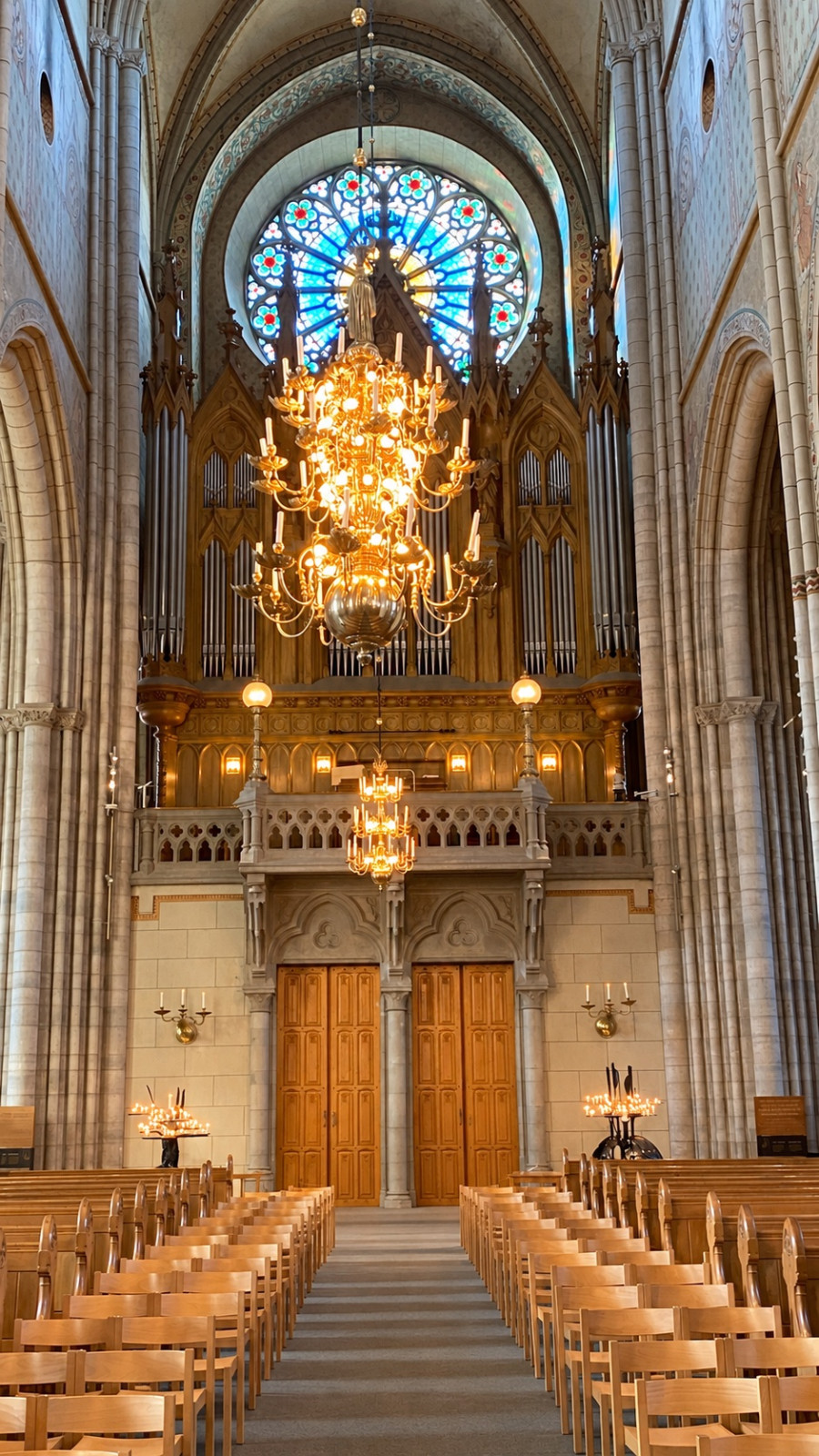
® Churches in Sweden 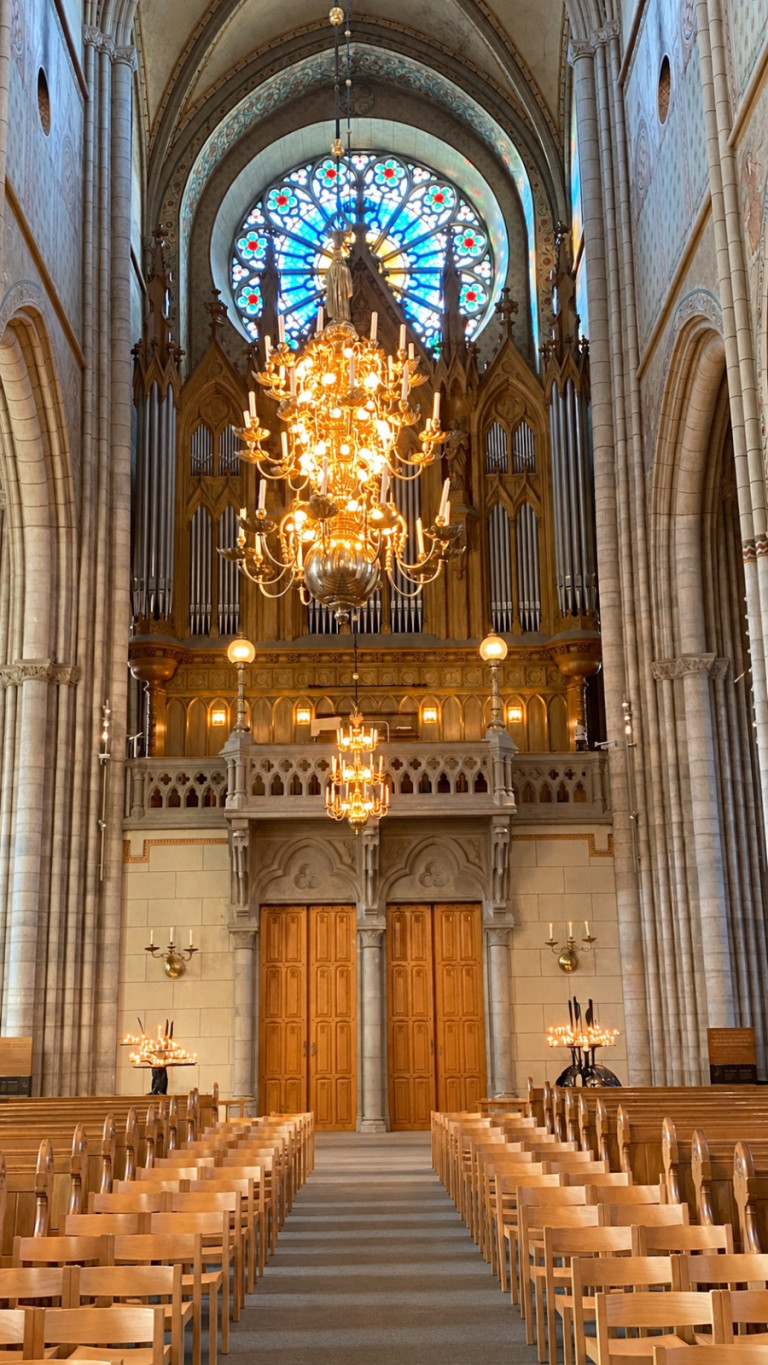 Uppsala Domkyrka organ
® Churches in Sweden 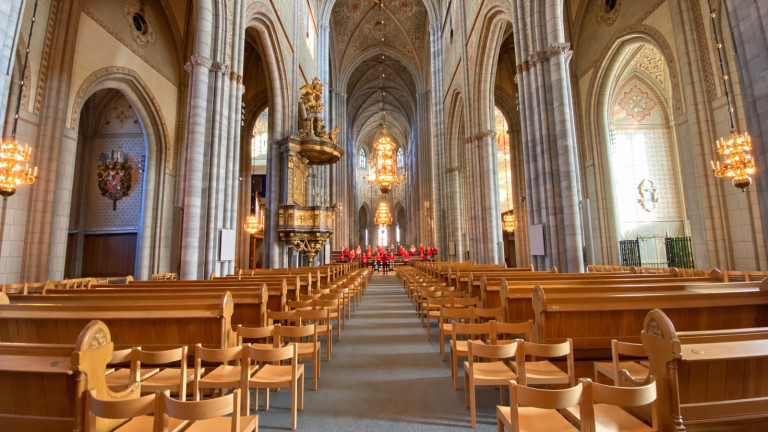 Uppsala Domkyrka choir rehearsal
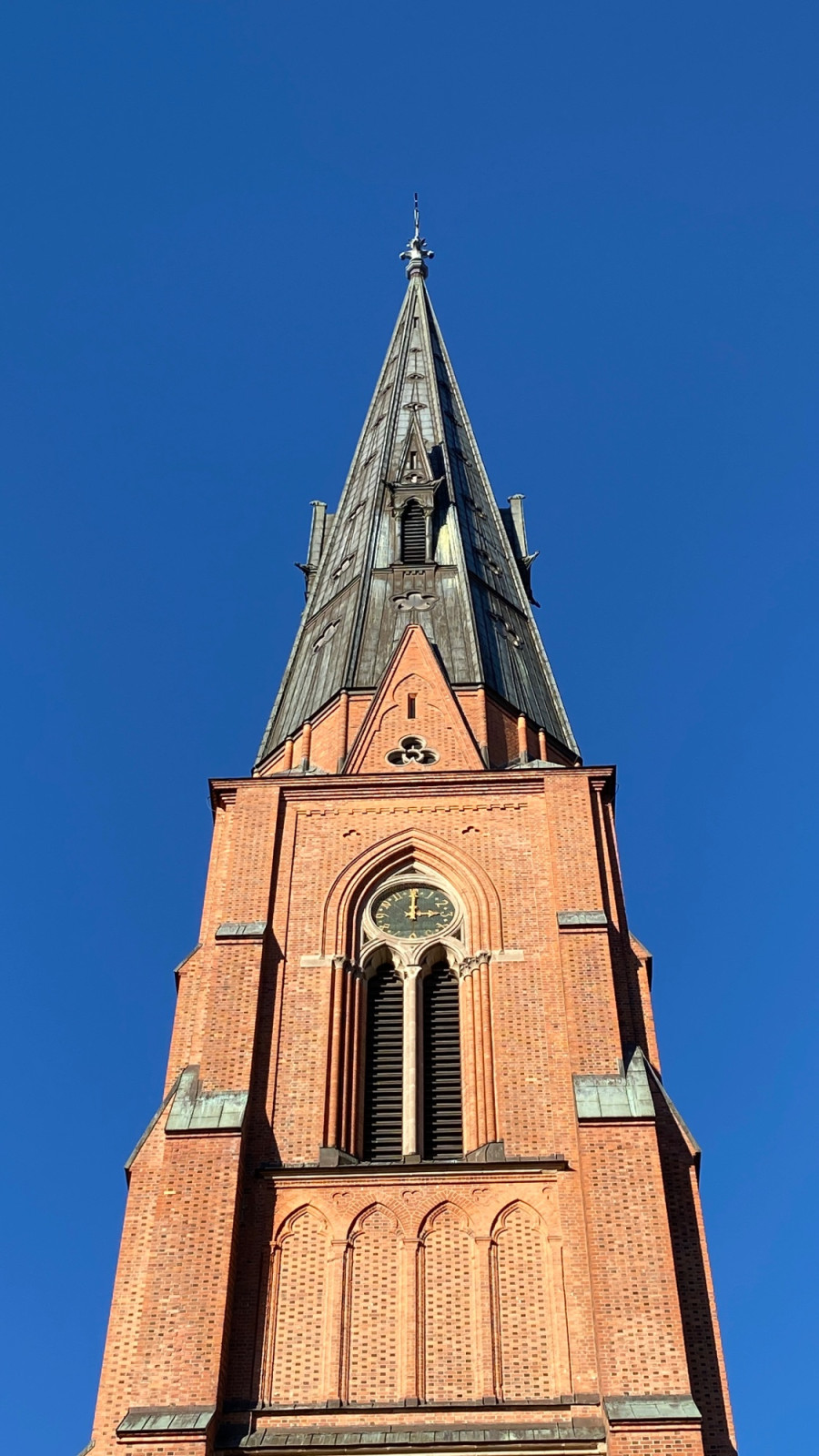
® Churches in Sweden 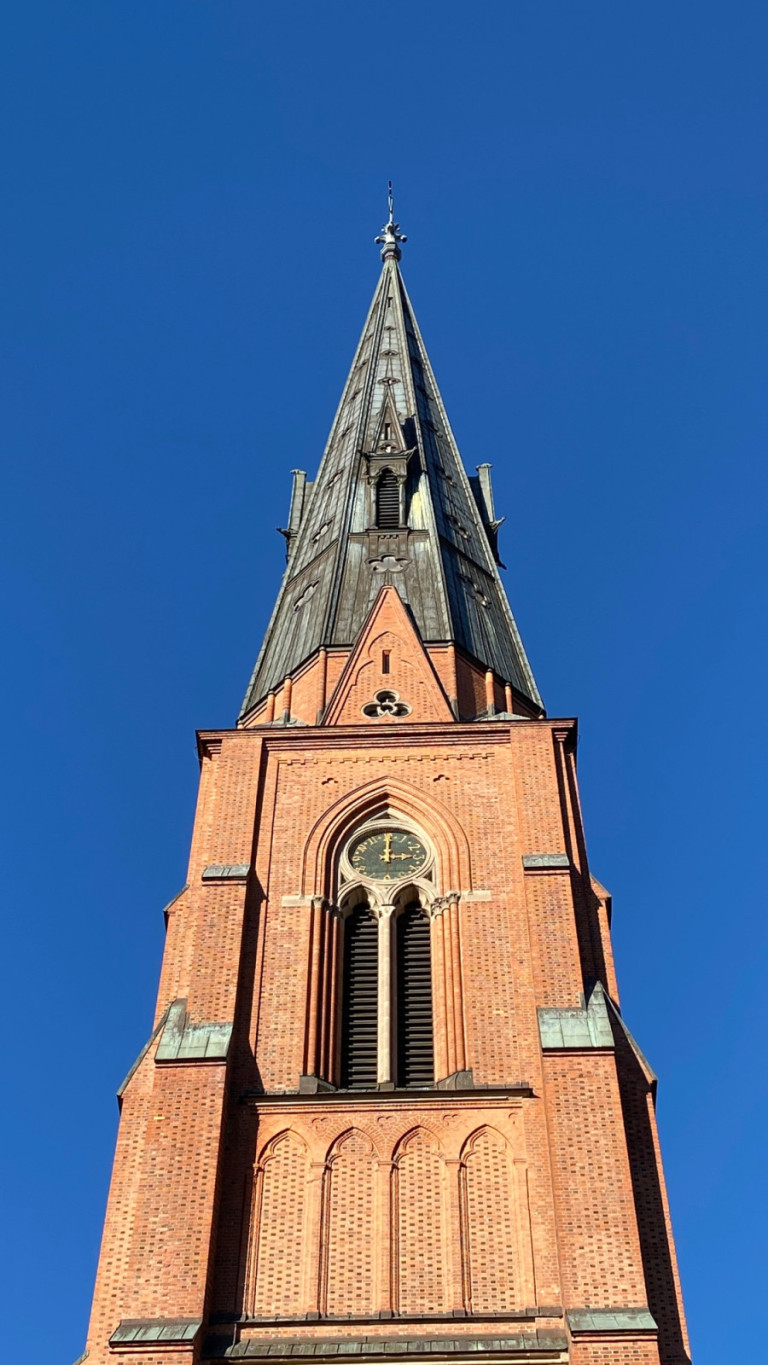 Uppsala Domkyrka tower
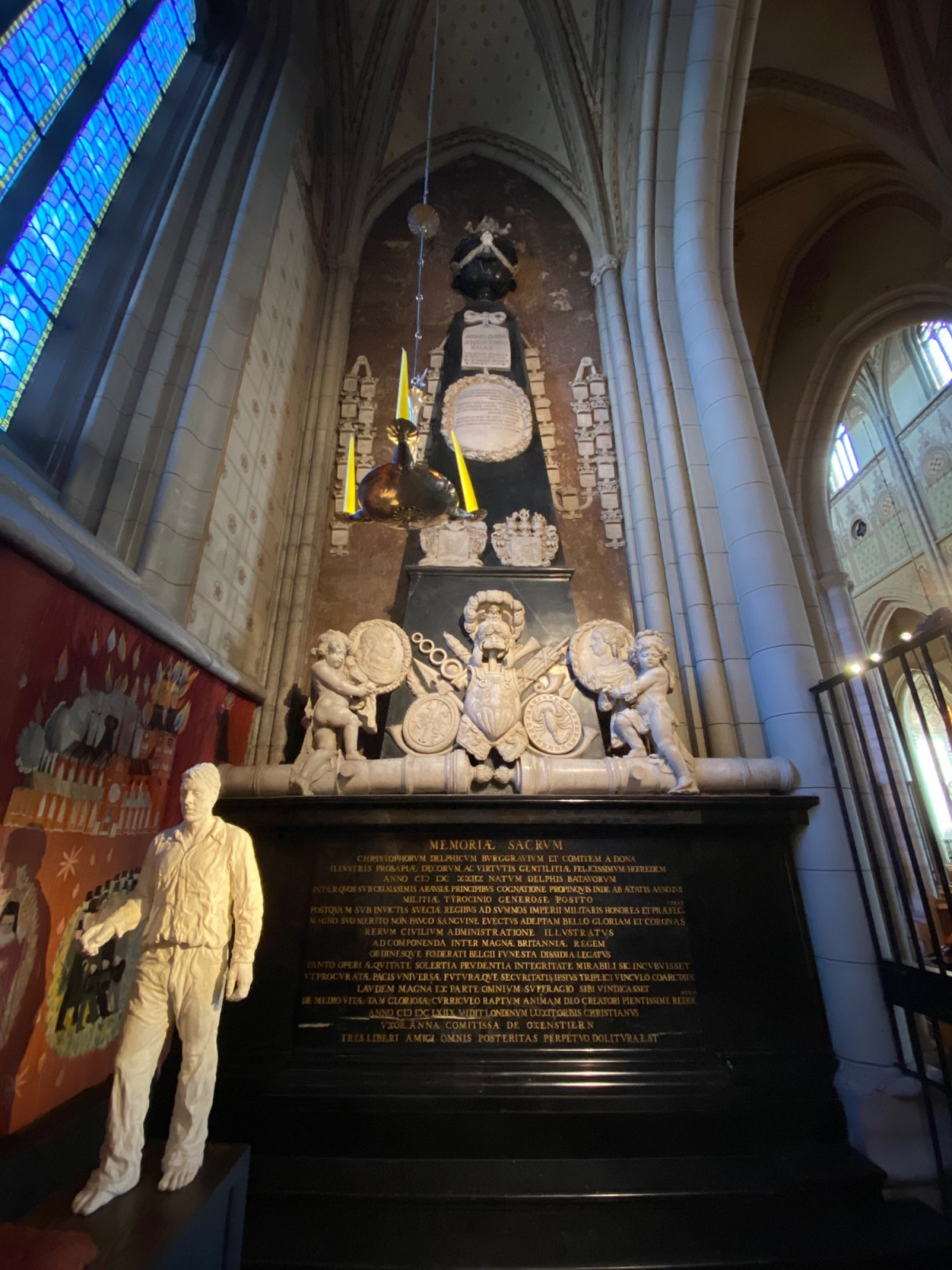
® Churches in Sweden 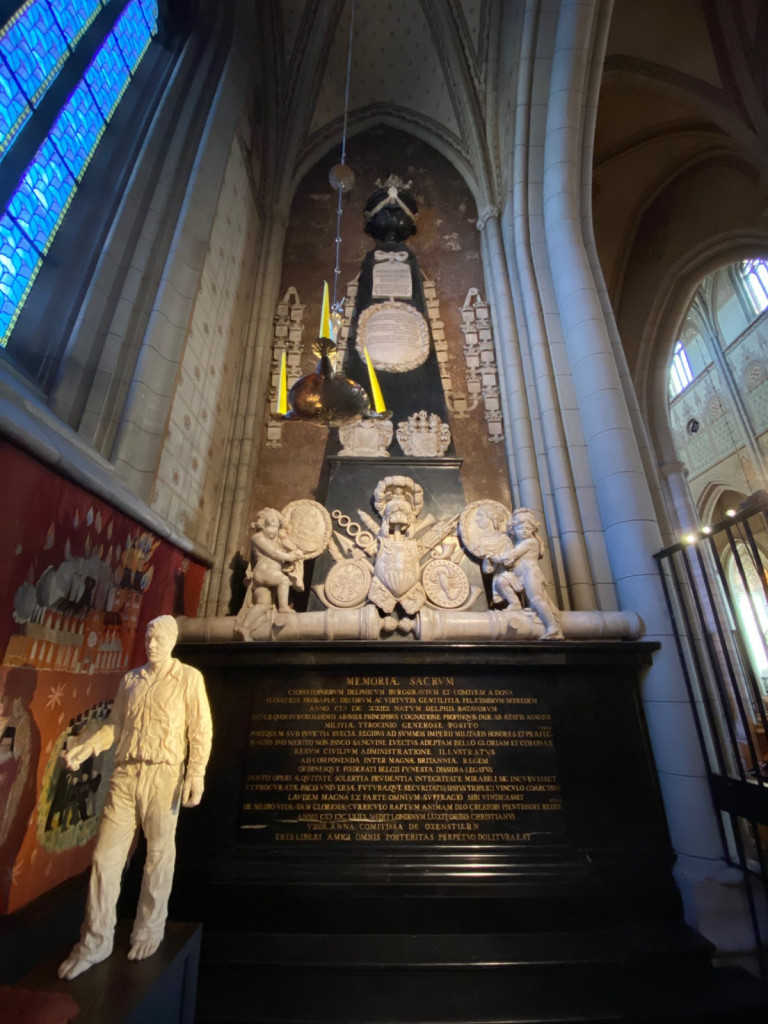 Uppsala Domkyrka sculptures
® Churches in Sweden
A cathedral across the centuries
A medieval building continually reshaped by worship, fire, restoration and music.
A new cathedral site
Building begins at Östra Aros. St Erik’s reliquary arrives from Gamla Uppsala in 1273.
An appeal for support
King Magnus Eriksson asks for further contributions towards the long-running building project.
Consecration
The cathedral is consecrated; work on the towers continues afterwards.
Reformation and remembrance
Worship changes and chapels become burial places, including the former Lady Chapel for Gustav Vasa and his queens.
The great city fire
Severe damage leads to decades of rebuilding and a lower tower silhouette.
The western organ
Per Larsson Åkerman’s organ brings a new musical presence beneath the western rose window.
The pointed skyline returns
Helgo Zettervall’s neo-Gothic restoration gives the cathedral its present tall spires.
Restoration and textiles
Building improvements accompany modern textiles for five chapels.
A second large organ
The Fratelli Ruffatti organ is inaugurated in the north transept.
Three things to notice
Follow the facade’s tracery, look up into the vaults, then turn towards the organ.
Brick, stone and the rose window
The red brick west front is broken by pale carved stone around the pointed entrance and the circular tracery above it. Stepped buttresses draw the eye upwards towards the paired copper-green spires.
Painted ribs overhead
Stars, foliage patterns and ornamental bands spread across the vaults. Our upward views show how painted surfaces and slender ribs work together above the tall clustered columns.
The western organ and chandeliers
The wooden organ case and ranks of silver-coloured pipes sit beneath a luminous rose window. Brass chandeliers hang along the central axis, framing the view back towards the entrance doors.
The full church story
The cathedral’s story began before the present building. Sweden’s first archiepiscopal cathedral stood at Gamla Uppsala; the church there survives. Around 1270, construction began on a new cathedral at Östra Aros, farther south along the Fyrisån. St Erik’s reliquary was transferred in 1273, and the name Uppsala moved with the ecclesiastical centre.
The eastern chapels and high choir came first. French expertise, including the master builder Estienne de Bonnueill, helped shape this part of the project. Locally made brick supplied much of the building, while limestone from Gotland was used for the columns towards the east. The nave followed later, extending the church westwards.
Construction was prolonged by shortages of money, difficult winters and plague. In 1331, King Magnus Eriksson appealed for further contributions. The cathedral was finally consecrated in 1435, although its great towers were completed only later. The building that visitors see today contains the results of several centuries rather than one finished medieval design.
The Reformation changed both worship and the use of the chapels. Former devotional spaces became burial chapels for royal and aristocratic families. Gustav Vasa and his queens were buried in the former Lady Chapel. The cathedral also became the resting place of scholars including Carl Linnaeus, and remained a setting for royal coronations until 1719.
The city fire of 1702 caused particularly severe damage. Rebuilding continued into the middle of the eighteenth century, leaving whitewashed walls, plain glazing and much lower tower caps. The familiar pointed skyline belongs to a later transformation: Helgo Zettervall’s neo-Gothic restoration of 1885–93 introduced the present tall spires and much of the painted and glazed appearance associated with the cathedral today.
The towers now reach 118.7 metres. Their changing roofs tell a different story from the medieval brickwork below: successive fires and restorations repeatedly altered their silhouette. Another major restoration in 1971–76 improved the building and introduced modern wall textiles in five chapels.
Music is part of this continuing history. The western organ, visible in our photographs beneath the rose window, was built by Per Larsson Åkerman in 1871. A second large organ by Fratelli Ruffatti was inaugurated in the north transept in 2009. The cathedral continues to serve daily worship, concerts, ordinations and quieter visits.
Plan a visit
Domkyrkoplan, 753 10, Uppsala
Opening hours
Provider-listed schedule, applicable on 27 Nov 2026. All times are local to Sweden.
| Monday | 08:00–18:00 |
|---|---|
| Tuesday | 08:00–18:00 |
| Wednesday | 08:00–18:00 |
| Thursday | 08:00–18:00 |
| Friday | 08:00–18:00 |
| Saturday | 08:00–18:00 |
| Sunday | 08:00–18:00 |
Additional opening information is awaiting translation. Check the official visitor-information link before travelling.
Check access with the parish before travelling. Services and seasonal changes can affect visits.
What’s on at Uppsala domkyrka
The latest calendar refresh is delayed. These previously fetched events may have changed; check with the parish before travelling.
Upcoming events and events underway. Times are local to Sweden. Original event titles are in Swedish.
08:00–18:00
Utställning: Vaggvisa för de osynliga
Event details for Utställning: Vaggvisa för de osynliga12:45–13:00
Middagsbön
Service / Mass
Event details for Middagsbön15:00–16:00
Lilla juloratoriet
Music / choir
Event details for Lilla juloratoriet08:00–18:00
Utställning: Vaggvisa för de osynliga
Event details for Utställning: Vaggvisa för de osynliga08:30–09:15
Adventsgudstjänst
Service / Mass
Event details for Adventsgudstjänst11:00–12:30
Högmässa
Service / Mass
Event details for Högmässa12:30–13:30
Visning av domkyrkan
Event details for Visning av domkyrkan18:00–19:00
JS Bach: Juloratoriet del I–III
Music / choir
Event details for JS Bach: Juloratoriet del I–III
Show more events
08:00–18:00
Utställning: Vaggvisa för de osynliga
Event details for Utställning: Vaggvisa för de osynliga09:30–11:00
Visning av julkrubban
Event details for Visning av julkrubban11:45–12:00
Bön för freden
Service / Mass
Event details for Bön för freden12:00–12:30
Mässa
Service / Mass
Event details for Mässa12:45–13:00
Middagsbön
Service / Mass
Event details for Middagsbön15:30–17:30
Själavård i Mennanders kor
Event details for Själavård i Mennanders kor17:30–18:15
Vesper
Service / Mass
Event details for Vesper18:30–19:15
Taizé Prayer in English
Service / Mass
Event details for Taizé Prayer in English08:00–18:00
Utställning: Vaggvisa för de osynliga
Event details for Utställning: Vaggvisa för de osynliga11:45–12:00
Bön för freden
Service / Mass
Event details for Bön för freden12:00–12:30
Mässa
Service / Mass
Event details for Mässa12:45–13:00
Middagsbön
Service / Mass
Event details for Middagsbön08:15–09:00
Mässa
Service / Mass
Event details for Mässa09:30–11:00
Visning av julkrubban
Event details for Visning av julkrubban11:45–12:00
Bön för freden
Service / Mass
Event details for Bön för freden12:45–13:00
Middagsbön
Service / Mass
Event details for Middagsbön15:30–17:30
Själavård i Mennanders kor
Event details for Själavård i Mennanders kor17:00–17:30
Ekumenisk förbön
Service / Mass
Event details for Ekumenisk förbön07:30–08:15
Mässa
Service / Mass
Event details for Mässa08:00–18:00
Utställning: Vaggvisa för de osynliga
Event details for Utställning: Vaggvisa för de osynliga11:45–12:00
Bön för freden
Service / Mass
Event details for Bön för freden12:45–13:00
Middagsbön
Service / Mass
Event details for Middagsbön17:30–18:00
Bön med Frälsarkransen
Service / Mass
Event details for Bön med Frälsarkransen
Source: Svenska kyrkan CalendarAPI. Fetched 27 November 2026, 04:15 (Swedish time). Events may change. A service or other event is not confirmation of general opening hours.
Contact & official information
Uppsala domkyrkoförsamling
- Telephone +46 18 4303500
- Email uppsala.domkyrka@svenskakyrkan.se
Check the official pages below for opening hours and visiting information. We may not have the latest details, and access can change for holidays, services or private ceremonies. If the information is unclear, contact the parish before travelling.
Facilities & accessibility
- Parking
- Toilet
- Café
- Hearing loop
Listed by the provider; availability has not been independently checked. An unlisted facility is not necessarily unavailable.
Find your way
Use the interactive map to explore the church and the surrounding landscape.
The interactive map could not load. Use the location link below.