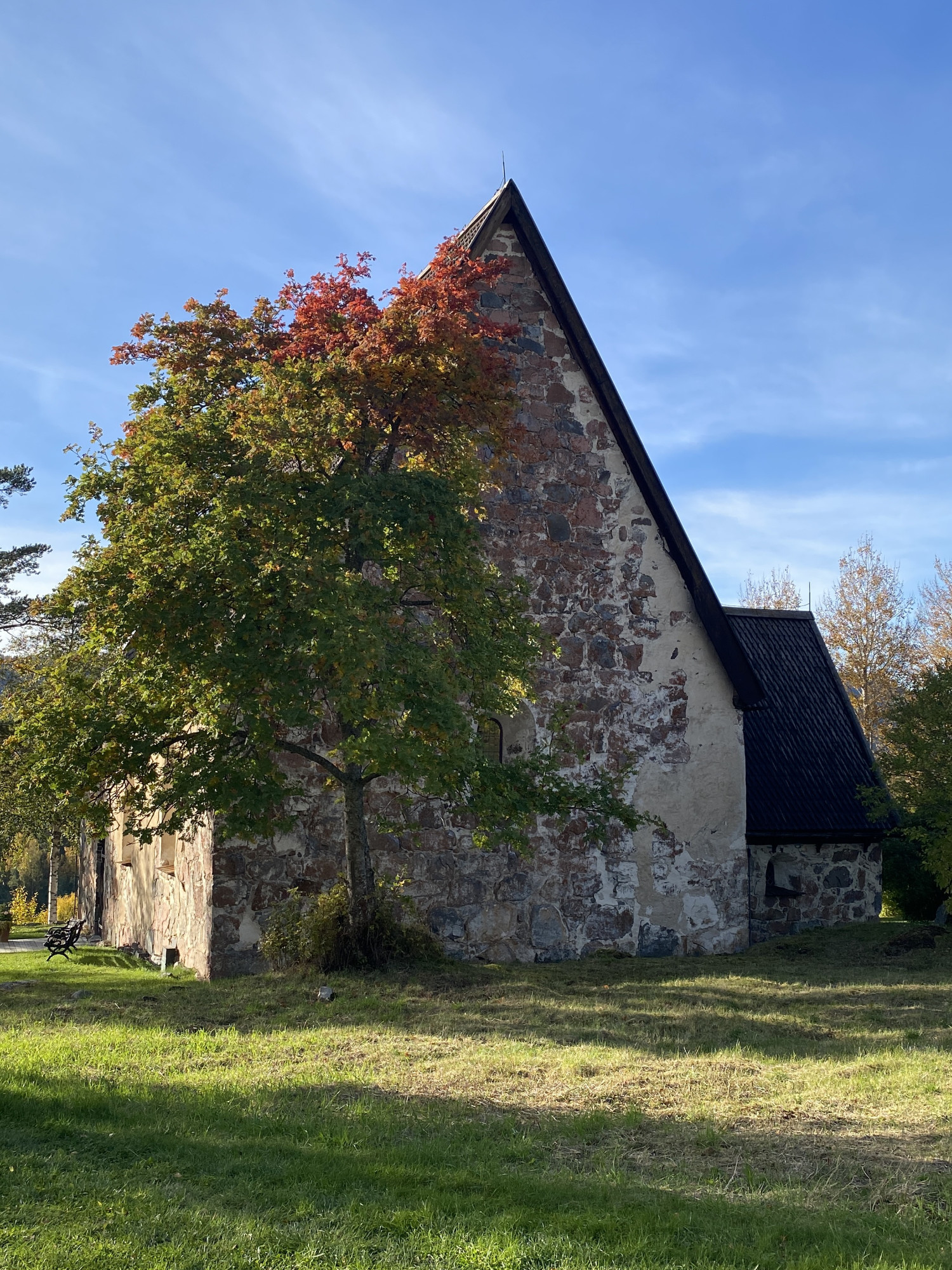
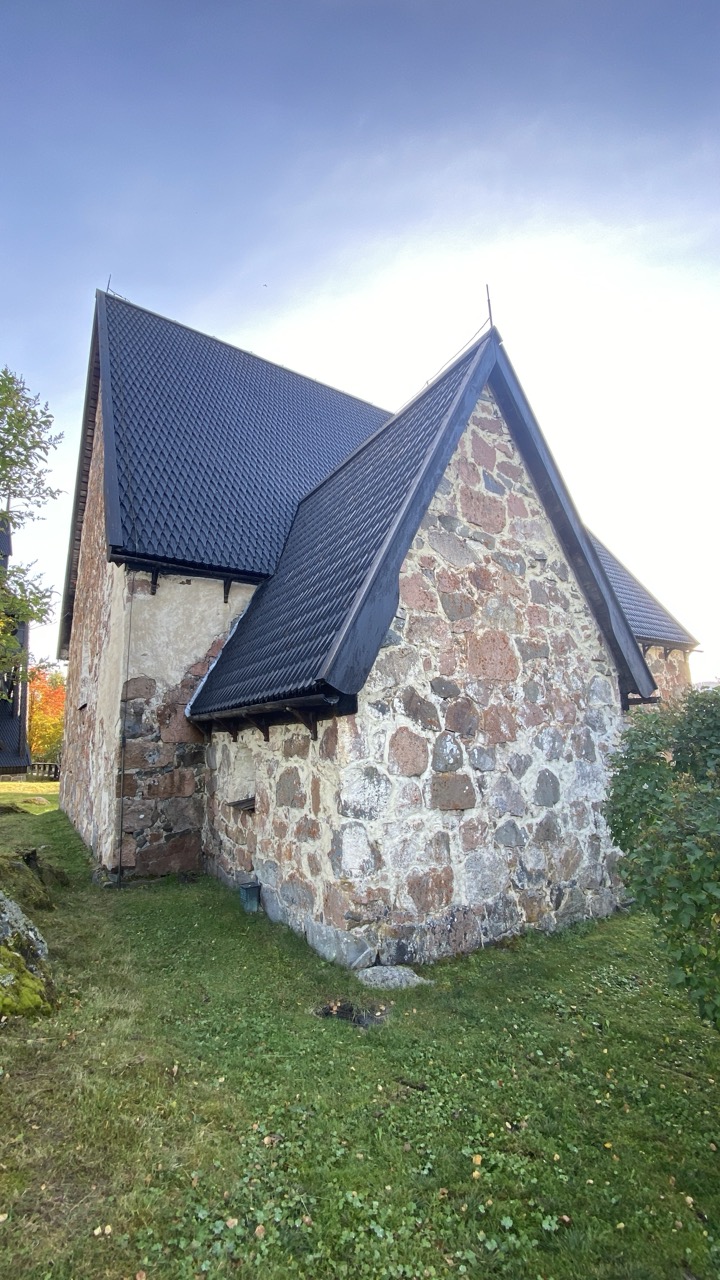
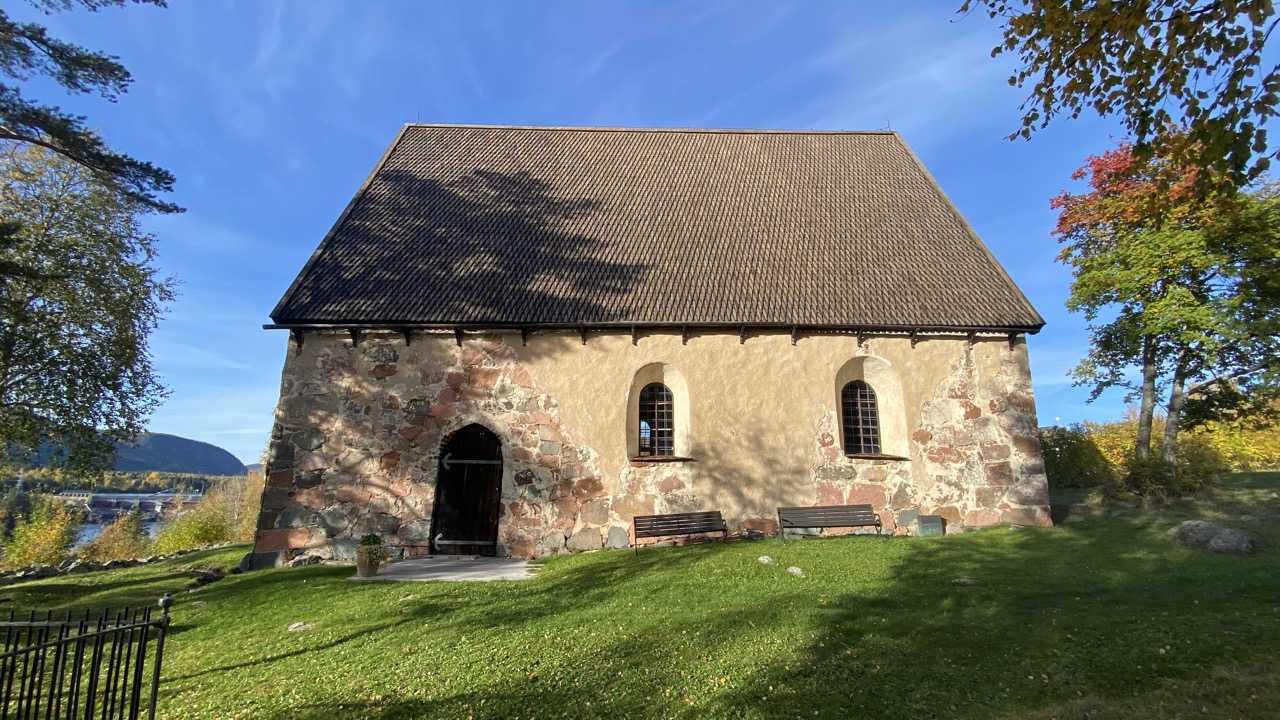
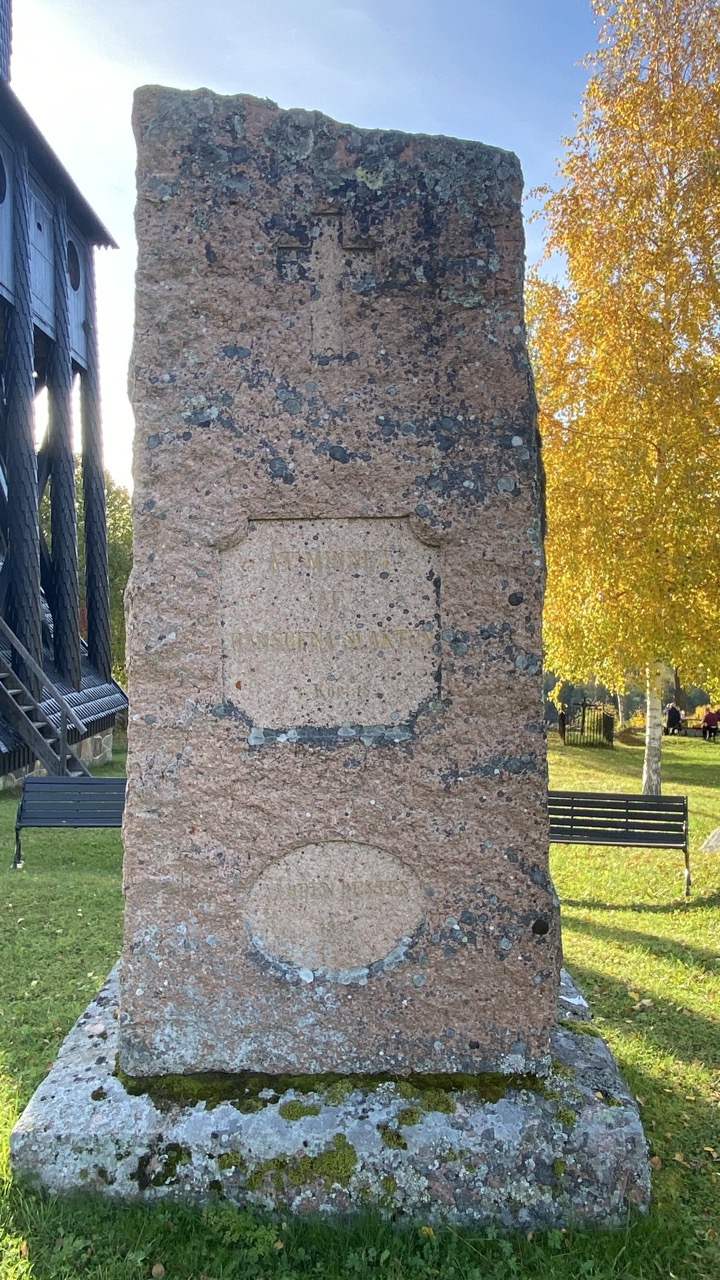
Archbishop Johannes of Uppsala mentions Ragunda church in a letter written in January 1290. We know that the church referred to in the letter is not our present medieval church. An informed guess is that the church was built by the Danish-born monk Josephus, who was vicar in Indal and is said to have been behind several of the churches along the Indalsälven river. However, it is possible that the church was built earlier and that Josephus carried out restoration work on an existing church building. Weighing all the facts in the matter, it can be said that it is clear the church was built between 1480 and 1510. It is conceivable that Archbishop Jakob Ulvsson, during his visit to Ragunda in 1487, not only consecrated a triumphal crucifix (which we today believe is the one found in Håsjö gamla kyrka) but actually consecrated the entire building.
Over the years the church has undergone several changes, with the addition of more and larger window openings, the addition of a sacristy, and more. Most of the church's interior dates from the 17th century and later. The stately door of the main entrance was carved in 1696 by the dragoon Gregorius Raaf from Sundsjö, who also carved the door to the sacristy in the so-called flat-carving technique. On the entrance door one can read: "AD/VITAM/DUCIT PORTA/ANGUSTA" and "INTROITUM NOSTRUM ET EXITUM CUSTODIAT IEHOVA", meaning "Narrow is the gate that leads to life" and "May the Lord guard our going out and our coming in".
The chancel screen is now something unique. In Sweden only one other chancel screen has been preserved (Husaby church). During the Middle Ages this partition marked the distinction between the priests' place and the rest of the congregation. The altarpiece was made by the Jämtland farmer Anders Olsson of Hållborgen in 1689 and depicts biblical scenes. In 2001 the church was broken into and a number of objects were stolen. The altarpiece lost five of its sculptures, of which three have since been recovered, together with a sword said to have belonged to Lieutenant Moback of Kullsta and a portrait of vicar Wargentin's wife Anna Catharina Frostera, which was also taken at the same time. Together with newly made replacement sculptures, the altarpiece is now complete and has also since been secured against theft. The aforementioned Moback funded the altar rail, which was also carved by Gregorius Raaf in 1696. The church also contains a small sculpture of St Anne, mother of Mary, holding the Madonna and the Christ child, dated to the 1520s.
The pulpit is beautifully painted and has a stately body bearing the year 1632. It was made by the Norwegian Per Iversen. The wooden font dates from around 1700. The pew furnishings date from the same period. The gallery's balustrade is adorned with portraits of Christ and the apostles and was most likely painted by Carl Hoverberg, a clergyman's son from Ragunda.
The organ is the oldest known one in Jämtland and was donated to the church by Wilhelm Wargentin in 1754. It has six stops and was made by Petter Quarnström of Sundsvall.
The church has undergone a fate shared with several other medieval churches. In the mid-19th century it was decided to build a new and larger church, and once this had been inaugurated in 1853, the old church was left to decay. However, under the leadership of several dedicated individuals, a rescue project was launched in the early 20th century, resulting in an extensive renovation during the years 1925-1929. Great efforts were made at that time by the builder Elov Fridh from Pålgård, who achieved remarkable results from what was often a fragmentary remnant. Parts of the old wall paintings were also uncovered at that time. In 1931 the church was reconsecrated, and it is now used as the parish's church during the summer.
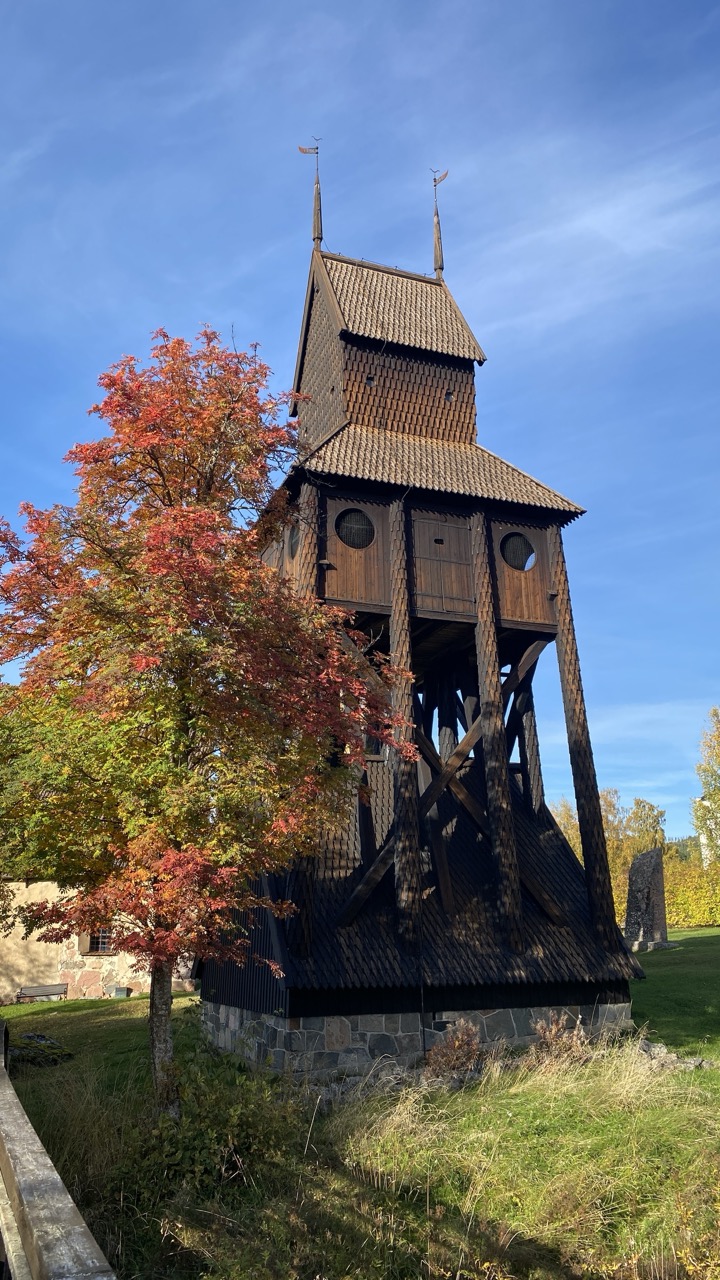
The church has also had a bell tower; we know that Gregorius Raaf built a new tower in 1705 to replace an earlier one that was no longer usable. This bell tower was demolished in 1872, meaning there was no bell tower at the time of the old church's reconsecration.
In 1946 a new tower was designed by Ragnar Hjort of Stockholm, as a copy of Raaf's tower from 1705. It is a construction with 15-metre-long king posts measuring up to 90 cm in diameter. It was built by Edvin Olsson of Gevåg, Karl Petrusson of Lien, Oscar Gulliksson of Lien and Olle Engström of Pålgård.
The bells had been moved to the new church, and so a new bell was cast for the new tower at M&E Ohlsson's bell foundry in Ystad, which rang for the first time at the high mass on 27 July 1947.