Kungs Barkarö kyrka
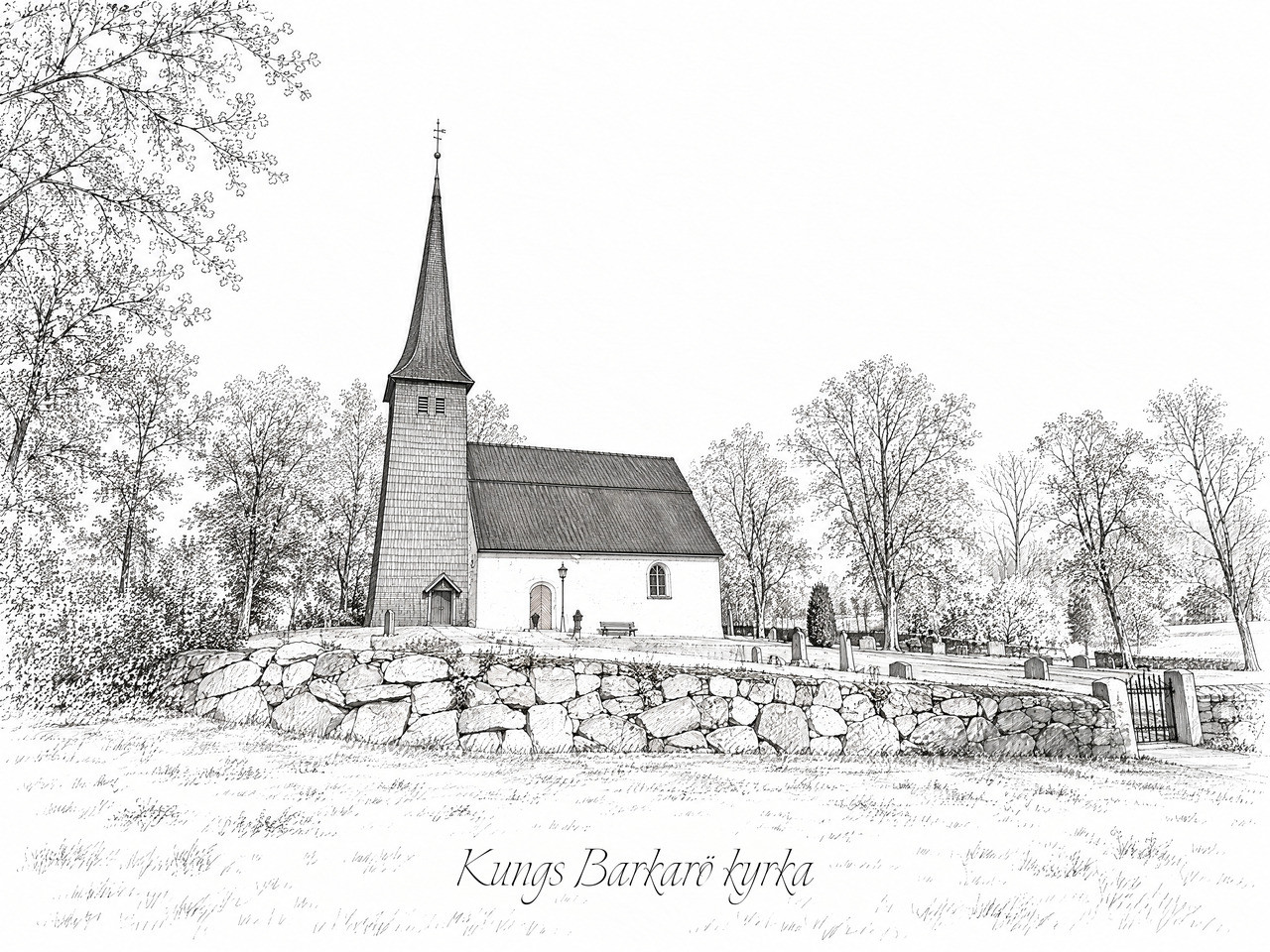
Kungs Barkarö kyrka is a small medieval church set among old trees and stone churchyard walls in the countryside near Kungsör. Its pale plastered nave and tall, dark wooden spire make a distinctive pair: a compact church with a surprisingly slender silhouette.
Our visit
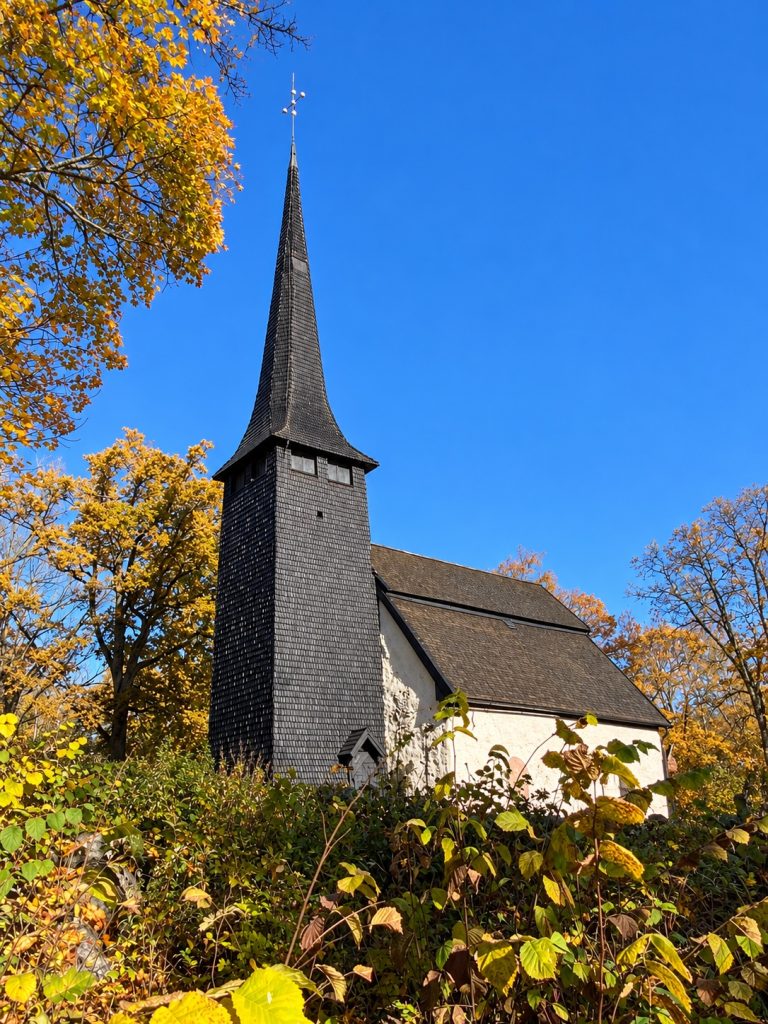
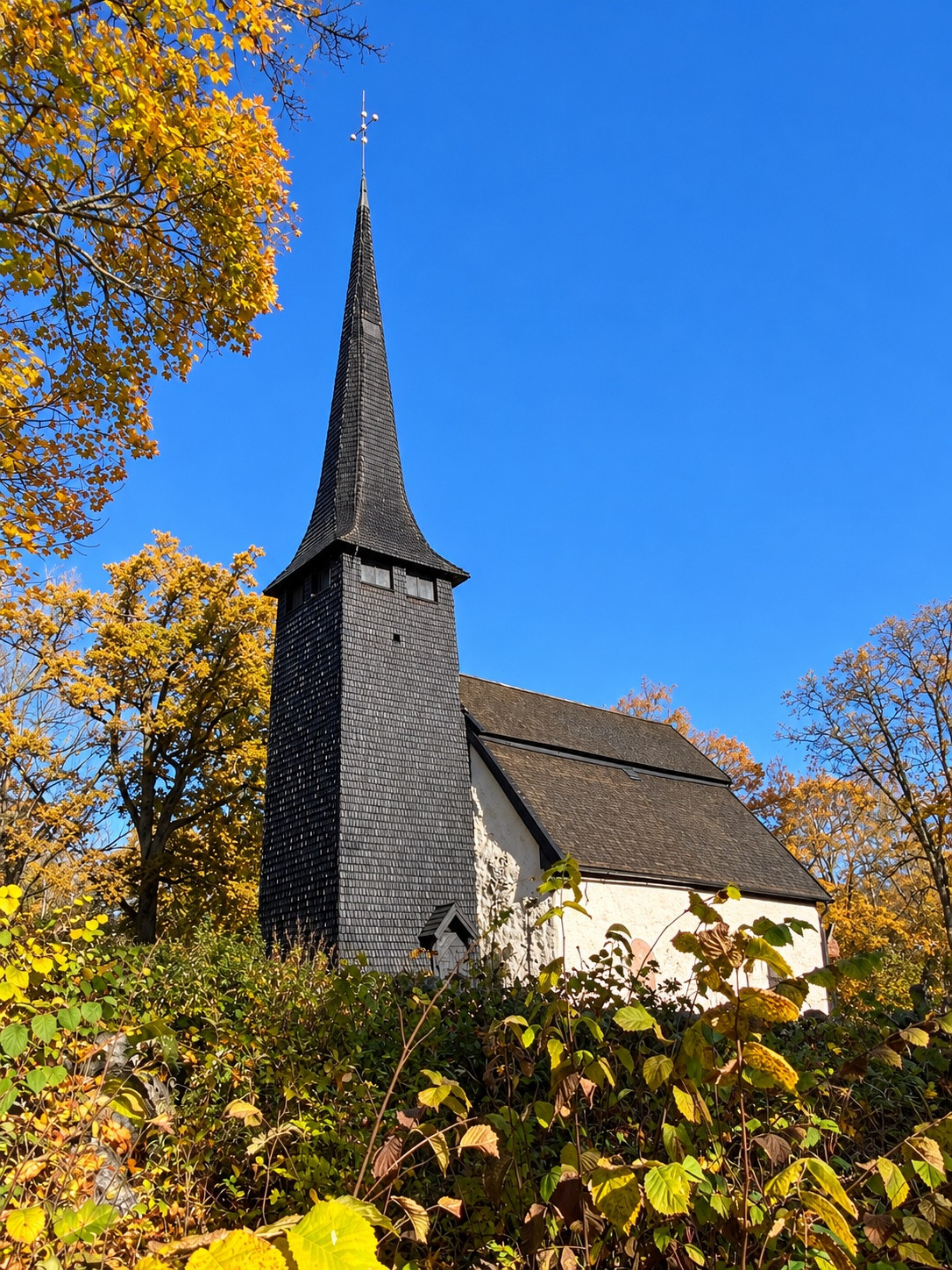
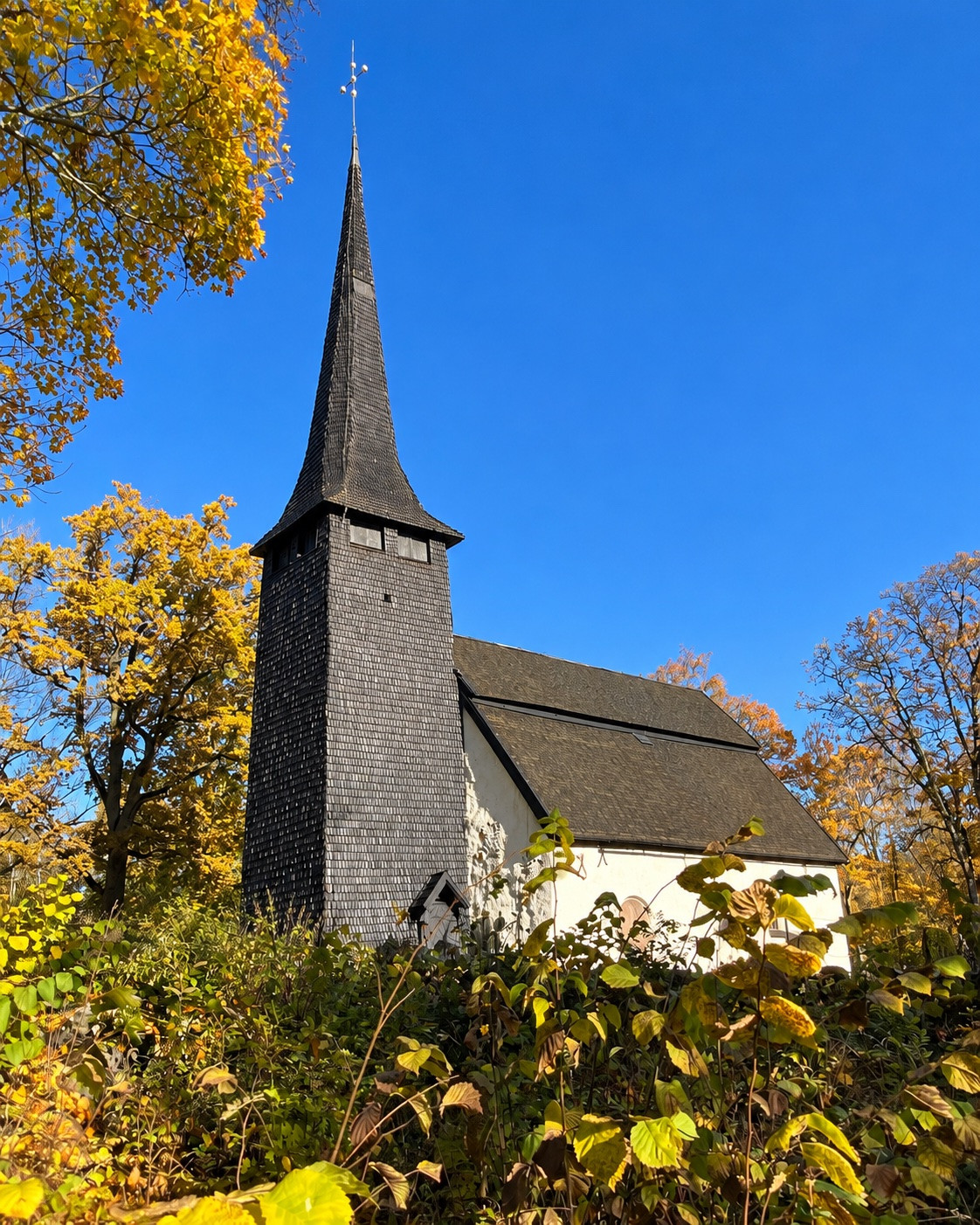
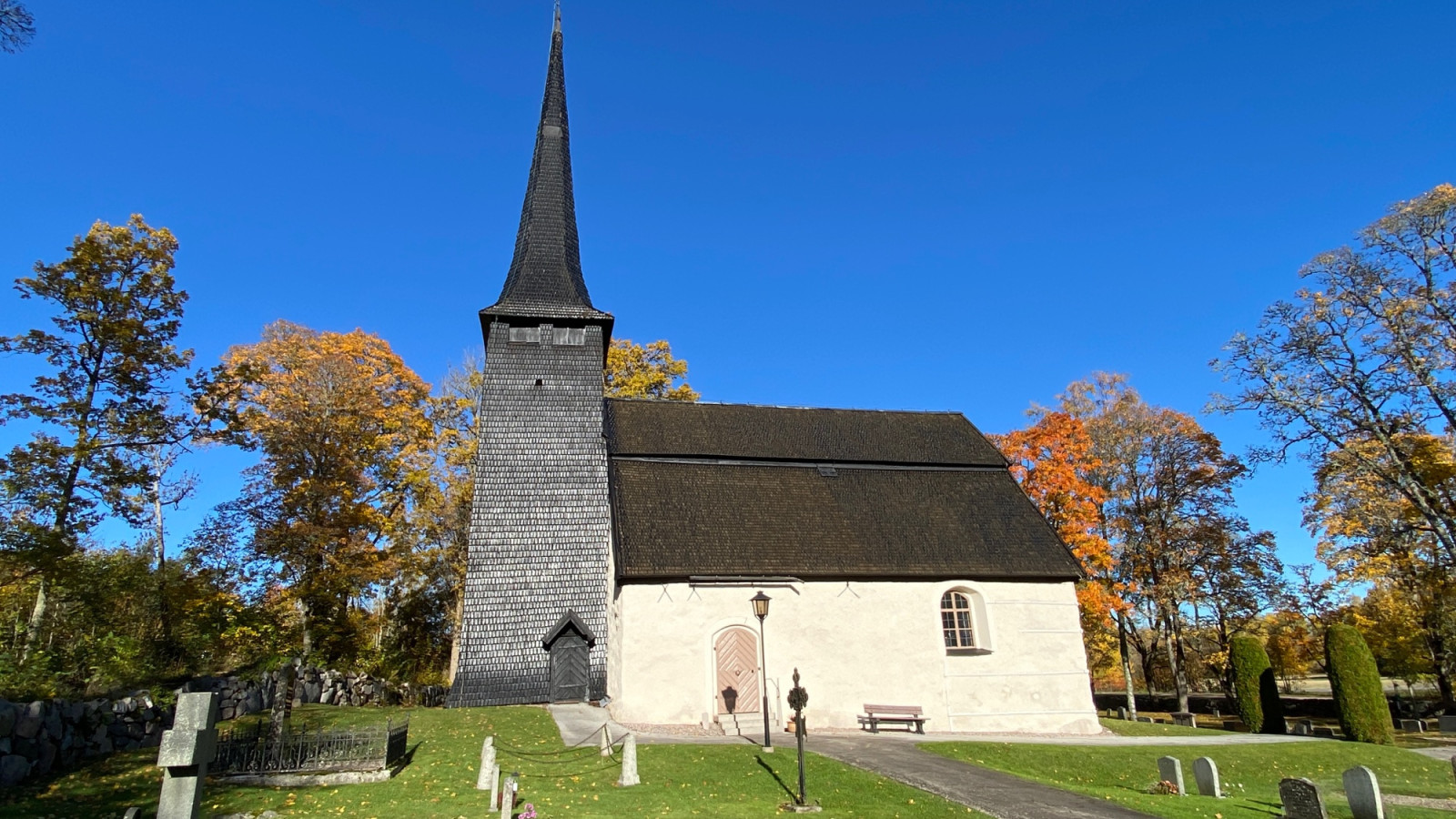
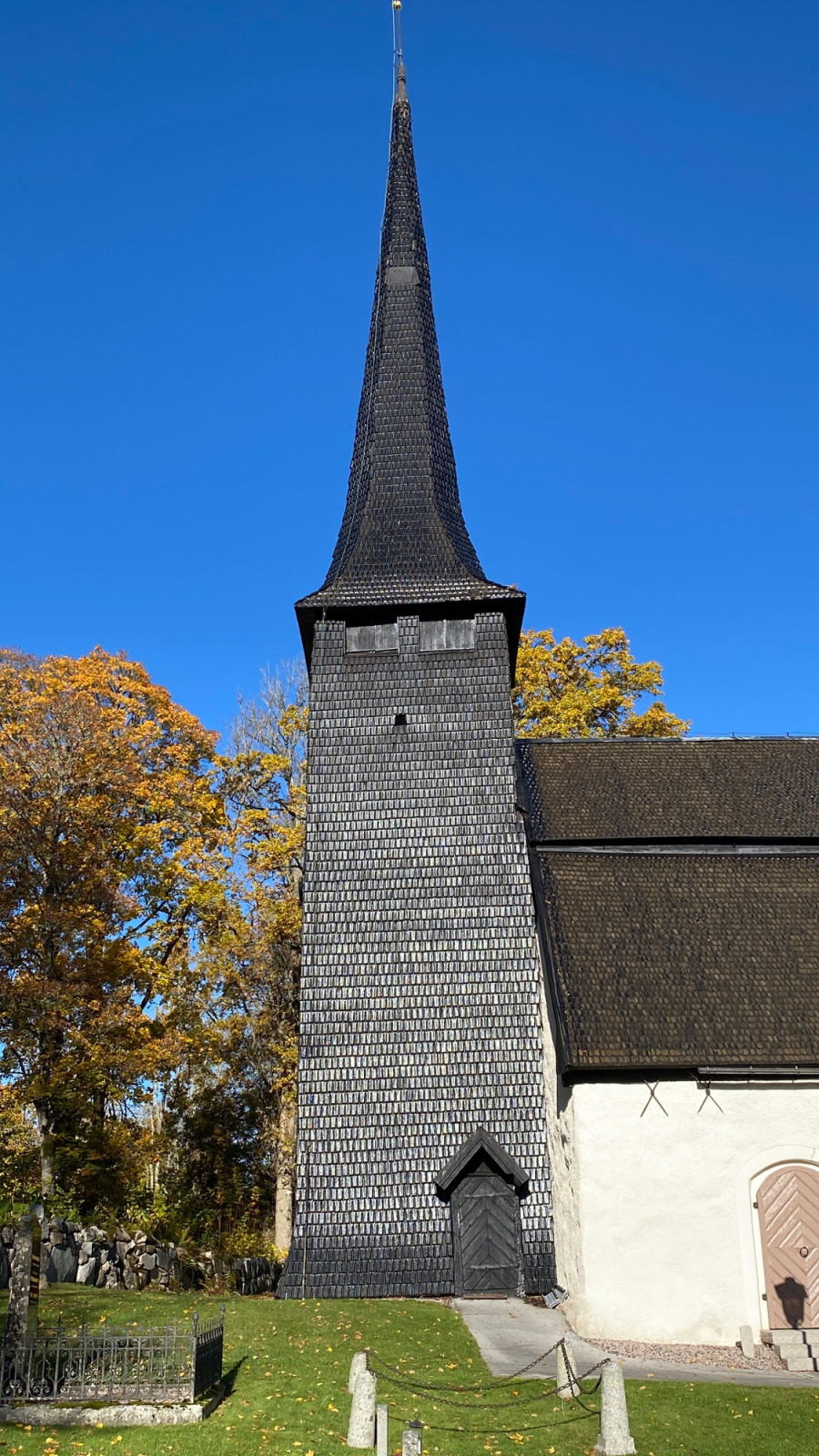
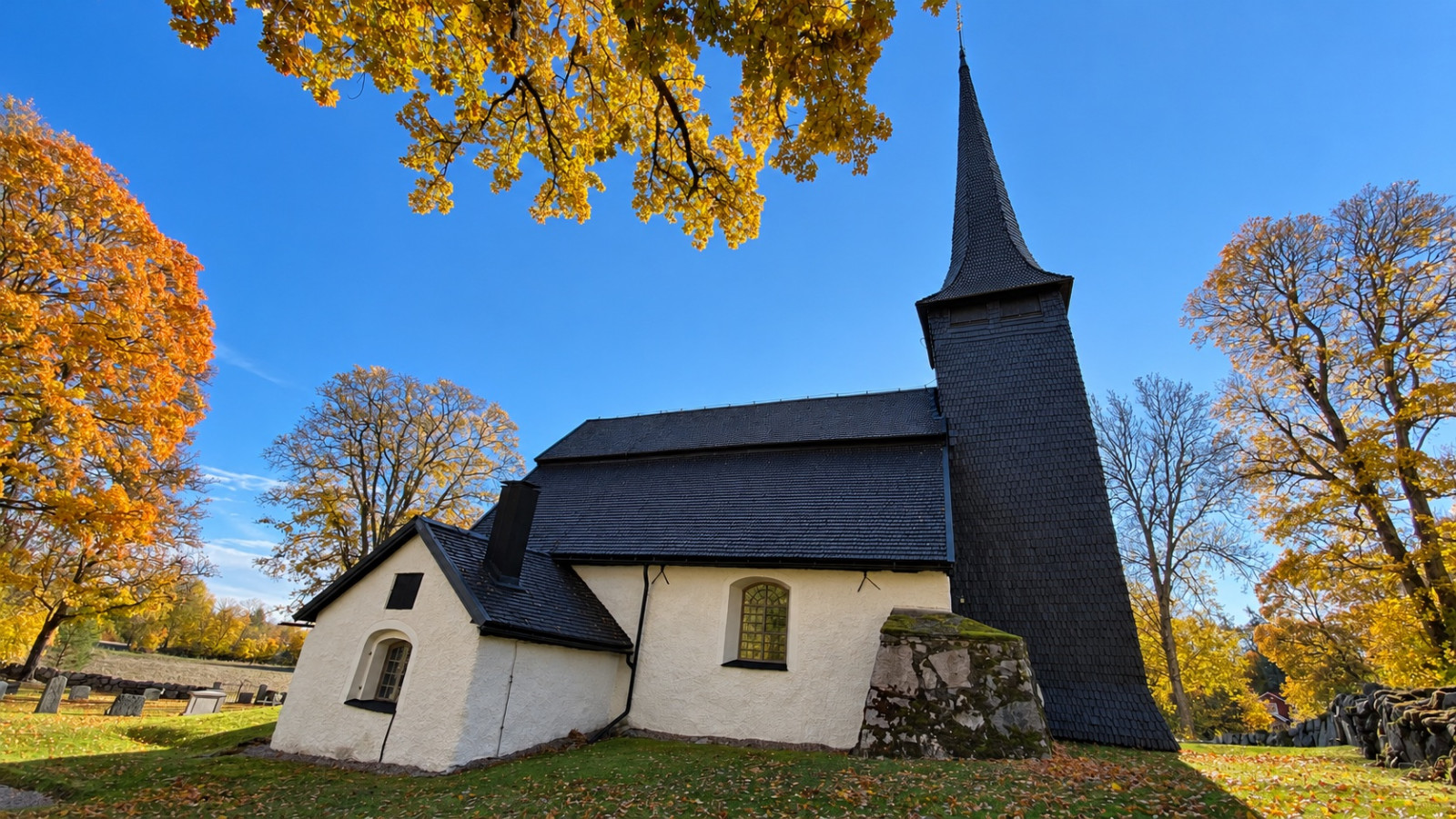
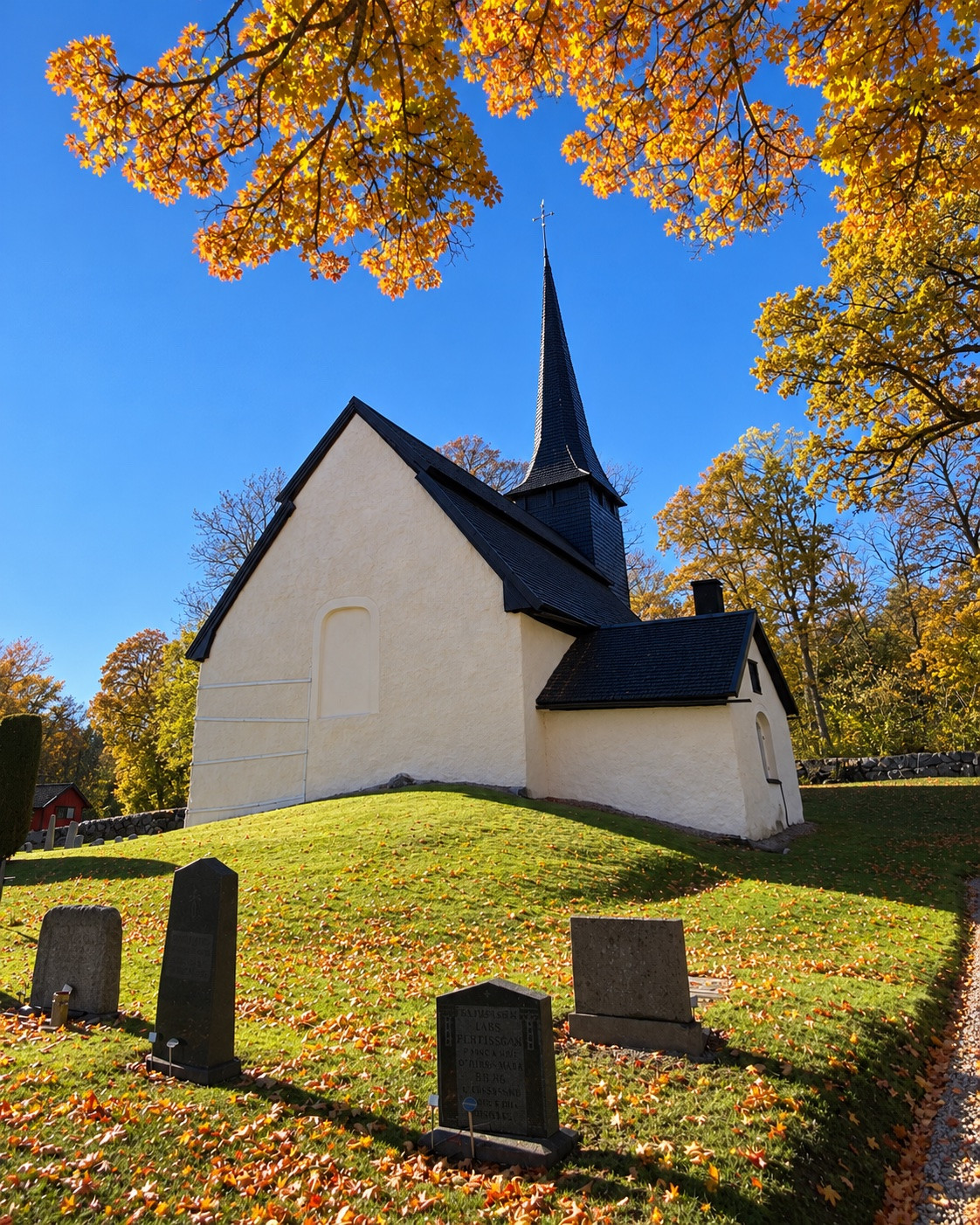
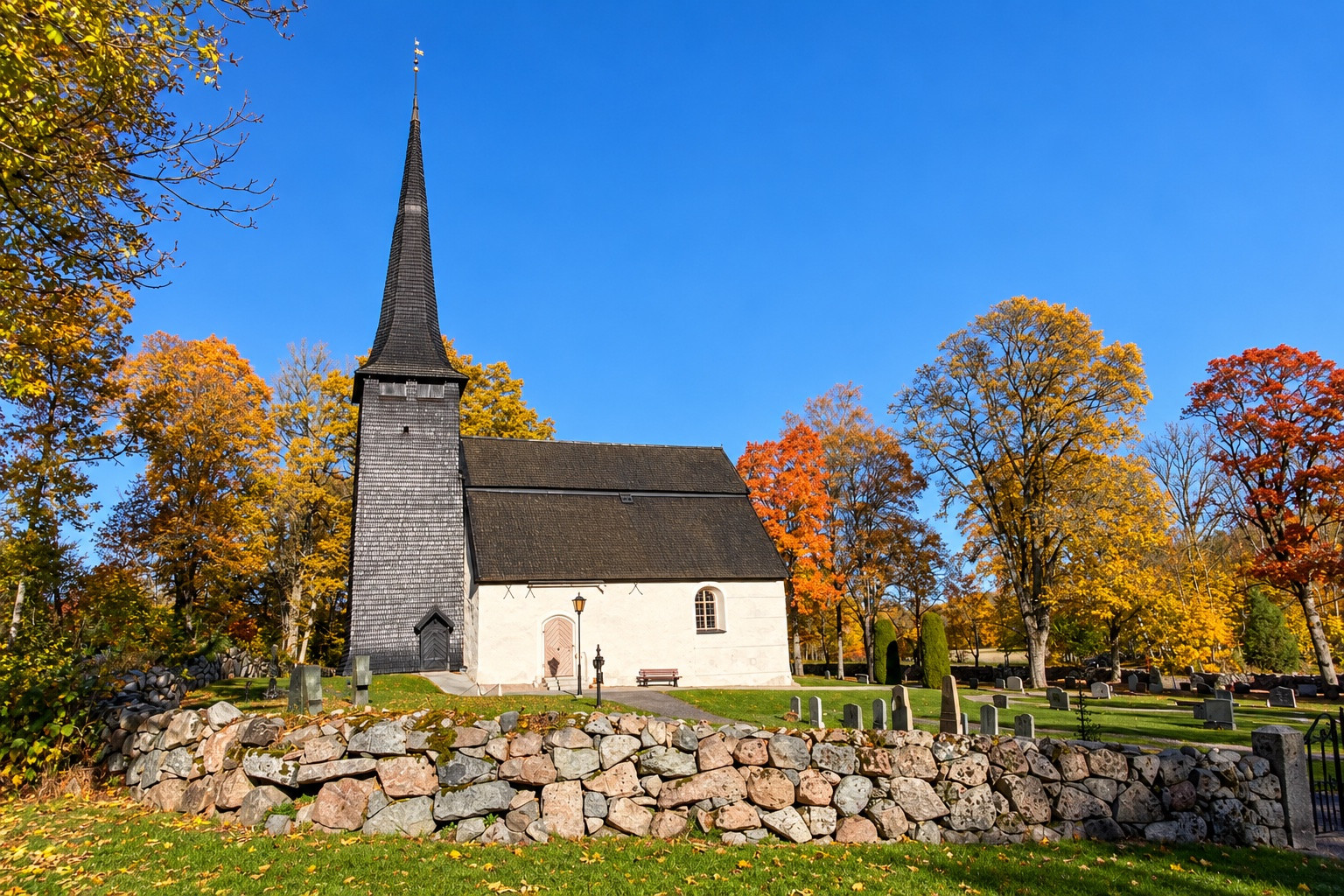
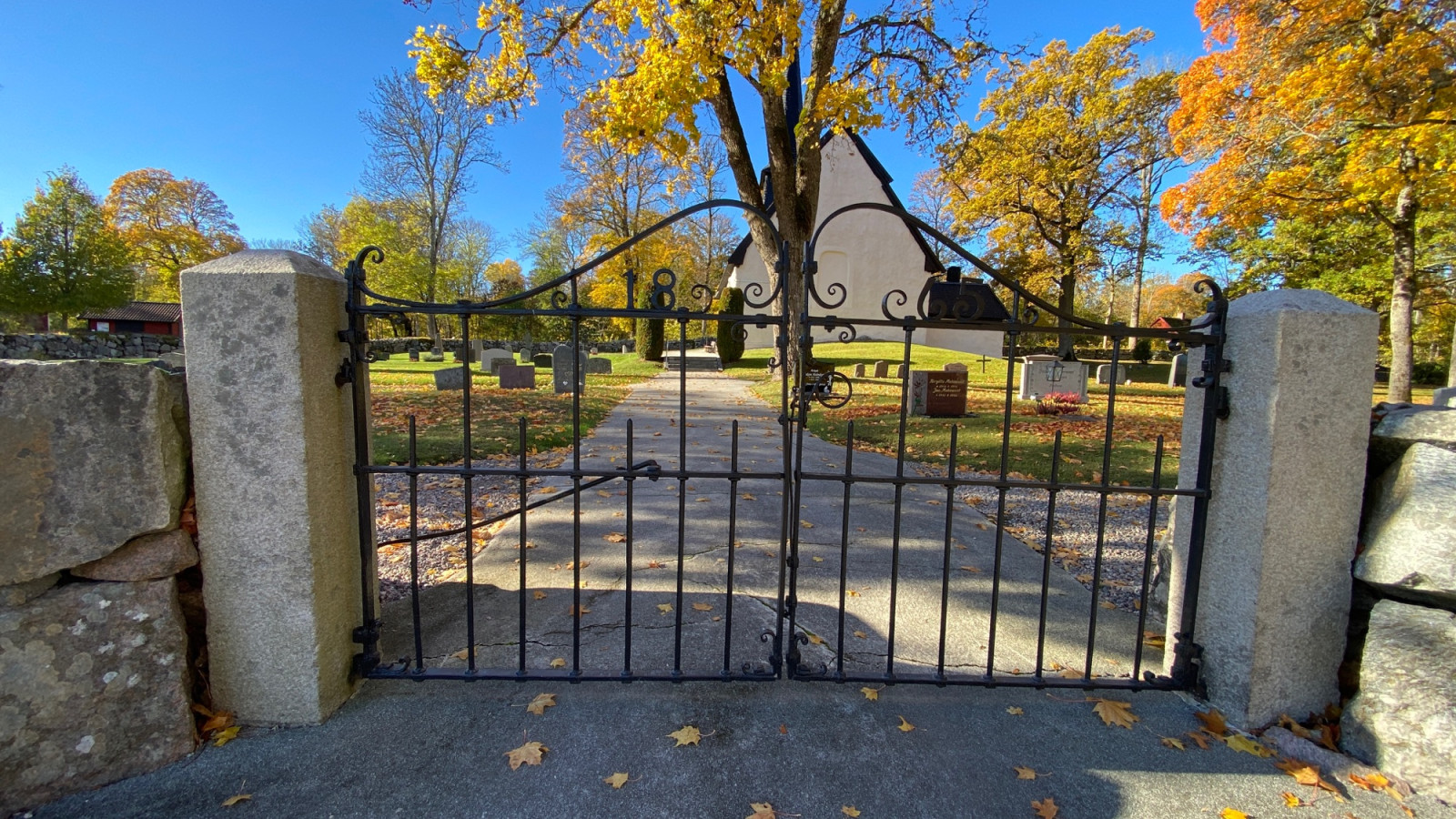
Our exterior photographs from 17 October 2026 show the church among autumn trees: the shingle-clad tower, pale walls, north-side sacristy and the iron gates into the churchyard.
 Kungs Barkarö Kyrka
® Churches in Sweden 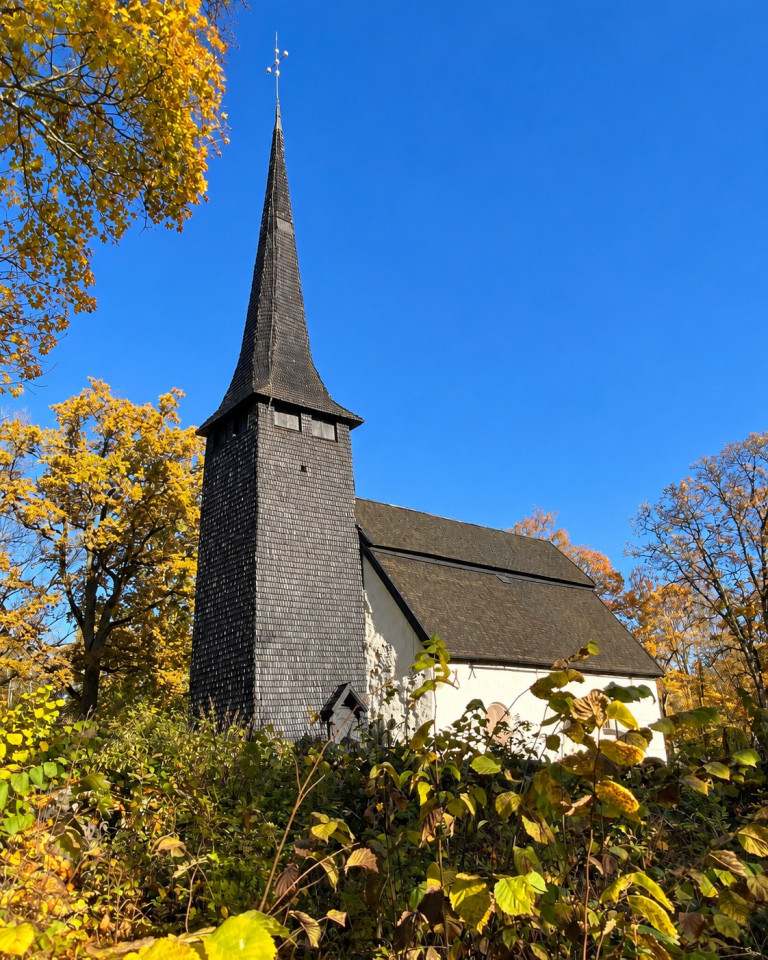 Kungs Barkarö Kyrka
® Churches in Sweden 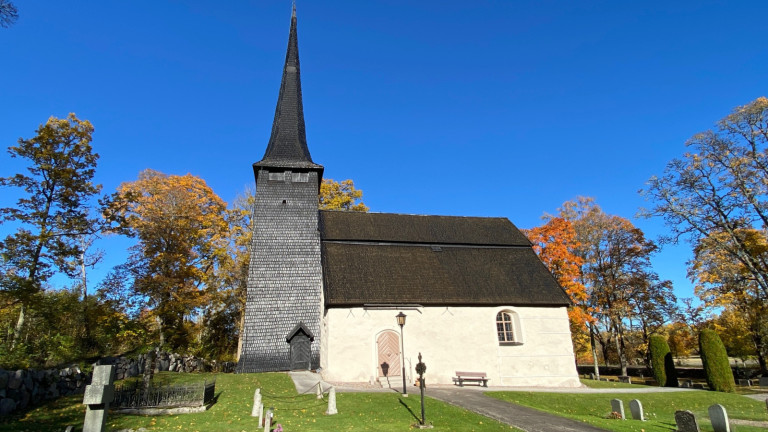 Kungs Barkarö Kyrka south facade
® Churches in Sweden 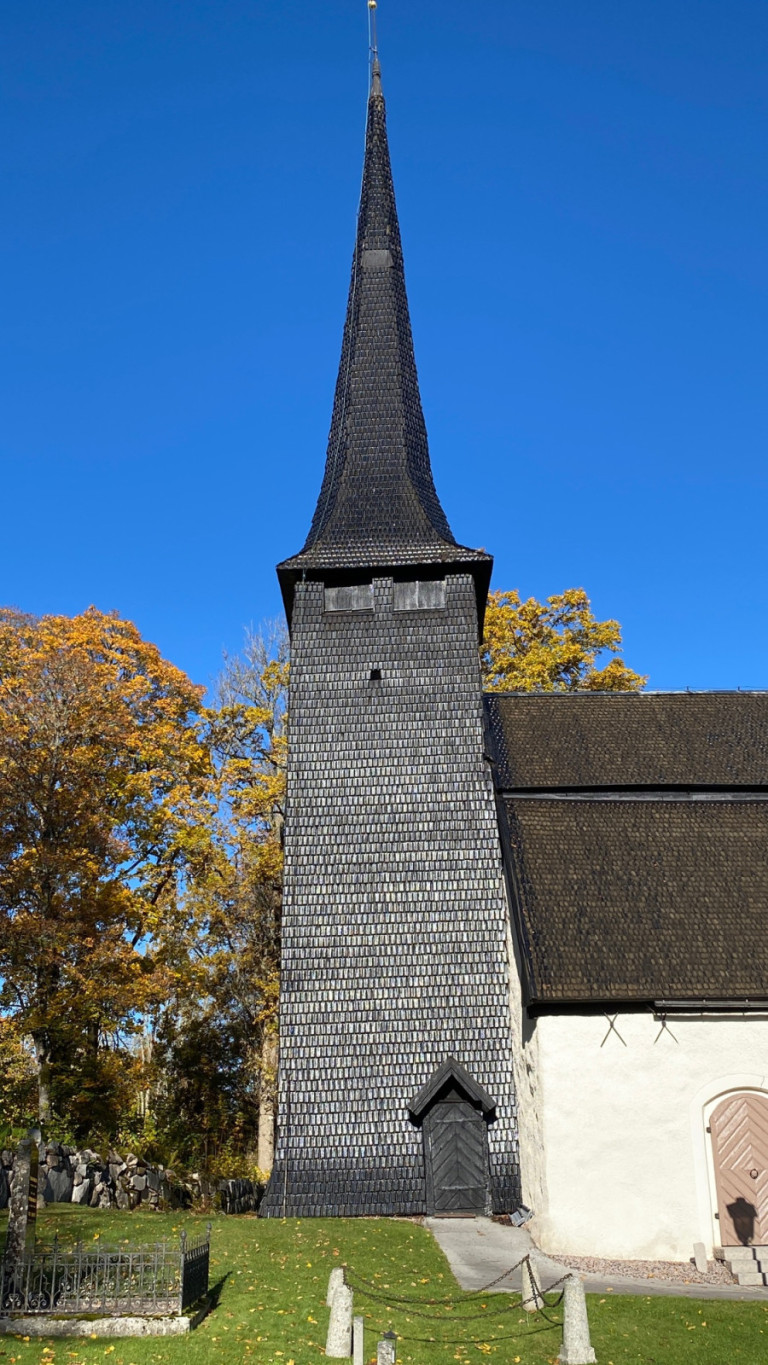 Kungs Barkarö Kyrka tower
® Churches in Sweden 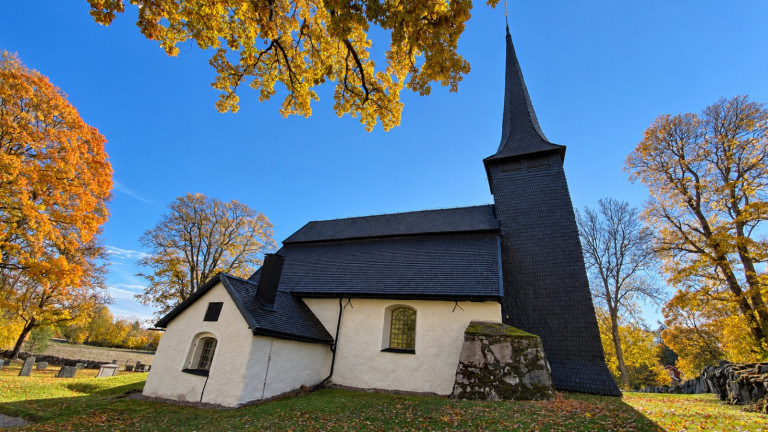 Kungs Barkarö Kyrka north facade
® Churches in Sweden 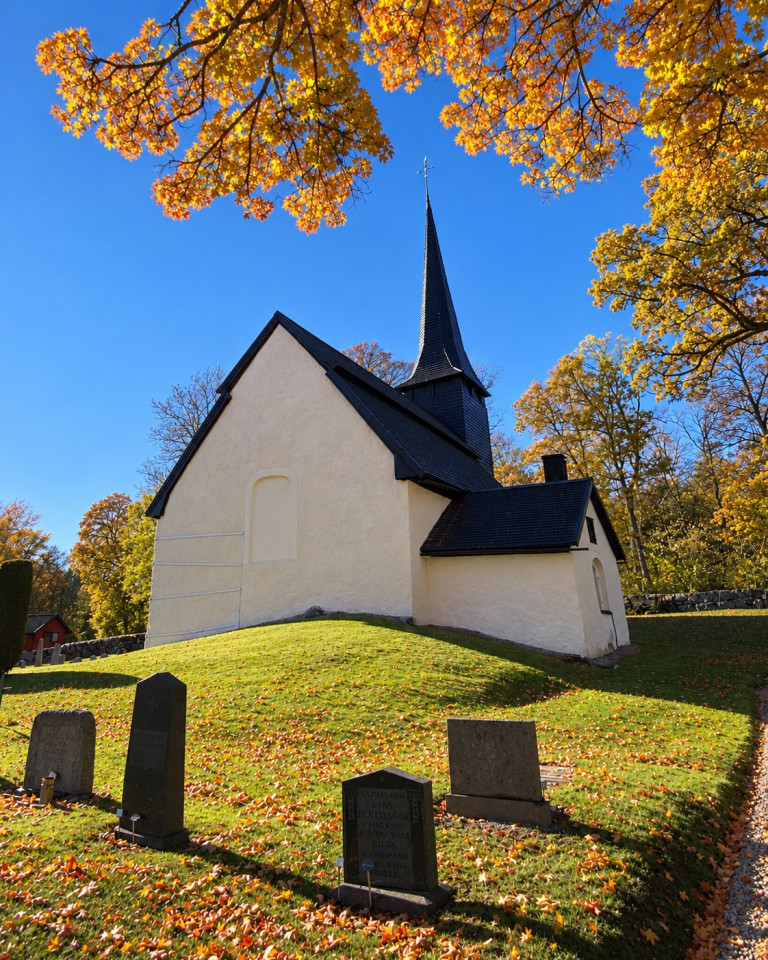 Kungs Barkarö Kyrka east gable
® Churches in Sweden 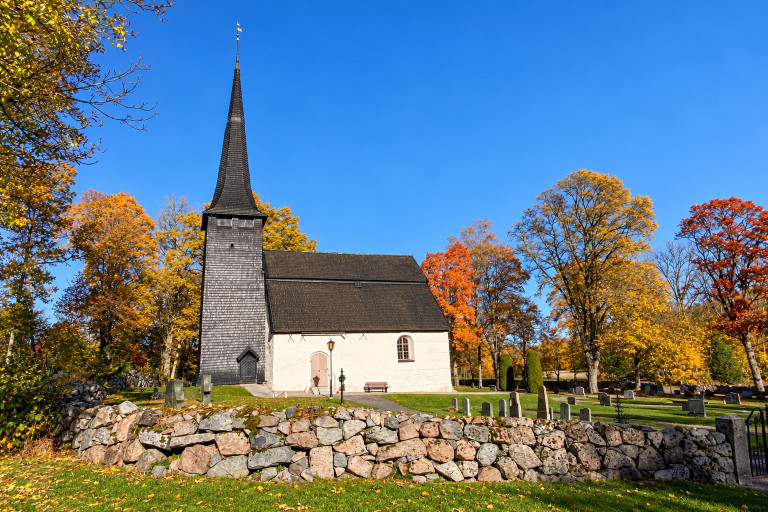 Kungs Barkarö Kyrka
® Churches in Sweden 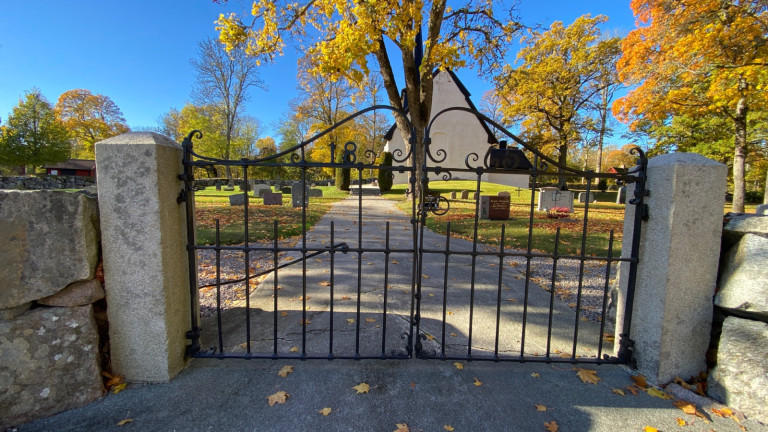 Kungs Barkarö Kyrka gate
® Churches in Sweden
A small church shaped over centuries
Medieval walls, a timber spire and successive generations of careful repair.
A small stone church
The church is probably built around this time, with nave and chancel under one roof. The parish places its origins in the thirteenth century.
Star vaults above the church room
Two brick star vaults replace the timber ceiling. Their restrained painted decoration survives in part.
A winged altarpiece
The surviving medieval altarpiece is made, probably locally, with the altarpiece in Köpings kyrka as its model.
A slender wooden tower
A timber bell tower rises at the west gable. Its tall shingled spire gives the small church its striking silhouette.
Repairs and a new sacristy
The vaults and gables are repaired and the north sacristy is added. A Rococo altar and communion rail follow in 1774.
Iron gates for the churchyard
Double iron gates are installed in the two openings of the stone churchyard wall. The date can still be seen in the ironwork.
The medieval interior revisited
Vault paintings are restored, the altarpiece returns, enclosed pews and brick floors are installed, and the east window is blocked.
Traditional shingles renewed
Split shingles replace the previous sawn covering, with repairs to decayed roof timber and boarding.
Three things to notice
Look closely at the timber, the east wall and the churchyard entrance.
A tower dressed in shingles
Rows of dark wooden shingles cover both the tower and its long, tapering spire. The contrast with the small pale nave is especially clear from across the churchyard wall.
The trace of a former window
A blocked opening remains visible in the east gable. The chancel window was closed during the 1952 restoration when the medieval altarpiece returned to the church.
The date in the iron gates
The black entrance gates carry the date 1865. Their curved upper bars, scrollwork and stone posts frame a view through the churchyard towards the church.
The full church story
Kungs Barkarö kyrka stands in the agricultural landscape northwest of Kungsör. The parish dates the church to the thirteenth century; the diocesan heritage inventory places its construction probably around 1300. The small stone building brought nave and chancel together beneath one roof, and its medieval outer walls remain at the heart of the church.
At first, the interior had a timber ceiling. During the later fifteenth century, two brick star vaults were built over the church room and given restrained painted decoration. A large medieval crucifix, dated to the mid-fourteenth century in the inventory, and a winged altarpiece from around 1500 are among the important surviving furnishings. These are documented interior features; the photographs here show the exterior and churchyard.
The tall timber bell tower at the western gable was added around 1600, or in the preceding decades. Its tarred shingles and tapering spire contrast with the low stone church. The parish also records a thirteenth-century bell, a reminder that some of the church’s contents are older than the tower that houses them.
Repairs became increasingly urgent during the eighteenth century. A major campaign in the 1760s repaired the vaults and gables and added the sacristy on the north side. The inventory suggests that the extensive iron ties were probably fitted during this work. The sacristy also helped support the north wall. A Rococo altar and communion rail followed in 1774.
The churchyard’s black iron gates were installed in 1865. Ten years later, an organ built by Olof Svan in 1785 was acquired from Gunnilbo church. It was subsequently rebuilt, while its eighteenth-century case survived.
The major interior restoration of 1952 introduced brick floors and enclosed pews, uncovered and restored traces of medieval vault painting, and returned the medieval altarpiece to the church. The east window was blocked as part of this work; its outline remains visible outside. Exterior work in 1966 gave the walls a renewed white finish. In 1990, split wooden shingles replaced the earlier sawn covering, continuing the craft tradition visible across the roofs and tower.
Plan a visit
Kungs Barkarö kyrka 1, 736 93, Kungsör
Opening hours
Opening hours have not been confirmed for the current date. This does not mean the church is closed.
Additional opening information is awaiting translation. Check the official visitor-information link before travelling.
Check access with the parish before travelling. Services and seasonal changes can affect visits.
What’s on at Kungs Barkarö kyrka
Loading calendar… Events will appear here automatically when the first background fetch finishes.
Contact & official information
Kungsörs församling
- Telephone +46 227 15500
- Email kungsor.forsamling@svenskakyrkan.se
Check the official pages below for opening hours and visiting information. We may not have the latest details, and access can change for holidays, services or private ceremonies. If the information is unclear, contact the parish before travelling.
Facilities & accessibility
- Parking
- Toilet
- Hearing loop
Listed by the provider; availability has not been independently checked. An unlisted facility is not necessarily unavailable.
Find your way
Use the interactive map to explore the church and the surrounding landscape.
The interactive map could not load. Use the location link below.