The present stone church was probably built around the middle of the 15th century, though the surviving 1472 date marks a visit by Archbishop Jakob Ulvsson Örnfot, who consecrated the altarpiece and issued a letter of indulgence, later preserved only in a 17th-century copy. It is unclear whether this event marked the start of construction or the consecration of the completed building. During the Middle Ages the Kalix River mouth lay close to the church, but land uplift has since shifted the coastline several kilometres to the south-east.
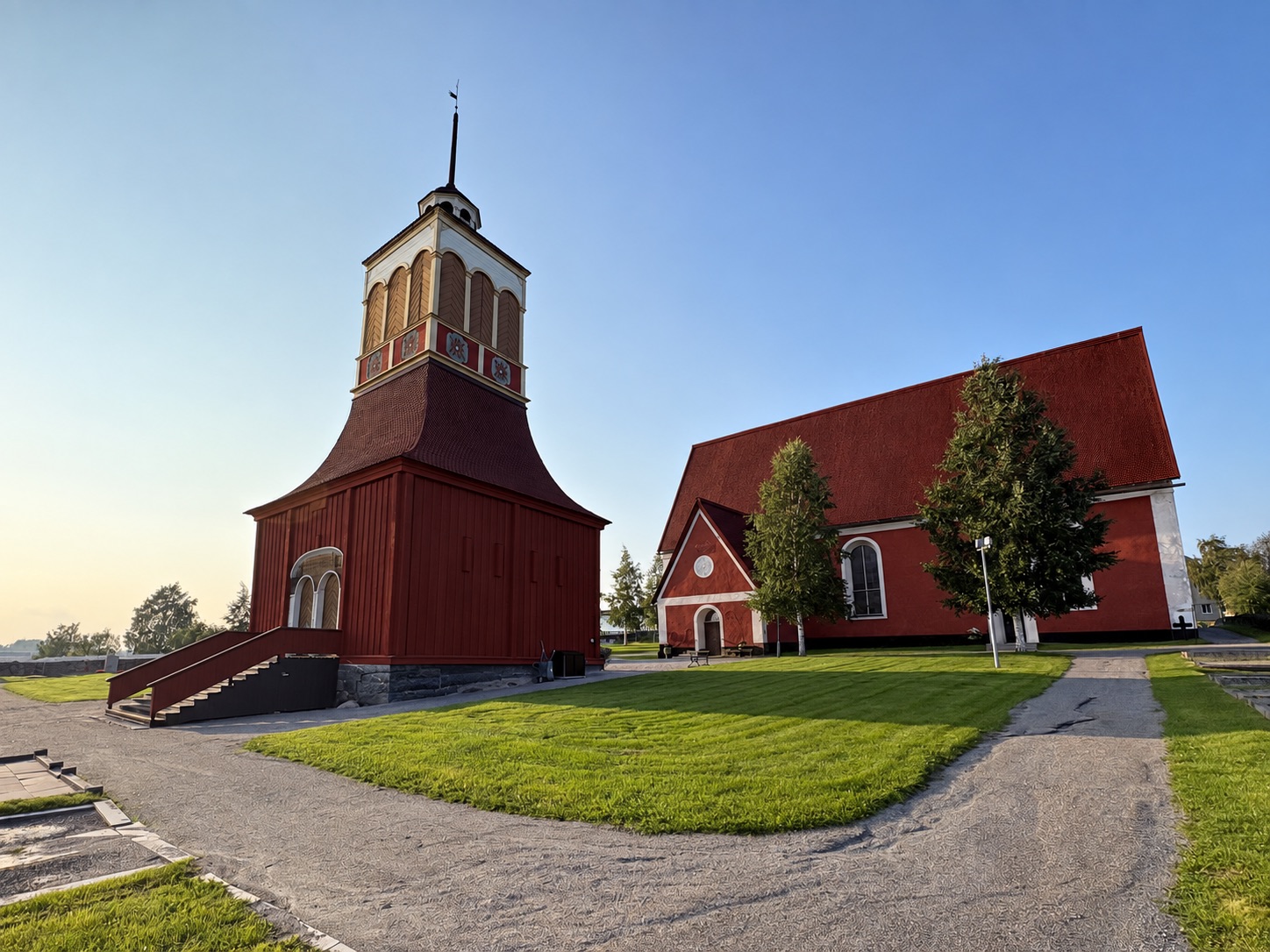
The church is a single-nave hall church in an early Gothic style, with brick-ornamented gable ends and three star vaults inside. A sacristy was added to the north and a porch to the south, the latter dating from the 1600s and replacing an earlier medieval timber porch. Two medieval south portals survive, one in the chancel and one in the nave. Medieval wall paintings in the chancel vault were largely destroyed by a fire in 1595, though fragments remain and still contribute to the building's strongly medieval character.
The church has endured a turbulent history: it was plundered by Russian forces in 1716, and during the war of 1809 the Russian army reportedly used it as a stable. Various restorations followed over the centuries, including window enlargements in the 1747 and further work in the 1750s. A 1920s restoration introduced neo-Baroque fittings, later reversed in a 1955 restoration that reinstated older furnishings and uncovered the medieval brick ornamentation on the façade, previously hidden under plaster. A further restoration took place in 1972.
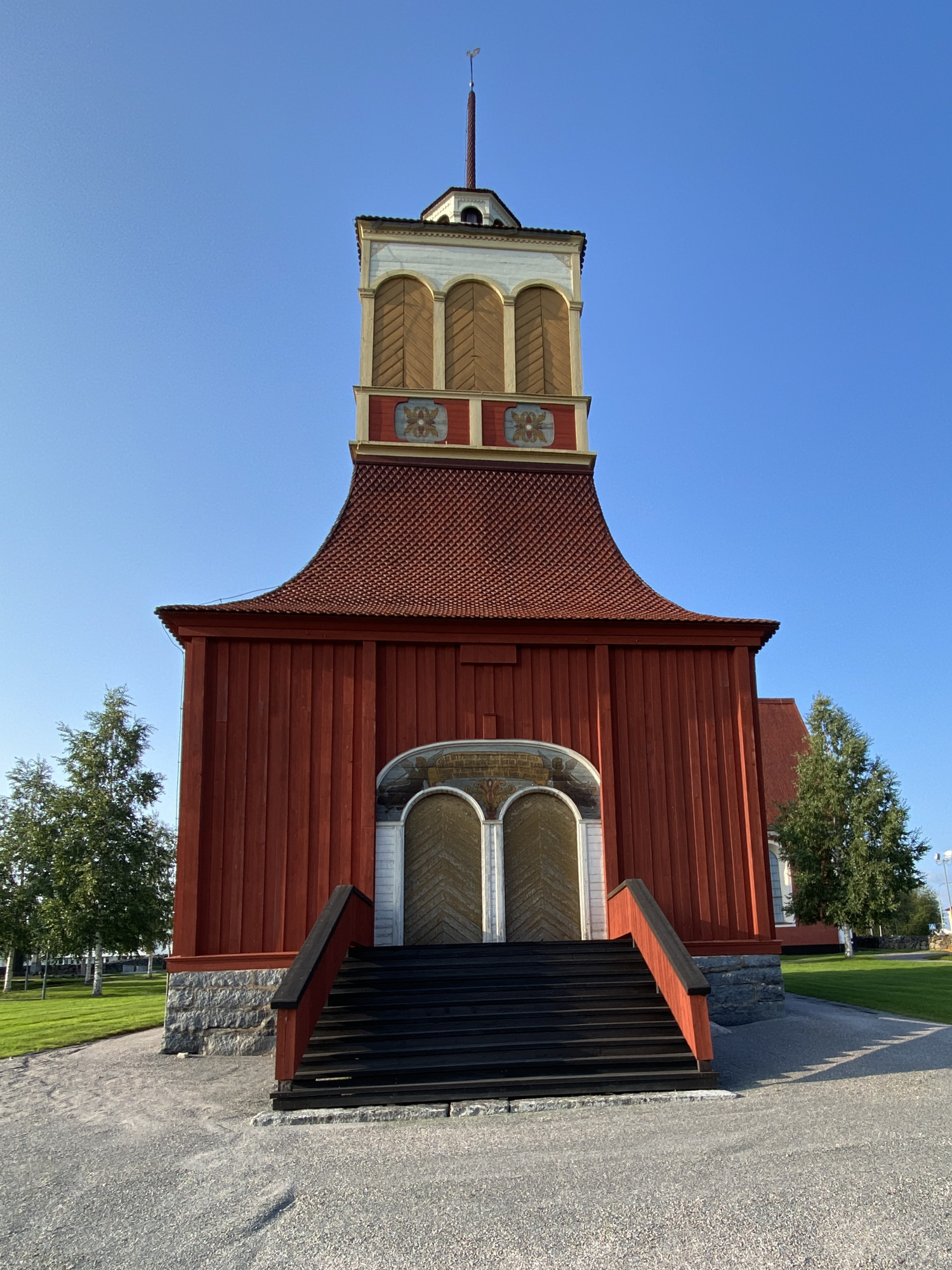
Standing in the churchyard is a detached bell tower of the so-called Bothnian type, timbered in 1731 by craftsmen from Ostrobothnia, with an octagonal lantern at its top and three bells, the oldest cast in 1682. It originally stood beside the old high road and served as a lychgate before the road was moved and the churchyard extended.
Among the church's furnishings is a pulpit dated 1674, said to be the oldest in the Diocese of Luleå, decorated with figures of Christ and several apostles. The medieval altar cabinet, linked to the 1472 consecration, contains carved figures of Mary and the Christ child flanked by two saints named Jacob, with later replacement doors. A medieval font bears a Latin inscription referring to salvation through blessed water. The church also has an organ built in 1974 by Grönlunds Orgelbyggeri.