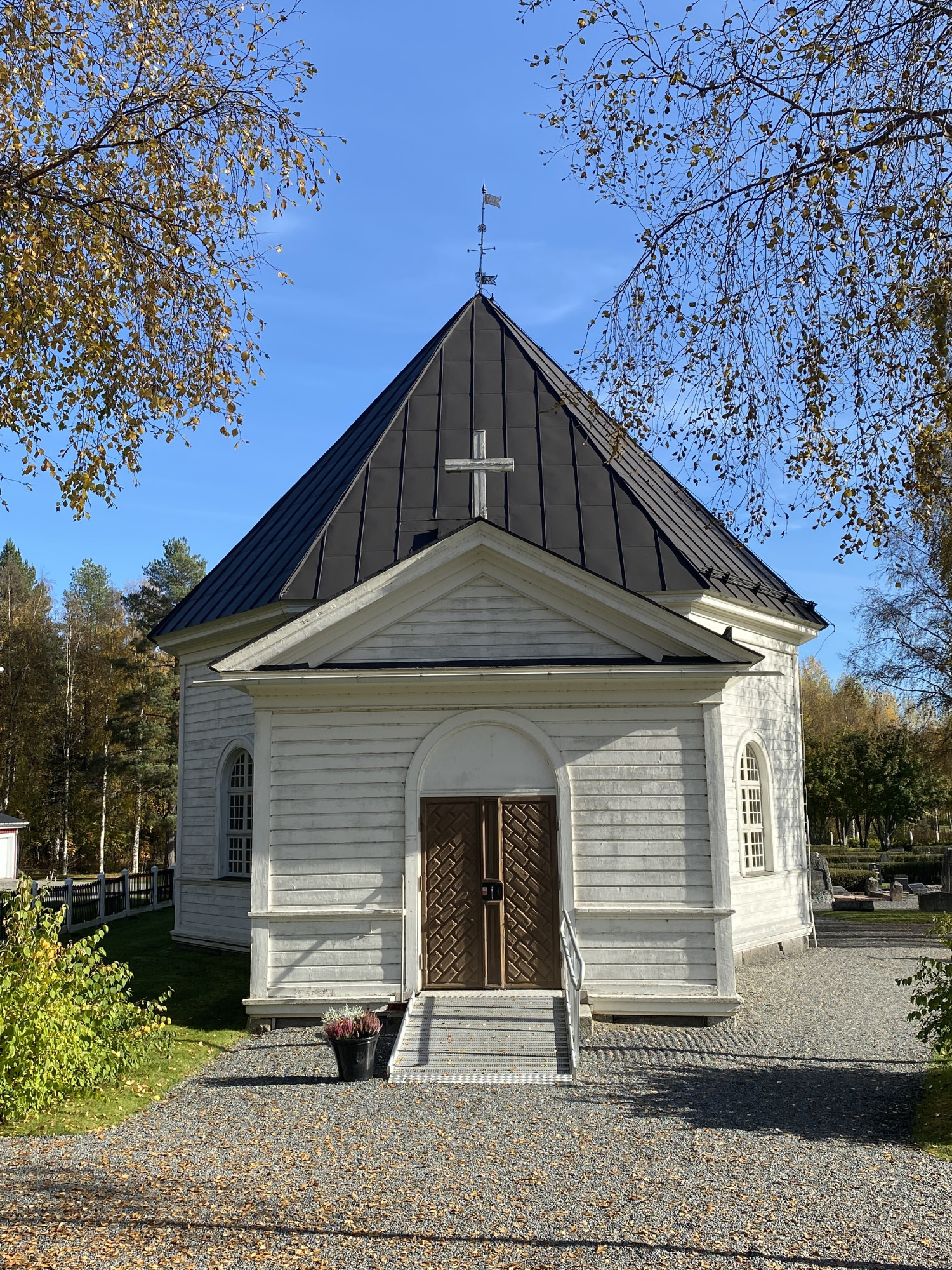
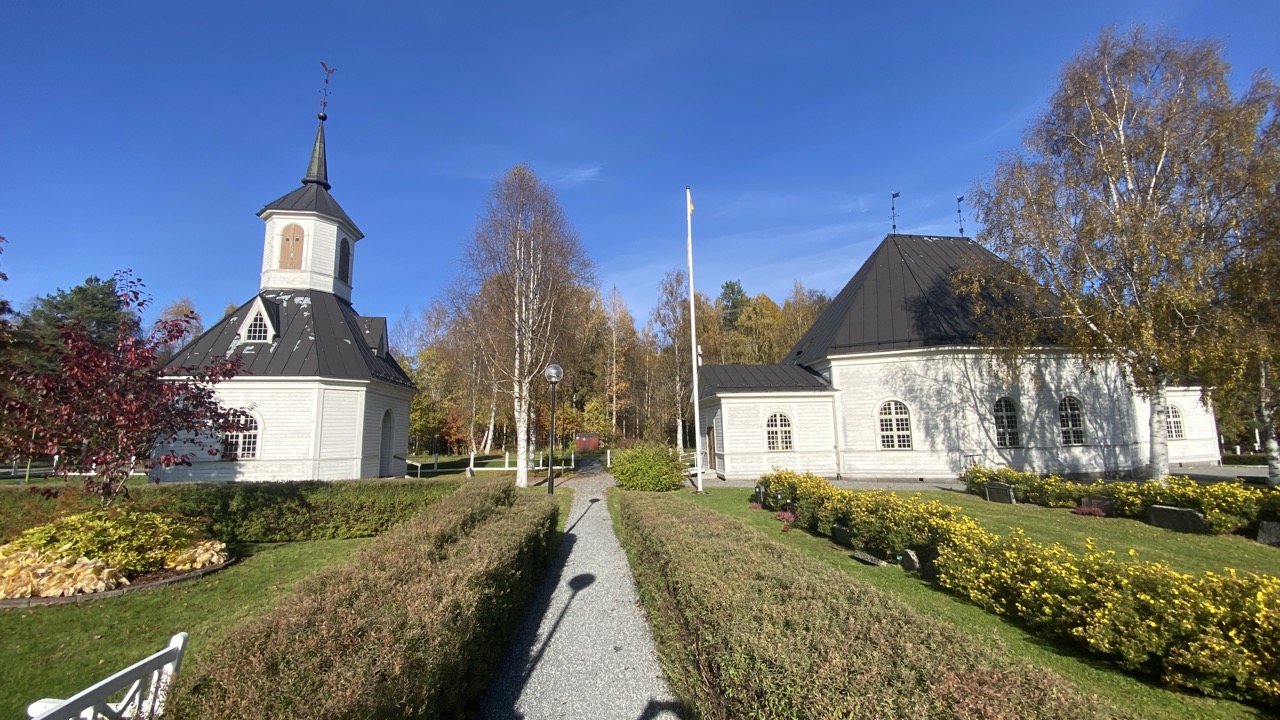
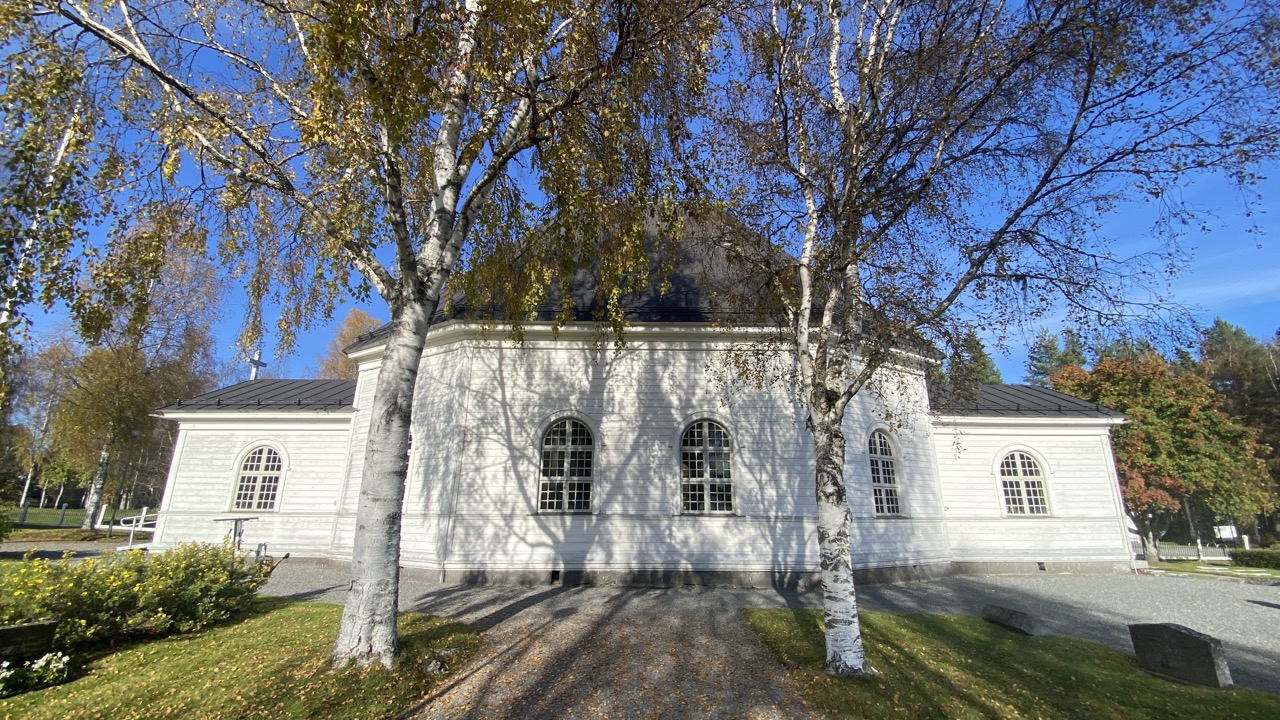
The church was built of timber between 1759 and 1762, serving the workers and community attached to the Graninge ironworks. It was sufficiently complete to be used from December 1760, with the formal consecration following in April 1761. Its octagonal plan and lack of a tower give it an unusual silhouette among Swedish parish churches, and it was positioned almost axially in relation to the old manor grounds. A porch stands to the west and a sacristy to the east, the latter fitted out in its current form in 1952.
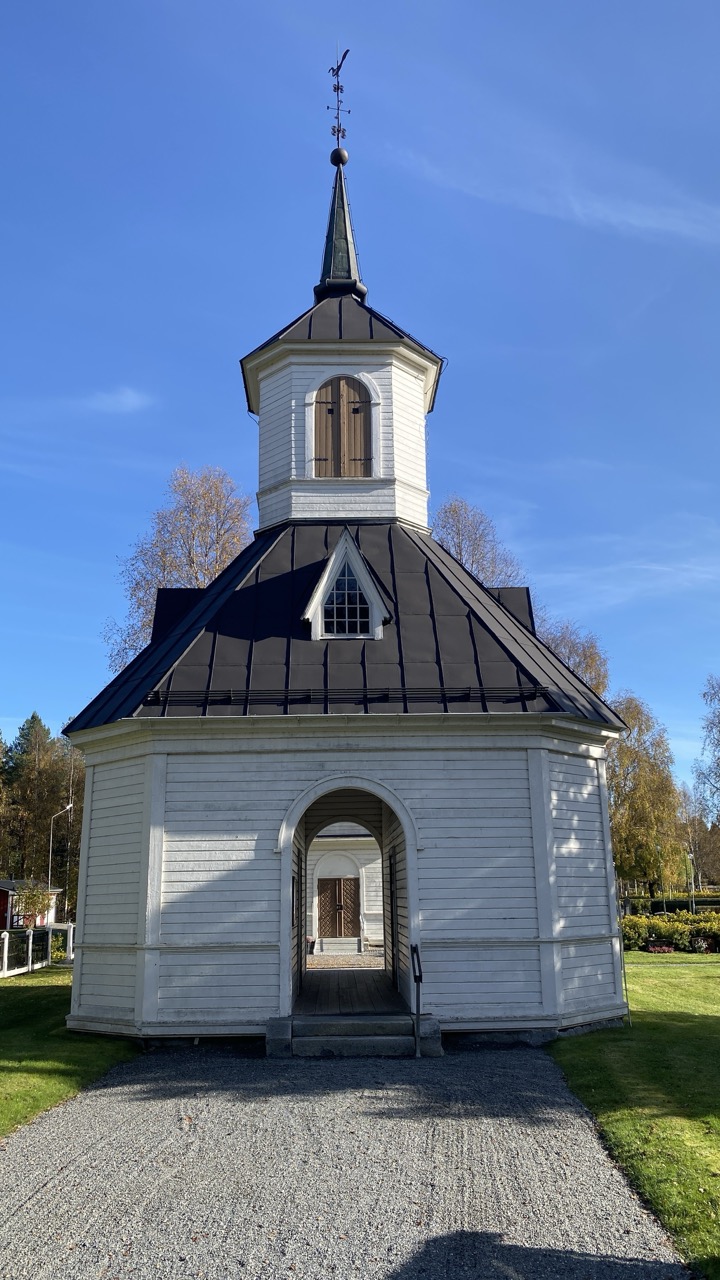
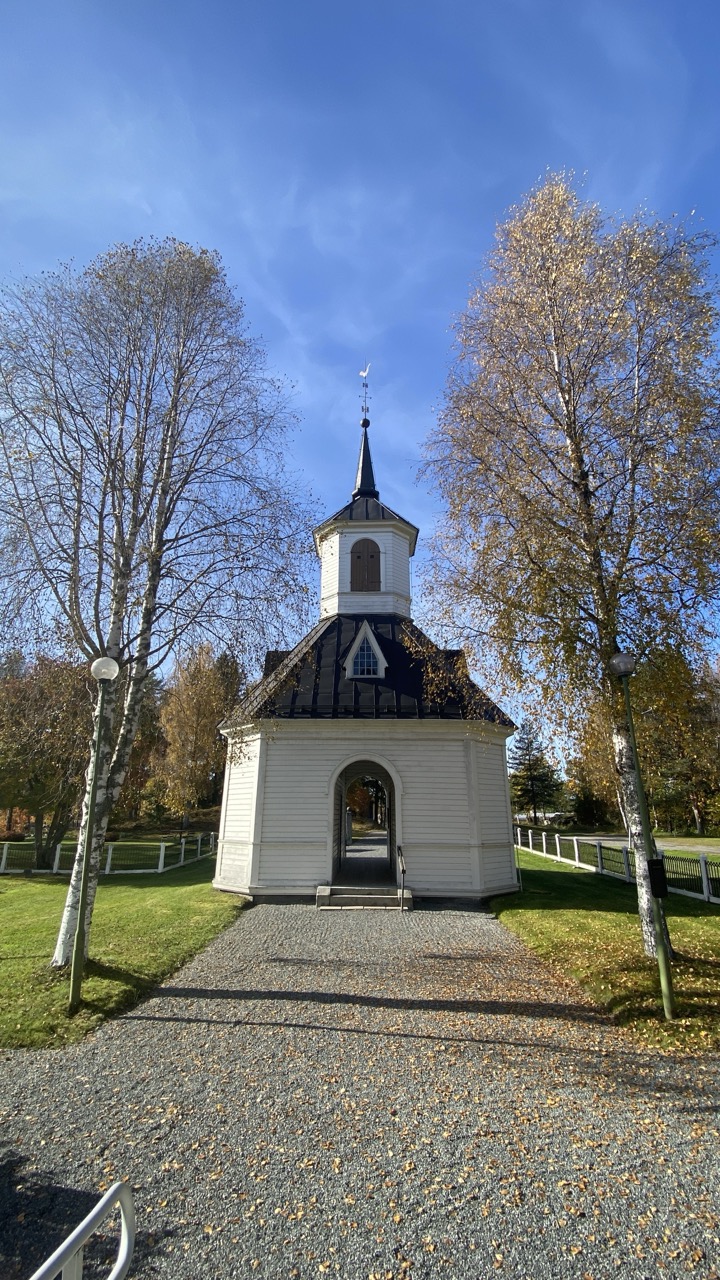
The exterior is clad in white-painted horizontal panelling and covered with a metal roof, a plain but well-kept finish typical of ironworks churches of the period. A freestanding bell tower was first erected in 1762, replaced in 1887 by the octagonal structure that still stands today, echoing the shape of the church itself.
Among the furnishings, the Rococo pulpit is considered an early work of the cabinetmaker Johan Edler the Elder, made before he became an independent master craftsman in 1760. A black chasuble trimmed with silver braid dates from 1777. The wooden font, with its accompanying brass basin, was donated to the church in 1944, and the altar carpet, woven with symbols associated with Graninge parish, was added in 1984.