Nora kyrka
Nora kyrka stands above the valley with a broad white tower, dark clock faces and an open lantern beneath a rounded cap. Its long roof and rows of pale windows stretch behind the churchyard hedge, giving the building a quiet presence in the landscape.
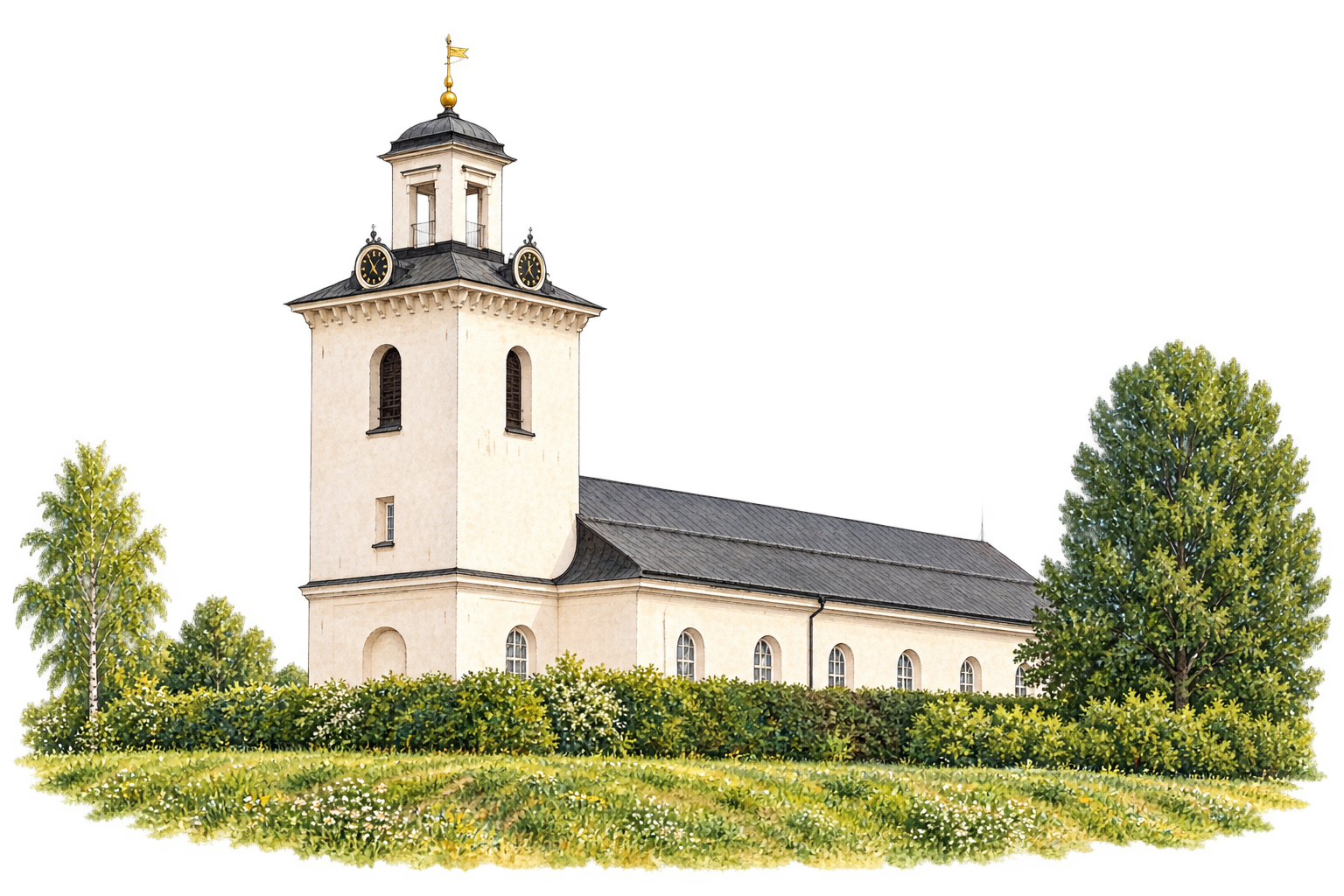

A familiar tower, carefully preserved
A medieval font, a new church and generations of maintenance.
The font is made
The Gotland limestone font survives from the medieval church.
A larger church takes shape
Simon Geting builds the present church on the earlier site.
The interior is furnished
Much of the surviving woodwork belongs to this decade.
Metal replaces shingles
The roof receives a different protective covering.
The altar rail returns
The original rail is put back into the interior.
The lantern is lowered
A crane brings the tower’s upper structure down for repairs.
Three things to notice
The tower’s outline is especially useful for recognising Nora.
The open lantern
Light passes through the rectangular openings of the small white upper structure. Its rounded cap contrasts with the square tower below.
Clocks along the roof
The dark clock faces stand in decorative surrounds on the shallow tower roof, below the open lantern.
The long roofline
A broad dark roof draws the eye from the tower across the nave. Below, pale window frames and a low hedge keep the composition calm.
The full church story
The photograph used for this illustration shows a particularly distinctive tower top. Black clock faces stand against the low roof, below a white lantern with open rectangular bays. A curved dark cap and delicate golden weather vane complete the outline. Beneath them, narrow bell openings punctuate the broad tower, while the long nave repeats a simpler rhythm of rounded windows.
Simon Geting built the present church in 1804–1806 on the site of an earlier medieval stone church. One important survivor is the thirteenth-century baptismal font, made from Gotland limestone. The new building used stone walls with brick around openings, a western tower and an eastern sacristy.
Much of the interior furnishing belongs to the 1860s. The parish credits M. Kärrlander with the pulpit and Pehr Dahlquist of Nordvik with the altar rail, gallery barrier and doors beside the altar. Sculptures by local artist Hampe Svanberg depict Peter and John. The original altar rail was reinstated in 1936.
The roof has its own history of maintenance. Timber shingles gave way to metal in 1909, and new metal roofing followed in 2002. In 2022, substantial rot prompted major work on the tower. Its roughly nine-ton lantern was lowered by crane on 4 March so repairs could be undertaken at ground level. The parish later invited people to watch its return lift in August.
That repair story gives the airy tower top a different scale: what looks small from the valley is a substantial timber structure. The illustration keeps the familiar distant silhouette, the low hedge and the rising grass. It interprets the credited exterior photograph rather than claiming to record a personal visit or a survey of the church’s present condition.
Plan a visit
Prästbordet 101, 87298, Noraström
Opening hours
Opening hours have not been confirmed for the current date. This does not mean the church is closed.
Check access with the parish before travelling. Services and seasonal changes can affect visits.
What’s on at Nora kyrka
Loading calendar… Events will appear here automatically when the first background fetch finishes.
Contact & official information
Nora-Skogs församling
- Telephone +46 612 85500
- Email kramfors.pastorat@svenskakyrkan.se
Check the official pages below for opening hours and visiting information. We may not have the latest details, and access can change for holidays, services or private ceremonies. If the information is unclear, contact the parish before travelling.
Getting there & visiting information
Prästbordet 101
Find your way
Use the interactive map to explore the church and the surrounding landscape.
The interactive map could not load. Use the location link below.