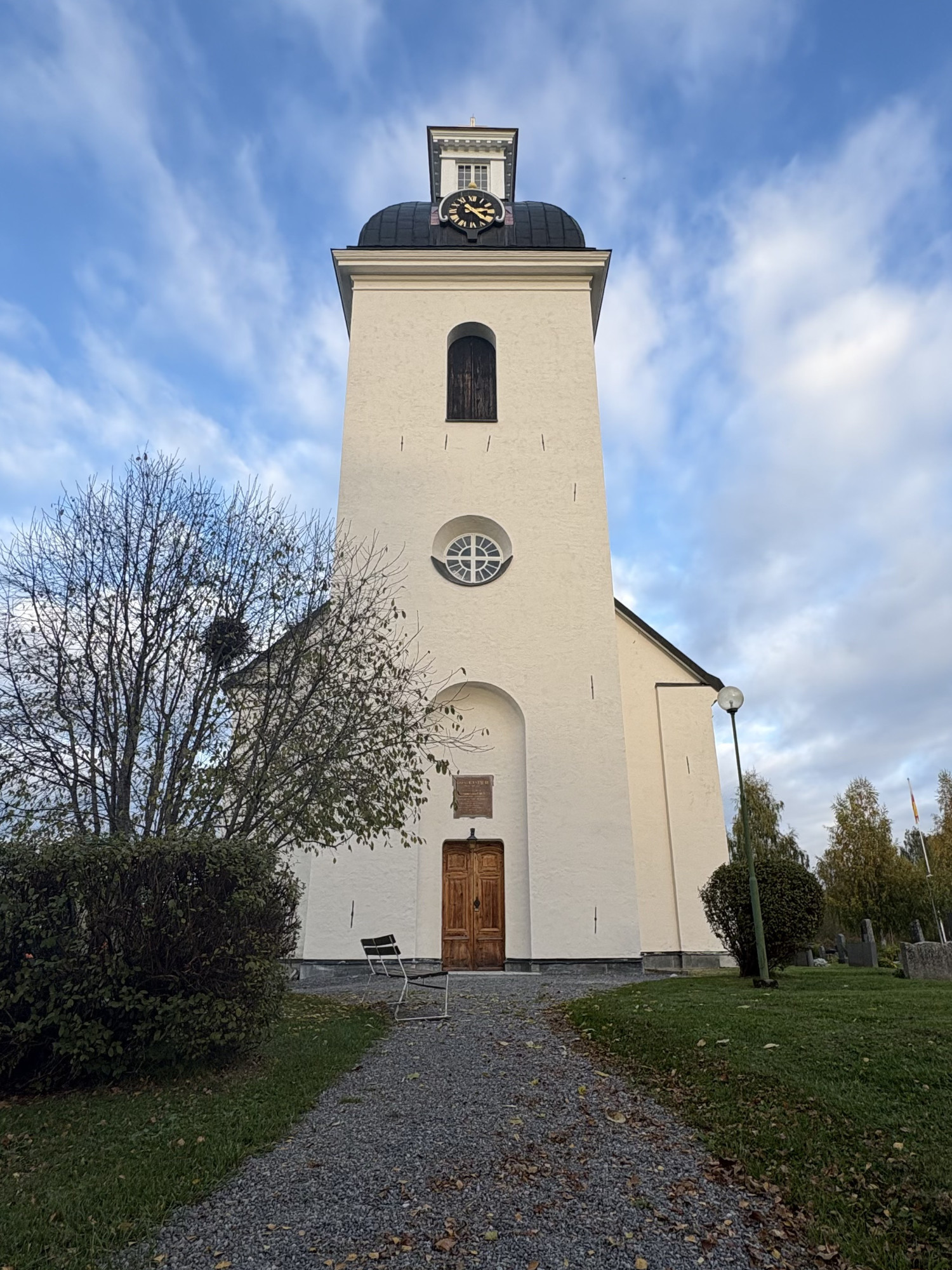
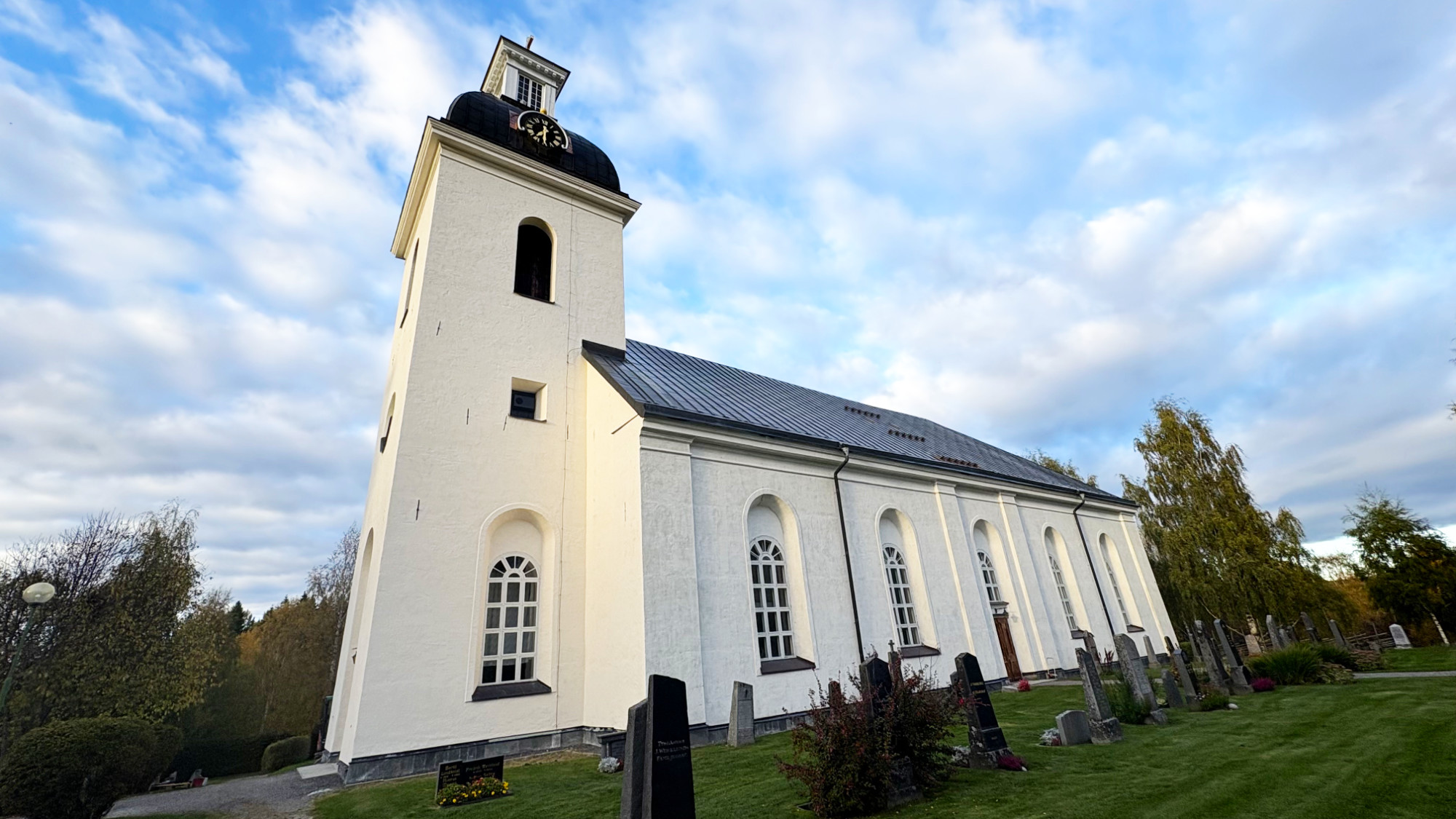
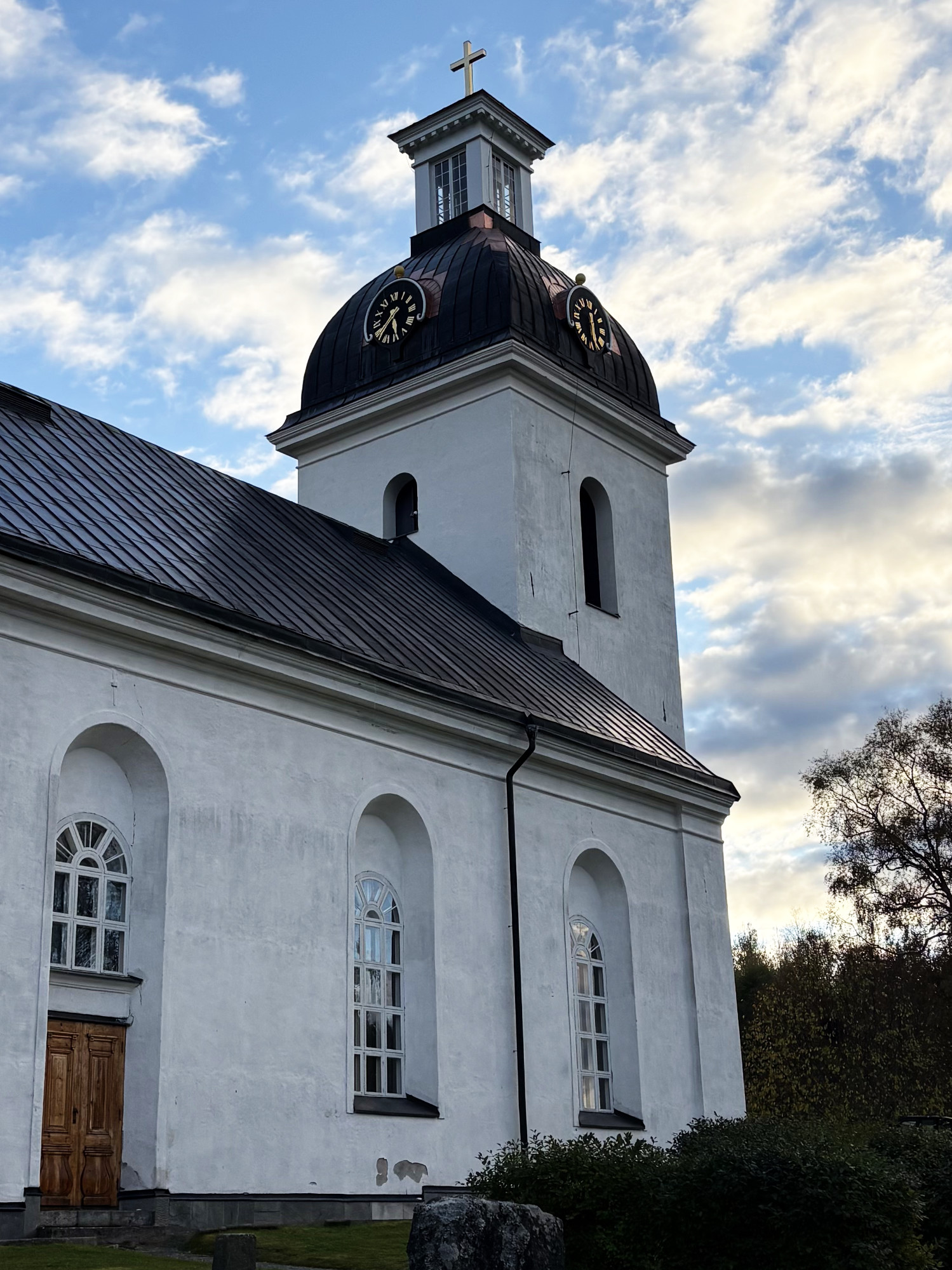
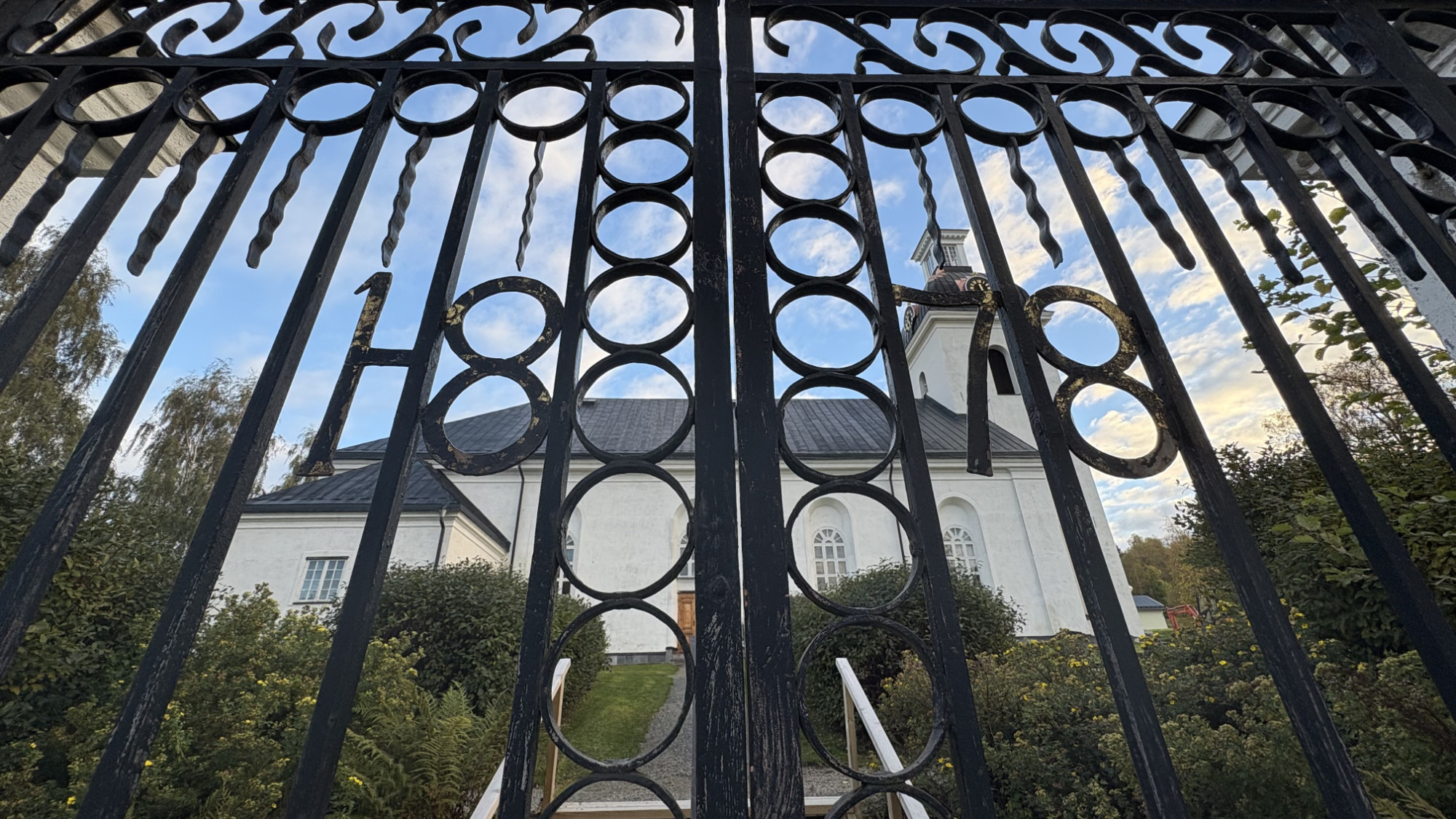
The earliest recorded church on this site was a wooden building that burned down in 1559 after being struck by lightning. Its replacement, built the following year, quickly proved too small for the growing congregation and was lengthened in 1685. A century later this second church was demolished to make way for the present stone building, completed in 1786 under the direction of builder Pehr Hagmansson. The interior features a barrel-vaulted ceiling.
The altarpiece, depicting a cross, shroud and crown of thorns, was carved by Johan Edler. Among the church's furnishings is an eighteenth-century oil painting showing the biblical scene of the sinful woman in the house of the Pharisee, drawn from the Gospel of Luke. The communion vessel is thought to be of German origin, though this attribution is not stated with certainty in the sources.
The church organ, built by Pehr Strand of Stockholm, originally had eight-foot pipework and thirteen stops; a new organ mechanism was installed in 1916 by the firm of Zetterqvist and Son of Örebro.